WILLEMSTAD – Curaçao's history came alive through the eyes of its younger generation as participants in the Salt and Slavery Project presented the results of months of research and creative work during a closing ceremony at Landhuis Jan Kok.
Organized by the Caribbean Research and Management of Biodiversity Foundation (CARMABI), the project centered on the Seru Largu National Park and explored the area's historical role in salt production, slavery, nature conservation and cultural heritage.
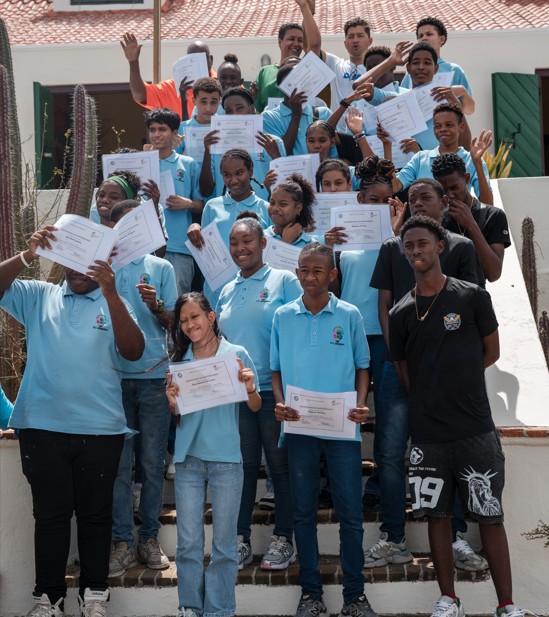
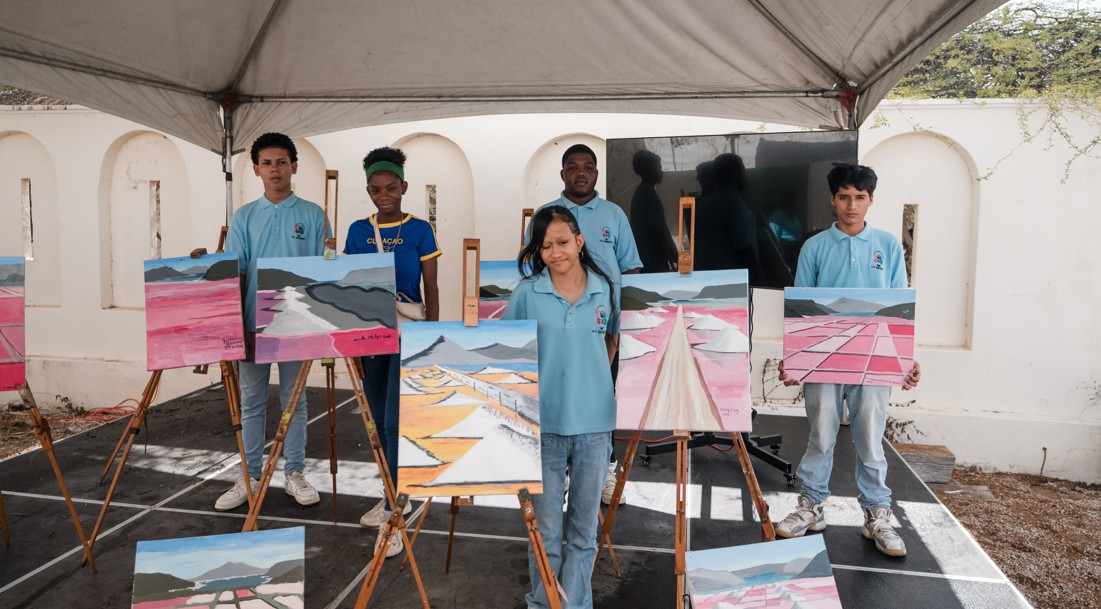
Throughout the program, the participating youth learned about the history of Seru Largu and its significance during the island's salt industry and the era of slavery. They examined how the landscape, natural environment and cultural heritage are interconnected and transformed their findings into creative expressions, including music, drama, visual arts and handcrafted works.
The event opened with welcoming remarks, followed by speeches from CARMABI's director, the manager of Terrestrial Parks, representatives of the National Slavery Heritage Commemoration Committee and the project coordinator. The students then presented their projects to invited guests before the program concluded with an awards ceremony and an informal gathering.
Nature as a storyteller
According to CARMABI, the project demonstrates that nature is about far more than biodiversity. Landscapes such as Seru Largu preserve the traces of Curaçao's past and tell the stories of the people who lived, worked and helped shape the island over the centuries.
By encouraging young people to discover these stories themselves, the organization hopes to deepen their understanding of the relationship between nature, culture and history.
"At CARMABI, we believe you truly get to know a landscape only when you understand the stories behind it," said Sharalin Maduro, Manager of Terrestrial Parks. "Seru Largu tells not only the story of our natural environment, but also of the people who lived and worked here. By allowing young people to discover that connection themselves, we are helping build a generation that understands the importance of protecting both nature and our cultural heritage. We can only protect what we know."
Connecting conservation and heritage
For CARMABI, environmental conservation, cultural heritage and education are closely linked. By actively involving young people in the history of the landscapes where they live, the organization hopes to inspire a new generation that feels connected to both Curaçao's natural environment and its cultural legacy.
The Salt and Slavery Project also highlights that heritage is not only about preserving the past but also about shaping the future. By giving young people the opportunity to research, interpret and share historical stories, those stories remain relevant and meaningful for future generations.
According to CARMABI, the project underscores that protecting nature and preserving cultural heritage go hand in hand. The island's landscapes tell the story of Curaçao—from its biodiversity and geology to the generations of people who have shaped the land over time. By making those connections visible, the organization brings together science, conservation, culture and history, reinforcing the belief that understanding a landscape is the first step toward protecting it for future generations.