WILLEMSTAD – Wintertuin Curaçao has launched a new cultural education initiative, “Rais Rítmiko,” aimed at teaching students traditional music while deepening their connection to Curaçao’s cultural heritage.
The project is being carried out in collaboration with the M.M. Römerschool, which already stood out during last year’s Wintertuin Curaçao Kids Festival. At that event, students performed as a band and created music using recycled instruments. With Rais Rítmiko, the partnership is now being expanded through the formation of a band using traditional instruments such as the tambú, wiri, chapi and kachu.
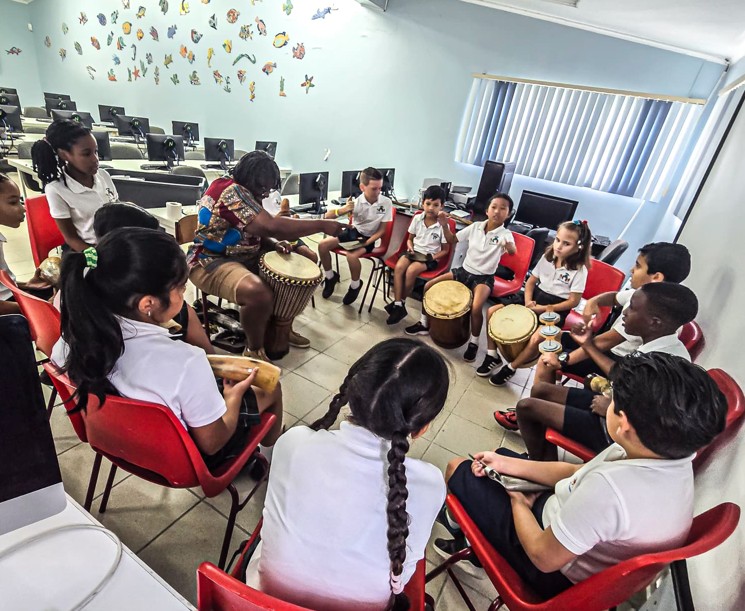
The program is structured in three phases. In the first phase, students are introduced to traditional rhythms such as seú, tambú and zumbi music. They learn about the cultural background of these musical styles and instruments while developing basic playing skills. By the end of this phase, each student is able to play an instrument.
The second phase focuses on songwriting and collaboration. Students are divided into three groups to write lyrics and compose music. Those interested in singing and writing receive guidance from a songwriter and vocal coach, while others continue with instrumental training. Together, they work toward producing three complete songs in different musical styles.
The final phase centers on preparation for the Wintertuin Curaçao Kids Festival in September 2026. A selection of fifteen talented students will receive additional training and work toward delivering a high-level performance at the event.
Classes are led by a vocal instructor and music teachers Crisanta Martha, specializing in wind and percussion instruments, and Sidney Emelina, focusing on percussion. The tambú and chapi instructor brings decades of experience, having spent 29 years performing with Grupo Trinchera and later founding his own rhythmic group, Grupo Uni Ritmo, which was active for 13 years.
His passion for music began at home, where his mother organized tambú gatherings in Comanchestraat. At the age of sixteen, he joined Grupo Trinchera, gaining not only performance experience but also engaging in research into Curaçao’s musical heritage. “We wanted to truly understand where this music comes from,” he said.
According to the instructors, fewer young people are being exposed to traditional music such as seú and tambú, making initiatives like Rais Rítmiko increasingly important. “We must keep our rhythms alive and give young people the opportunity to learn and play them,” he emphasized.
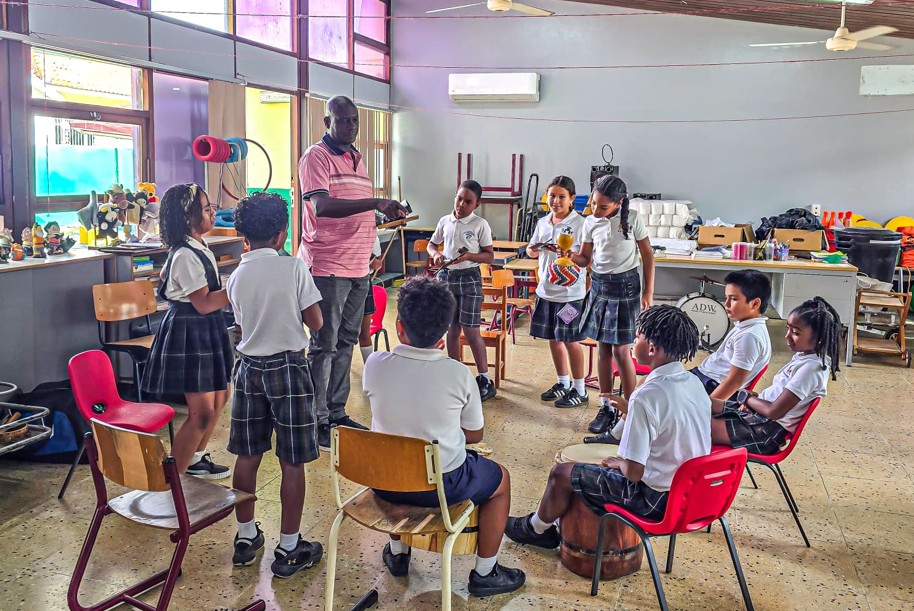
With Rais Rítmiko, Wintertuin Curaçao is not only investing in young talent, but also building sustainable partnerships with schools and cultural organizations, ensuring that the island’s musical traditions continue to thrive.