When will we ourselves draw the line to protect our autonomy?
Autonomy is a right, but good governance is a duty.
Curaçao is an autonomous country within the Kingdom of the Netherlands. But autonomy does not mean that politicians are above the law. The question is not whether the Netherlands should take control of our country, but how much longer we can allow politics to weaken our rule of law before the Kingdom is forced to intervene.
Recent developments provide serious reasons for concern.
Take the case of the bonuses. On October 7, 2026, the Council of Ministers approved a package of additional year-end payments. There was also an intention to award bonuses to ministers and members of Parliament, although they were not mentioned separately in the available decision. Following legal criticism and a request from the Governor to reconsider the decision, Prime Minister Pisas acknowledged that there was no legal basis for bonuses for politicians. The payments did not proceed.
How can a government even consider granting financial benefits to politicians without first ensuring that the law permits it?
The QuickPromo case also raises serious questions about integrity and political accountability. The Central Bank warned that the platform displayed characteristics of a pyramid scheme, while questions emerged about public support for the platform by a member of Parliament. An independent investigation must determine whether any criminal offenses were committed and who, if anyone, should be held responsible.
The real danger arises when cases like these are no longer exceptions, but symptoms of a culture of governance in which political interests outweigh the law and democratic oversight.
But who protects our rule of law when politics itself puts it under pressure?
What happened in 2017 provides a concrete example.
On February 12, 2017, the Koeiman government dissolved Parliament and scheduled elections for April 28. After the interim government led by Gilmar Pisas took office on March 24, the new government attempted to reverse the dissolution decision and interfered with preparations for the elections.
The Governor refused to sign the national decree reversing the dissolution. On April 3, 2017, the Kingdom intervened. On the basis of Articles 43 and 51 of the Charter for the Kingdom of the Netherlands, specific powers relating to the organization and conduct of the elections were temporarily transferred to the Governor.
The Council of State of the Kingdom concluded that the government's actions, aimed at obstructing the work of the Central Electoral Committee, justified intervention in Curaçao's autonomy.
The Kingdom did not take control of the entire government. The intervention was limited to protecting the democratic process.
The lesson we must learn from 2017 is clear: the Kingdom can intervene when political power threatens our democratic system. The question now is whether we have learned from that experience or whether we are continuing down a path that could bring us back to a similar situation.
The Charter for the Kingdom contains safeguards for such circumstances. Article 43 addresses the responsibility to protect fundamental rights, legal certainty, and good governance. Articles 50 and 51 allow intervention by the Kingdom under strict legal conditions.
Not every failure of governance justifies intervention. Such action requires a serious failure to fulfill constitutional obligations that our own institutions are unable to adequately correct.
The fundamental question is not only what mistakes the government makes, but also whether Parliament, the judiciary, and independent institutions still have sufficient capacity to correct those mistakes.
If politicians continue to cross legal boundaries, ignore warnings, and weaken democratic oversight, we increase the risk that the Kingdom will sooner or later have to intervene to fulfill its responsibility to safeguard our rule of law.
That is why it is time to move from words to action.
Parliament must demand that the government disclose its decisions, legal advice, and relevant financial documents. There must be public debate, independent investigations where concrete indications of irregularities exist, and political accountability when serious wrongdoing is established.
The Public Prosecutor's Office and other oversight institutions must be able to carry out their duties without political pressure. The government must respect their independence, answer legitimate questions, and correct unlawful decisions without waiting for the Governor or the Kingdom to intervene.
Our people also have a responsibility. It is not enough for the public to express outrage whenever a scandal comes to light. We must demand transparency, accountability, and independent oversight. We must insist that our leaders and elected representatives answer for their decisions.
This is not a call for the Netherlands to take control. It is a call for us to prevent the situation from reaching that point.
The greatest threat to our autonomy does not necessarily have to come from the Netherlands. It can emerge right here at home, when our own political leaders place power and political interests above the law and the rule of law.
Where do we draw the line?
We must say ENOUGH when politics crosses the boundaries of the law. No politician is above the law. No parliamentary majority is a blank check for the abuse of power. And our autonomy must never serve as an excuse for bad governance.
We must not wait for the Kingdom to draw the line for us. WE OURSELVES must draw that line NOW, demand accountability, and protect our rule of law before our failure to act puts our autonomy at risk.
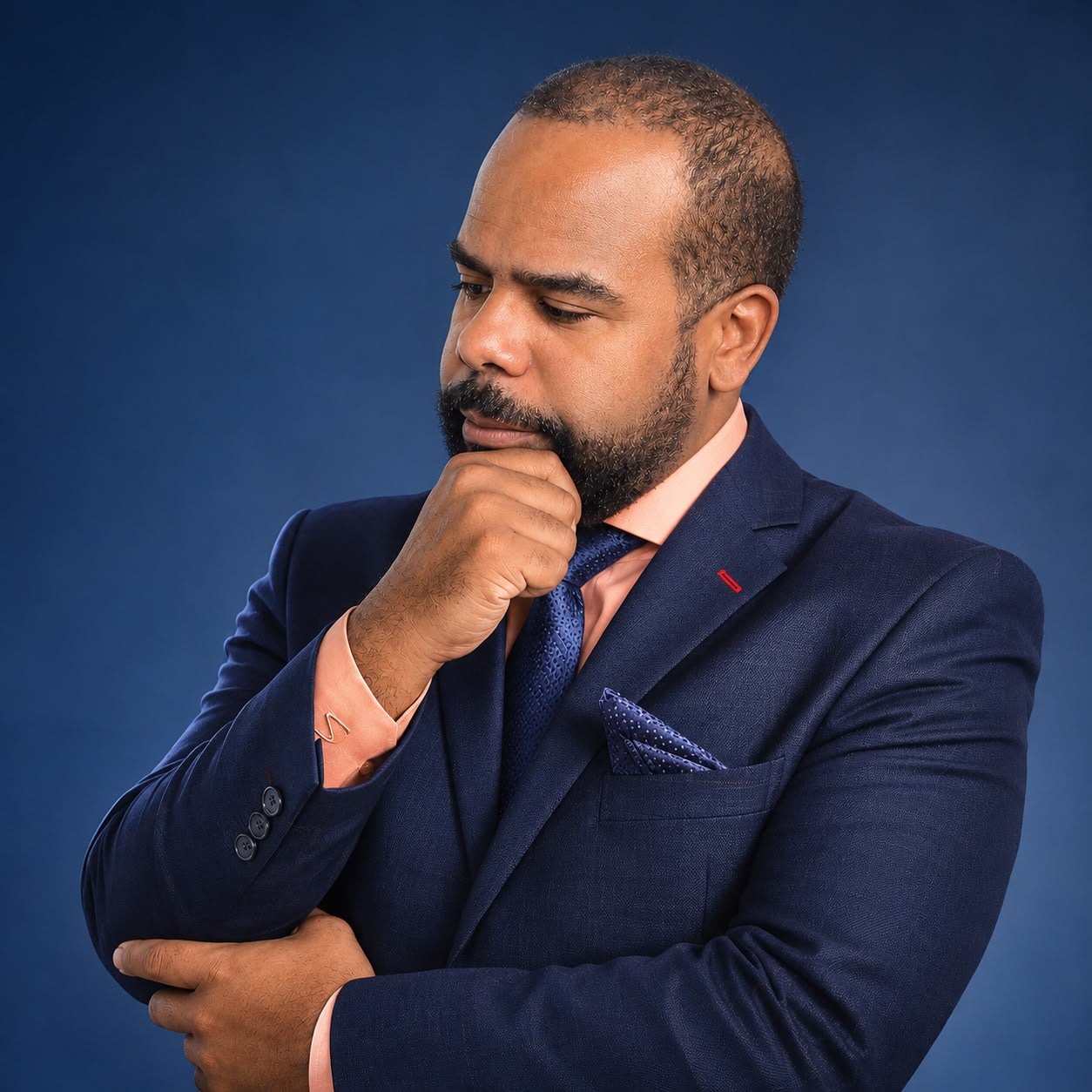
drs. Luigi A. Faneyte, MSc, CFE, CICA, CCS
Economist | Financial Expert | Analyst | Parliamentary Staff Member for PAR in the Curaçao Parliament