CARACAS – Venezuela has formalized a series of new oil agreements with Chevron and Italian energy company Eni, marking another step in efforts to attract foreign investment and expand crude production under the country’s recently reformed hydrocarbons framework.
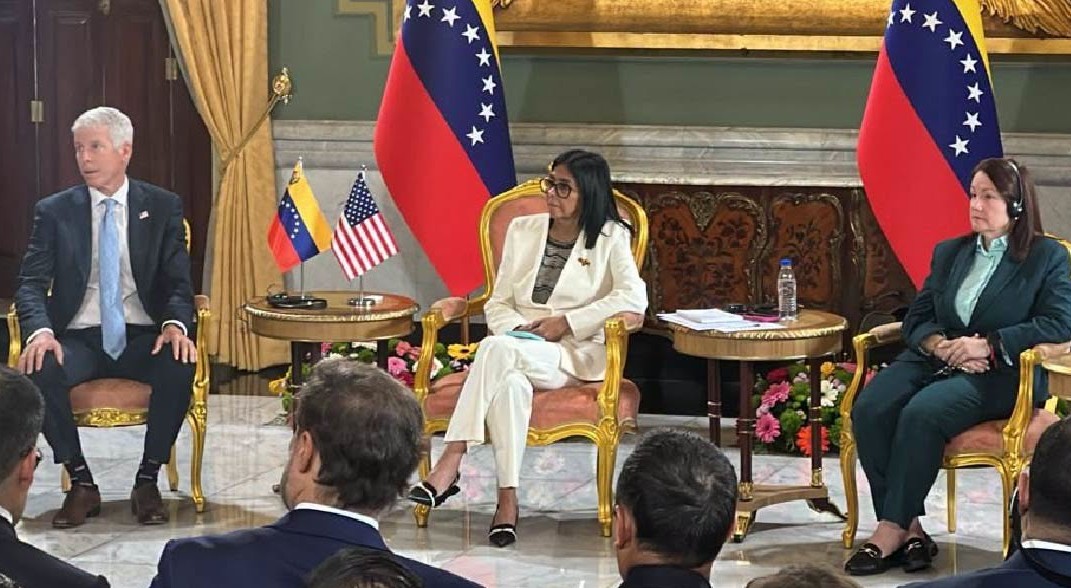
The agreements were signed in the presence of Venezuelan leader Delcy Rodríguez and U.S. Energy Secretary Chris Wright, whose arrival in Caracas came only days after the announcement of a broader oil agreement between Washington and Venezuela.
Under the agreements, Venezuela and Chevron recognized the conversion contracts covering the Petroboscán, Petropiar and Petroindependencia projects under the country’s new Hydrocarbons Law, which was reformed in January.
The agreements also provide for the companies’ business plans to be adapted to Venezuela’s new legal and fiscal framework. In addition, the parties signed a comprehensive agreement covering payment of a bonus related to access to reserves in areas assigned to Petroindependencia.
State oil company PDVSA separately signed a production participation contract with Eni for the Junín 5 block in Venezuela’s vast Orinoco Oil Belt. The two companies also signed a transition agreement covering operations in the area.
PDVSA also entered into a production participation contract with Primavera for the Budare-Elotes block.
The new agreements come as Chevron prepares to significantly expand its Venezuelan operations. The U.S. oil company has announced plans to invest more than $7 billion in Venezuela over the next five years and aims to double its production to approximately 600,000 barrels per day compared with 2026 levels.
Such an expansion would substantially increase Chevron’s role in Venezuela’s oil industry and could help Caracas raise overall production after years of underinvestment, sanctions and deterioration of energy infrastructure.
The latest agreements also highlight the growing importance of foreign companies in Venezuela’s strategy to rehabilitate its petroleum sector. The country holds some of the world’s largest proven crude oil reserves, much of them concentrated in the Orinoco Oil Belt.
The developments follow an announcement by U.S. President Donald Trump of an agreement aimed at developing Venezuelan oil reserves. The proposed arrangement has also raised attention because it reportedly contemplates a role for the Pentagon in sharing some of the economic benefits generated by the deal.
The presence of Wright in Caracas further underscores the rapidly evolving energy relationship between Venezuela and the United States, with oil once again becoming a central element in relations between the two countries.