CARACAS, WASHINGTON – The United States and Venezuela have signed an agreement to restore military cooperation, marking a dramatic transformation in relations between the two countries just ten months after American forces captured former Venezuelan President Nicolás Maduro during a military operation in January.
U.S. Secretary of Defense Pete Hegseth announced the agreement on Wednesday, November 18, 2026, during a surprise visit to Caracas, where he met with Venezuela's interim President Delcy Rodríguez at the Miraflores Presidential Palace.
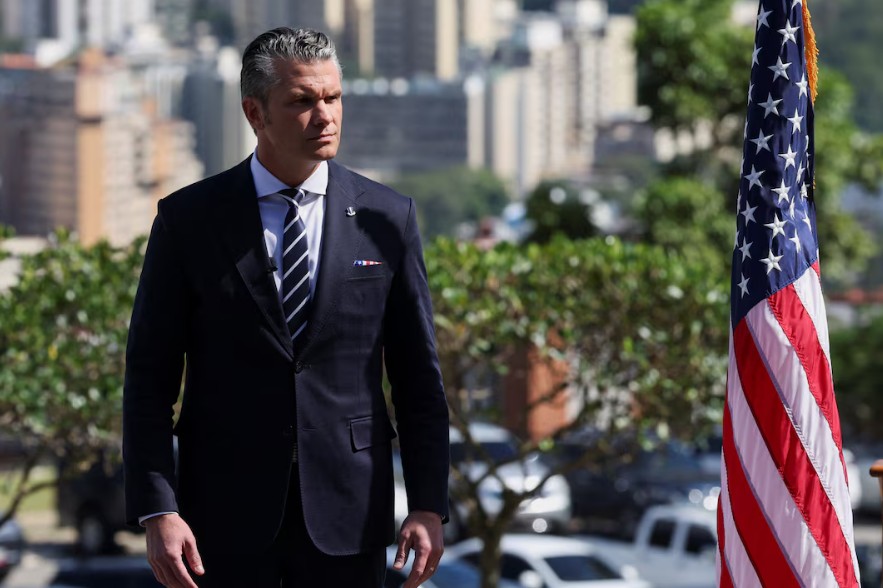
U.S. Secretary of Defense Pete Hegseth in Caracas
The agreement includes joint military training, intelligence sharing, cooperation on defense equipment, and strengthened efforts to combat drug trafficking and organized crime.
The visit was Hegseth's first to Venezuela since the January 3 operation that removed Maduro from power and transferred him to the United States to face federal criminal charges.
The agreement represents a significant shift in relations between Washington and Caracas, which had been characterized by years of diplomatic hostility, sanctions, and military tensions.
From Military Confrontation to Defense Cooperation
Speaking alongside Rodríguez during remarks broadcast by Venezuelan state television, Hegseth described the agreement as an opportunity to rebuild military relations between the two countries.
He said Washington intends to use American military expertise to strengthen cooperation with Venezuela's armed forces, particularly in areas involving training, intelligence, and border security.
The Pentagon chief also emphasized that the agreement would support joint efforts against drug trafficking organizations and other criminal groups operating in the region.
According to Hegseth, closer cooperation with Venezuela could contribute to regional stability and strengthen security throughout the Western Hemisphere.
The agreement was formally signed by Hegseth and Venezuelan Defense Minister Gustavo González López, with Rodríguez present at the ceremony.
The meeting also included senior Venezuelan government officials.
The agreement comes less than a year after American forces conducted the military operation that resulted in Maduro's capture, an event that fundamentally changed Venezuela's political landscape and its relationship with the United States.
Delcy Rodríguez Welcomes Renewed Military Relations
Interim President Delcy Rodríguez welcomed the agreement, describing it as an important step toward restoring cooperation between the Venezuelan and American governments.
She said the renewed partnership would help strengthen the capabilities of Venezuela's armed forces and improve their ability to respond to what she described as common security threats.
Rodríguez highlighted the potential benefits of additional military training, improved operational equipment, and access to new technologies.
She also expressed hope that cooperation between the two countries would contribute to peace and stability.
The Venezuelan leader described the agreement as evidence that both governments had managed to transform a difficult period in bilateral relations into an opportunity for cooperation.
Neither government has publicly provided a detailed implementation schedule, financial commitments, or a complete explanation of the military equipment and technologies that may be included in the arrangement.
Maduro's Capture Changed Relations Between Washington and Caracas
The military agreement follows the dramatic events of January 3, 2026, when American forces captured Nicolás Maduro during an operation in Venezuela.
Maduro was subsequently transferred to the United States, where he faces criminal proceedings related to allegations of drug trafficking and narcoterrorism.
Following his removal, Delcy Rodríguez assumed leadership of Venezuela's interim government.
Since then, Washington has expanded its engagement with Venezuelan authorities in several areas, including security, energy, and economic cooperation.
Senior American officials have visited Caracas as part of efforts to develop a new working relationship with the country's interim administration.
Hegseth's visit represents one of the most significant steps in that process because it involves the restoration of direct military cooperation between countries that were previously political and strategic adversaries.
Agreement Comes Amid Continued U.S. Operations in the Caribbean
The announcement also comes as the United States continues military operations targeting vessels suspected of involvement in drug trafficking in the Caribbean Sea and eastern Pacific Ocean.
The operations have generated international scrutiny over their legal basis, the use of lethal force, and the evidence supporting allegations against targeted vessels.
Washington maintains that its campaign is intended to disrupt criminal organizations and reduce the flow of illegal drugs.
The new agreement with Venezuela could potentially expand intelligence sharing and coordination against suspected trafficking networks operating along the Venezuelan coast and throughout the Caribbean.
However, officials have not explained whether the agreement will involve joint maritime patrols, the deployment of American military personnel in Venezuela, or direct Venezuelan participation in existing U.S. operations.
These questions remain particularly relevant for neighboring Caribbean countries, including Curaçao, because of their geographical proximity to Venezuela and the importance of maritime security in the region.
Washington Expands Its Influence in Venezuela
The military agreement is part of a broader rapprochement between Washington and Caracas.
The Trump administration has also pursued closer cooperation with Venezuela's energy sector, seeking to expand access to the country's substantial oil reserves.
The combination of military and economic agreements demonstrates the growing American role in Venezuela following Maduro's removal.
Nevertheless, important political questions remain unresolved.
Venezuela's future electoral process, the role of opposition groups, and the long-term structure of the country's government continue to generate debate.
While Washington and Rodríguez's administration are strengthening cooperation, the broader political transition remains uncertain.
Following his visit to Caracas, Hegseth continued his regional trip to Colombia, where discussions with government officials were expected to focus on defense cooperation and regional security.
For Venezuela and the wider Caribbean, the agreement signals a new phase in relations between Washington and Caracas, with potentially significant consequences for military cooperation, regional security, and the geopolitical balance in the Caribbean.