WILLEMSTAD – The Ministry of Education, Science, Culture and Sport (ESKD) has reported a highly successful series of conferences focused on the transition from primary to secondary education, highlighting strong public interest in upcoming reforms.
The ministry organized one session for teachers on Friday, March 20, 2026, followed by four sessions for parents over the weekend of March 21 and 22. In total, more than 200 teachers and over 1,100 parents attended.
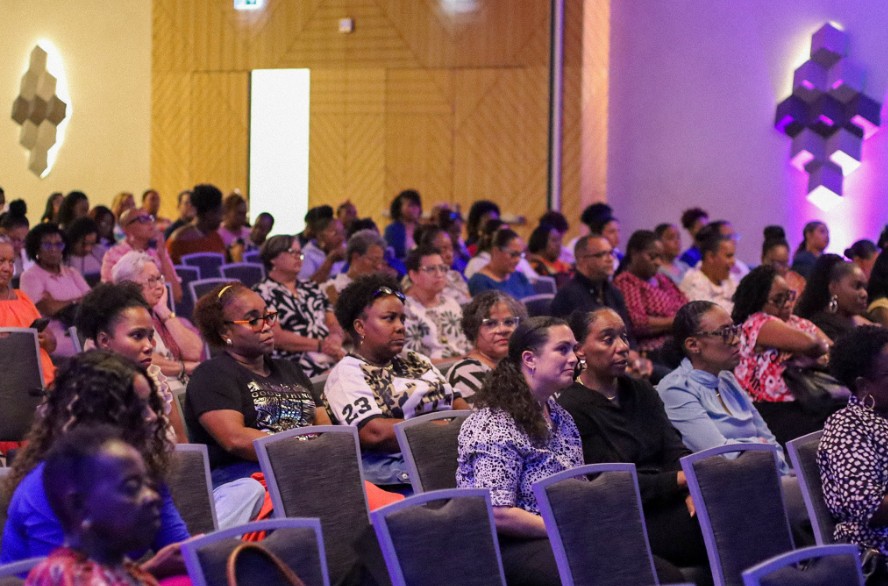
According to the ministry, the high turnout and active participation underscore the demand for transparency, information, and dialogue surrounding changes in the education system.
Central to the discussions was the introduction of a renewed Educational Report (OKR), which shifts the focus away from relying solely on a single test moment, such as the EFO exam, toward a broader evaluation of a student’s overall development.
Minister Sythree van Heydoorn opened the conferences by explaining the reasoning behind the reform, emphasizing equal opportunities, trust, and a more comprehensive view of each student’s abilities and potential.
“It is important that parents and teachers not only hear that changes are coming, but also understand why these choices are being made. Ultimately, this is about our children, their development, and their future,” the minister stated.
The program featured contributions from several experts. Wladimir Kleinmoedig, director of the Education and Science sector, addressed the legal and policy framework of the reforms. Project leader Saby de Bies provided insight into the content and application of the renewed digital OKR, while Nancy Josephina explained student profiles for HAVO, VSBO, and AGO tracks. Samira Saab discussed procedures related to school placement and enrollment, and educational specialist Yaniek de Wolff delivered a keynote on the influence of conscious and unconscious bias in student assessment.
Each session concluded with an interactive panel discussion moderated by Muriël Meyer. Participants raised critical questions, particularly regarding the objectivity of school advice, the role of the new OKR, and the procedures for placement and appeals.

Teachers also highlighted practical concerns, including how the reforms will be implemented in classrooms and the level of guidance required for students transitioning to secondary education.
The ministry described the atmosphere as open and constructive, with space for both concerns and clarification. ESKD indicated that it will continue to prioritize communication and engagement with schools, educators, and parents as the reforms move forward.
Recordings of the sessions are expected to be shared soon via the ministry’s social media channels.