WILLEMSTAD - The Social and Economic Council (SER) of Curaçao took part on April 10 and 11 in a two-day workshop in Santo Domingo organized by the Dominican Republic’s Economic and Social Council (CES) for newly appointed council members at the Crowne Plaza Hotel. Raúl Henríquez, the SER’s director and secretary general, was invited by CES President Rafael Toribio to participate in the event and to speak in its international segment on AICESIS, the international association of economic and social councils and similar institutions. Speaking alongside representatives from Guatemala and Spain, Mr. Henríquez also addressed the place of Caribbean and Latin American councils within that wider network.
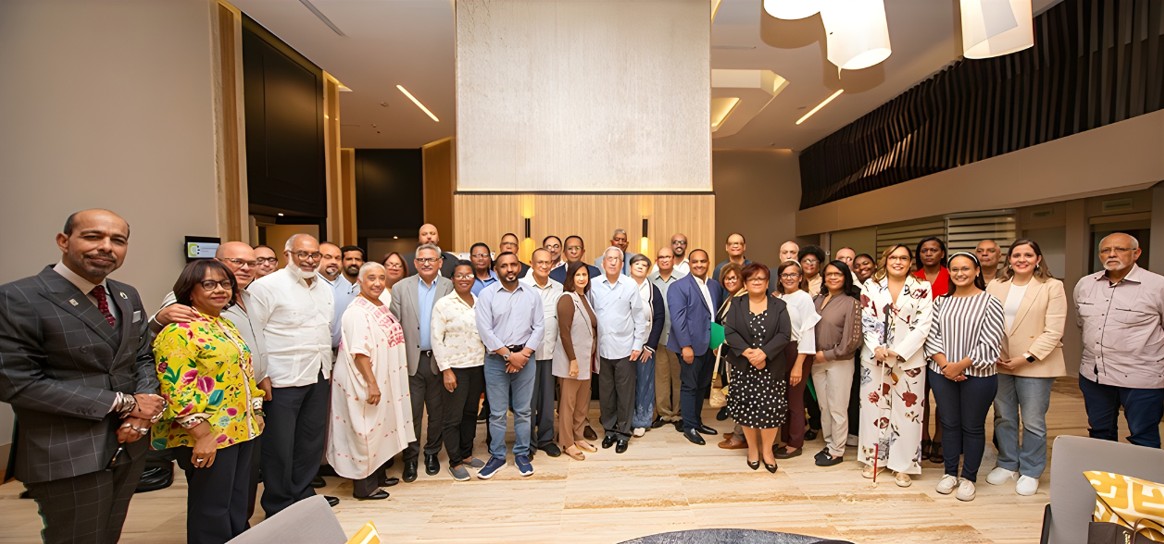
In his remarks, Mr. Henríquez argued that economic and social councils matter most when uncertainty is high. “In 2026, an economic and social council is no mere accessory to a democratic system; it is part of what keeps it stable,” he said. He warned that small, open, and island economies are especially exposed to geopolitical shocks, higher energy costs, supply chain disruptions, and weakening public confidence. In such circumstances, he said, sound policy depends not only on the substance of decisions, but also on the legitimacy of the process through which they are made.
For Curaçao, one of the clearest lessons of the workshop came in the closing reflections of Mr. Toribio, who argued that a council must do more than convene dialogue. It must also strengthen its influence, monitor compliance with agreements, and make clear who is honoring commitments and who is falling short. The broader design of the workshop reflected that institutional focus, with sessions on the legal framework of the Dominican CES, policy influence, the ethics of representation and the rollout of a new quality-management system.
Curaçao’s participation fit into a broader regional trend in which questions of legitimacy, implementation capacity and social peace are becoming more urgent. For the SER of Curaçao, the invitation offered not only international visibility, but also an opportunity to sharpen its own institutional role through comparative learning. “There can be no just transition without serious social dialogue,” Mr. Henríquez said. “And there can be no lasting social peace without institutions capable of ordering differences and turning them into workable agreements.”