WILLEMSTAD – A group of concerned Curaçao residents gathered in the Penstraat area on Sunday morning to protest against large-scale construction and tourism developments that they believe are putting increasing pressure on the island’s social balance, housing affordability and living environment.
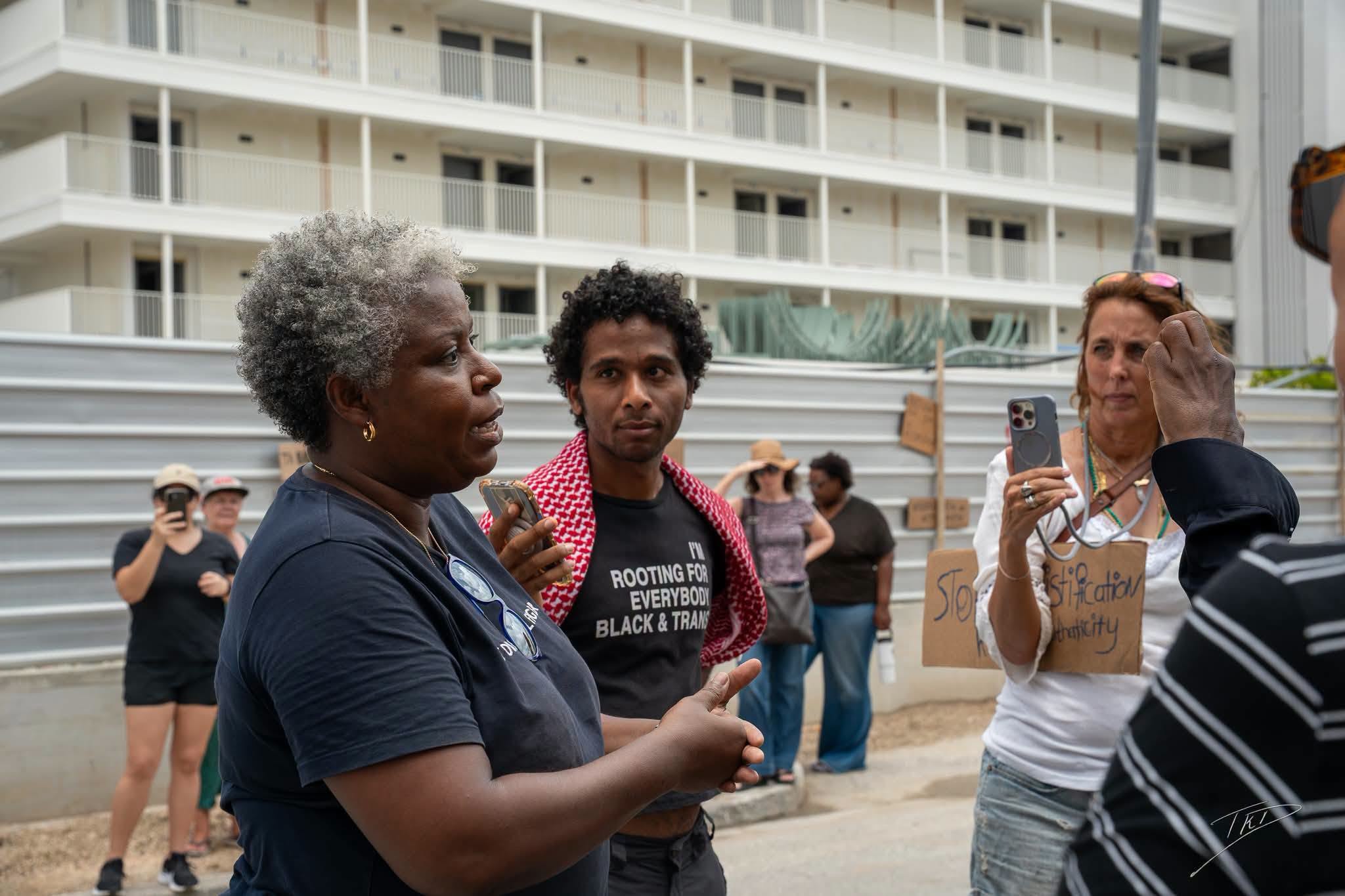
The demonstration forms part of a broader debate that has emerged on Curaçao over the pace and scale of development. Protesters argue that economic growth and tourism investment should not come at the expense of residents who increasingly face higher housing costs and changes to their neighborhoods.
The Penstraat protest took place near The Pyrmont Hotel development, formerly known as Pen Resort. The project has itself been the subject of years of discussion and legal proceedings over its development and building permits.
The demonstrators are not necessarily calling for an end to development. Their central concern is whether Curaçao has established sufficient safeguards to ensure that residents also benefit from the rapid expansion of tourism, real estate and large construction projects.
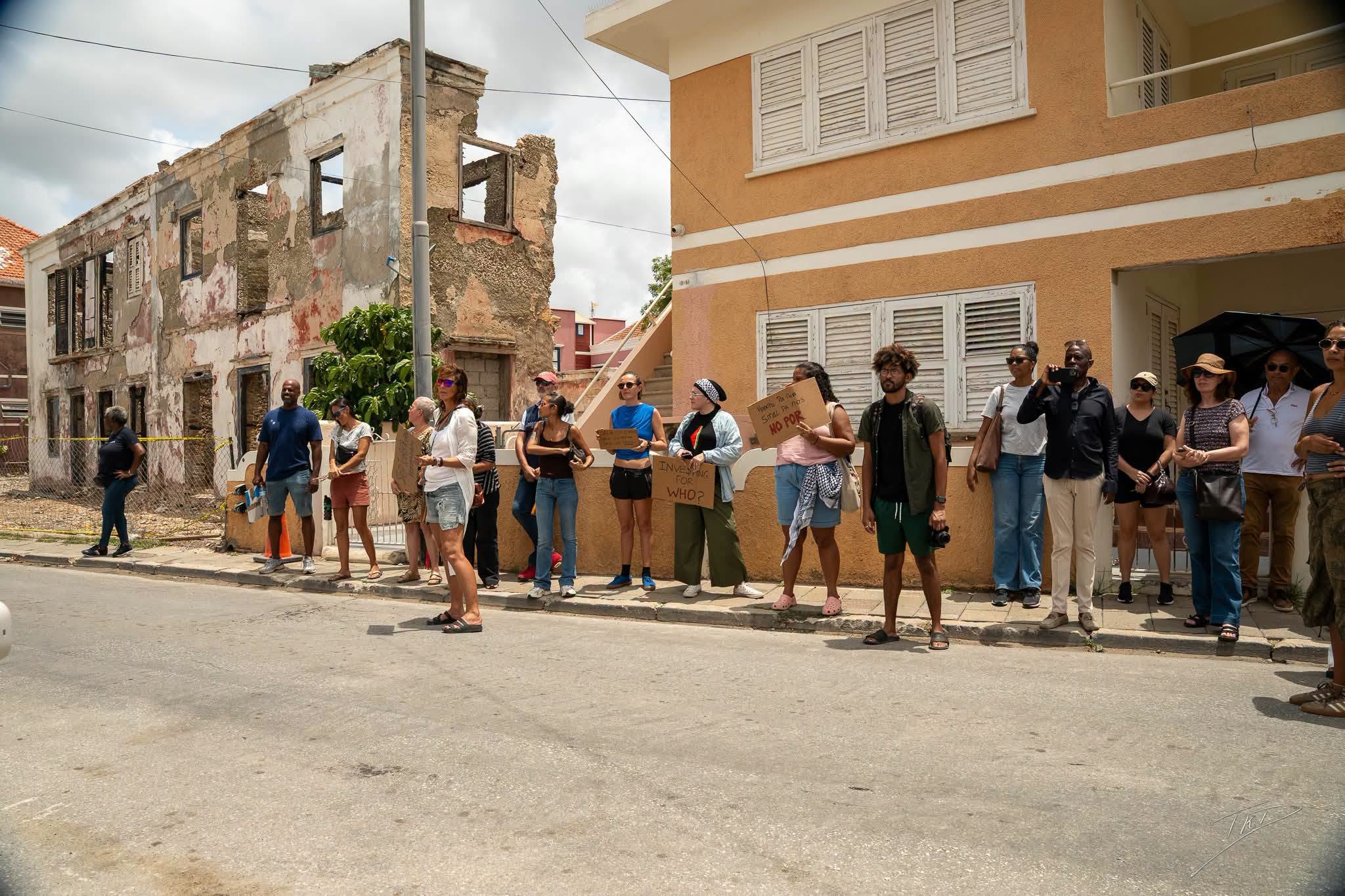
Similar concerns have recently been expressed by the activist groups Sin Kabes and Curaçao Nature Conservation. The organizations have pointed to developments in Penstraat, Zakitó, Bapor Kibrá, Otrobanda, Pietermaai, Santa Martha, Willibrordus, Westpunt, Caracasbaai and Piscadera as examples of areas where they believe greater attention should be given to residents, nature and accessibility.
The debate has also extended to the affordability of housing. As neighborhoods become increasingly attractive for tourism and investment, critics fear that property prices, rents and short-term vacation rentals could make it more difficult for lower- and middle-income Curaçao residents to live in some parts of the island.
Recent academic research into the transformation of Otrobanda has highlighted a similar tension. Researchers found that urban revitalization can make neighborhoods safer and economically more attractive, but can simultaneously increase property values and create a risk of gentrification if affordable housing and existing communities are not adequately protected.
The protest has also drawn a political response. Minister of Traffic, Transport and Urban Planning Charles Cooper defended development in the Penstraat area after the demonstration, arguing that tourism development there has been envisioned for many years.
The discussion surrounding The Pyrmont nevertheless illustrates the complexity of the issue. In 2023, the Court of First Instance annulled an earlier building permit for the project because the minister had not sufficiently explained the balancing of interests surrounding a substantial deviation from the permitted building height. A new permit was subsequently issued after additional justification was provided.
For protesters, the issue extends beyond one hotel or one neighborhood. They want Curaçao to have a broader discussion about how much development the island can accommodate and what conditions should apply before major projects are approved.
That discussion is becoming increasingly relevant as Curaçao continues to experience strong tourism growth while simultaneously facing pressure on infrastructure, including roads, electricity, water, waste management and housing.
The protesters argue that the question should therefore not simply be how much investment Curaçao can attract, but what kind of development the island wants and how its benefits and costs are distributed among the population.
The demonstration in Penstraat was relatively small, but the issues raised are increasingly becoming part of a larger public debate: how Curaçao can continue growing economically without making housing less affordable, putting excessive pressure on infrastructure or fundamentally changing communities in ways that leave existing residents behind.