WILLEMSTAD – A group of residents from the Brakkeput-Jan Thiel area has launched a public fundraising campaign to finance legal action against the controversial PODS Resort development, arguing that the large-scale tourism project will place unsustainable pressure on infrastructure, traffic and the natural environment.
The initiative is being led by Bianca Berends on behalf of the neighborhood association Oud Jan Thiel, representing 52 households in the area directly surrounding the project site.
Through a public crowdfunding campaign, residents are seeking to raise approximately 12,000 guilders to continue a legal procedure aimed at challenging the building permit granted for the project.
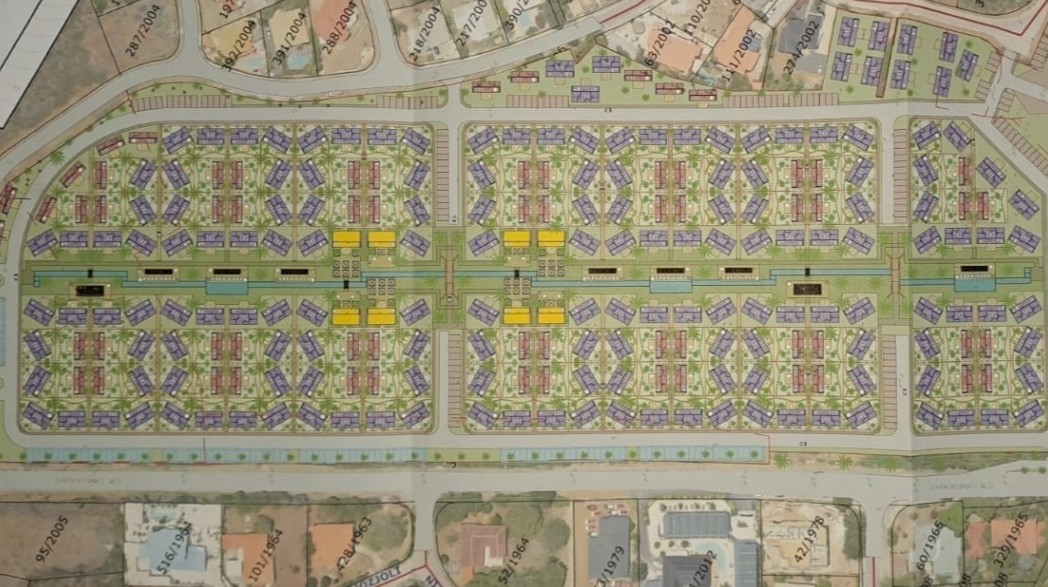
The PODS Resort project involves the construction of 244 so-called “pods” — compact tourist accommodation units that residents compare to luxury mobile homes or modular vacation cabins.
Marketed as an investment-focused tourism concept, the project has become one of the most discussed developments in the Brakkeput-Jan Thiel region.
According to an investigation by Curacao Chronicle, approximately 80 percent of the available lots have already been sold, indicating strong investor interest despite growing local resistance.
But for residents living nearby, the project represents much more than a tourism development.
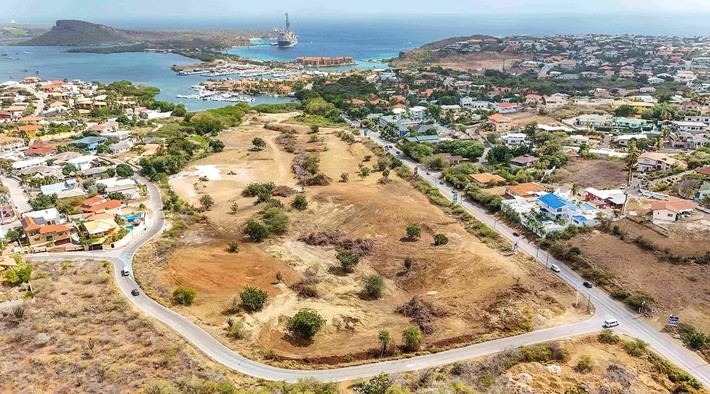
They argue it reflects a broader trend of overdevelopment on the island, where natural and open spaces are increasingly being replaced by dense construction.
According to the neighborhood association, their objections center on several major concerns.
Among them is the growing traffic pressure on Caracasbaaiweg, already one of the busiest roads connecting the Jan Thiel and eastern residential areas to Willemstad.
Residents warn that additional traffic generated by hundreds of tourist units could significantly worsen congestion and affect emergency access to surrounding neighborhoods.
The group also points to concerns over urban density and what they describe as a lack of proper spatial planning.
One of the technical objections focuses on drainage and rainwater management.
Residents argue that insufficient planning has been done to assess how rainfall runoff from approximately 40 hectares of surrounding land will affect the project area and neighboring communities.
The neighborhood association says it formally objected to the permit last year.
Since then, it has obtained the full construction file from the Ministry of Traffic, Transport and Urban Planning of Curaçao (VVRP).
Attorney Achim Henriquez, representing the residents, has since submitted additional objections based on the ministry’s response.
According to the association, all legal steps have been taken within the required deadlines, allowing the case to move into the next phase: an administrative law procedure aimed at having the permit reviewed and potentially annulled.
To finance that process, residents are asking the public for support.
The estimated 12,000-guilder legal budget covers attorney fees, the drafting and filing of legal documents, court filing fees and related procedural costs.
The campaign organizers say transparency is important and have publicly shared the legal invoice to justify the amount being raised.
Berends and the neighborhood association say the fight goes beyond their immediate neighborhood.
They argue the outcome could set an important precedent for how future large-scale developments are assessed on Curaçao.
The campaign is also tapping into broader public frustration over what some residents see as uncontrolled development across the island.
As major tourism and residential projects continue expanding into natural and residential areas, debates over sustainability, infrastructure and quality of life are becoming increasingly visible.
For the Oud Jan Thiel residents, the message is clear: this is not just about one resort.
It is about the future of the region.
And perhaps, the future of Curaçao’s development model itself.