WILLEMSTAD – An independent researcher based in the Netherlands has formally approached several oversight institutions in Curaçao, calling for an independent investigation into the Curaçao Gaming Authority (CGA) over concerns that online casinos operating under Curaçao licences may be accepting European gamblers without the necessary authorization in those countries.
Mustafa Jabano, who identifies himself as an independent researcher, submitted correspondence on Friday, November 6, 2026, to the Ombudsman of Curaçao, the General Audit Chamber of Curaçao, and the Cabinet of the Governor. His request follows a series of questions directed to the CGA concerning international gambling operations, financial transactions, licensing requirements, and consumer protection.
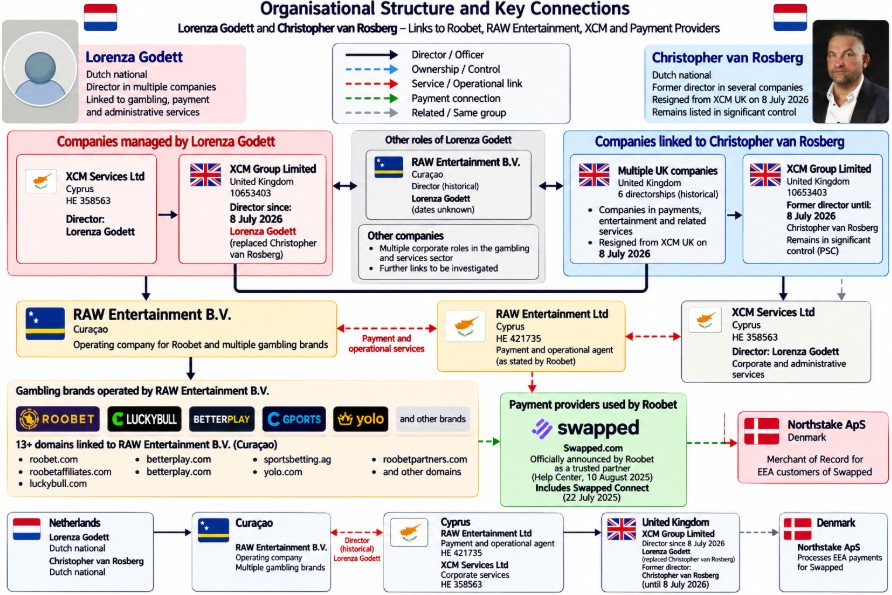
Jabano alleges that his investigation has uncovered evidence suggesting that online casinos holding Curaçao gambling licences allow players from European countries, including the Netherlands and Denmark, to access gambling services and deposit money even when the operators may lack the required national licences.
He says his findings are supported by screen recordings, bank transactions, and documented payment routes.
The allegations have not been independently verified, and the correspondence does not establish that the CGA or any individual gambling operator has violated applicable laws.
Researcher Questions Whether Curaçao-Licensed Casinos Target Unauthorized Markets
In his formal email to the CGA, Jabano raises questions about the authority's supervision of gambling operators that offer services internationally.
He wants to know whether the regulator actively monitors its licence holders to determine if they are accepting or targeting players in European countries where they do not possess the necessary national gambling licences.
The researcher specifically questions how certain operators can reportedly accept deposits from players in the Netherlands and other European jurisdictions despite potentially lacking authorization to provide gambling services in those markets.
His concerns focus on the distinction between holding a gambling licence issued in Curaçao and having permission to offer gambling services in another country.
A Curaçao gambling licence does not automatically authorize an operator to provide services in jurisdictions that require separate national licensing.
Jabano argues that the CGA should examine whether its licence holders are respecting the regulatory requirements of the countries where their customers are located.
Questions About Deposit Limits and Gambling Addiction Prevention
Another major concern raised in the correspondence involves the protection of gamblers, particularly young adults and vulnerable consumers.
Jabano asks how the CGA verifies that licensed operators implement effective safeguards, including customer identification procedures, deposit limits, responsible gambling measures, and mechanisms intended to prevent gambling addiction.
He claims to have documented situations in which players were able to deposit substantial amounts of money without effective deposit restrictions being apparent.
According to the researcher, these circumstances raise questions about whether existing consumer protection requirements are being properly implemented and enforced.
However, the correspondence does not identify the operators involved, specify the amounts deposited, or establish whether the transactions violated particular regulatory requirements.
Jabano maintains that the issue deserves closer examination because of the potential financial and social consequences for European consumers.
European Payment Providers Also Under Scrutiny
The researcher is also questioning the role of European payment service providers in facilitating transactions involving Curaçao-licensed gambling websites.
He has asked the CGA whether its supervisory activities include examining payment companies that process deposits and other financial transactions for online casinos.
According to Jabano, the payment routes identified during his investigation form an important part of the evidence he has collected.
He wants authorities to determine whether payment service providers are facilitating transactions connected to gambling activities that may not be authorized in the countries where customers reside.
His correspondence does not establish wrongdoing by any specific payment provider.
Nevertheless, the questions highlight the international nature of online gambling transactions and the regulatory challenges created when gambling operators, payment companies, and consumers are located in different jurisdictions.
Researcher Claims European Players Dominate Gambling Websites
One of the most striking claims in Jabano's correspondence concerns the geographic origin of customers using the gambling websites he examined.
According to the researcher, his findings suggest that the overwhelming majority of players on the websites under investigation are located in Europe.
He estimates that the proportion could be as high as 99 percent.
However, the email does not provide the underlying data, methodology, sample size, or a list of websites supporting that estimate. It therefore cannot be treated as a verified statistic about Curaçao-licensed gambling operators generally.
Jabano says he intends to submit relevant evidence, documents, and witness statements to the competent judicial authorities in the Netherlands.
He has not indicated whether a formal legal complaint has already been filed or whether Dutch authorities have agreed to open an investigation.
Questions About Revenue Curaçao Receives From Gambling Licences
Beyond consumer protection, Jabano is demanding greater transparency about the financial benefits Curaçao receives from its online gambling licensing system.
He asks how much revenue the country generates annually from gambling licences and what safeguards are in place to prevent licensing income from being associated with gambling activities that are not permitted in other countries.
The researcher questions whether European consumers should bear potential financial and social consequences while Curaçao receives income from licensing gambling operators.
He argues that the authorities should provide concrete information about how gambling revenues are generated and how international compliance is monitored.
His questions also concern the measures taken when licensed operators are found to repeatedly accept customers from markets where they are not authorized to operate.
The correspondence does not include official figures for Curaçao's annual gambling licensing revenue.
Ombudsman, Audit Chamber and Governor's Cabinet Contacted
After sending his questions to the CGA, Jabano forwarded his concerns to the Ombudsman of Curaçao, the General Audit Chamber, and the Cabinet of the Governor.
In his accompanying message, he explicitly requested an independent investigation into the CGA's supervision of gambling activities involving European markets.
He emphasized that his initiative is not motivated by an individual financial dispute or a demand for compensation.
Instead, he described the investigation as an effort to promote transparency, strengthen consumer protection, and prevent harm to young people.
According to Jabano, young people from several European countries are participating in efforts to investigate the practices, collect evidence, and warn other potential victims.
"It is not about money. It is about human lives, consumer protection, and the future of our young people," he wrote.
He also indicated that he is awaiting responses from the institutions contacted.
The correspondence does not establish whether the Ombudsman, General Audit Chamber, or Governor's Cabinet has accepted the request or initiated any formal examination.
CGA Asked to Explain Its Supervisory Responsibilities
Jabano's questions place the CGA's regulatory responsibilities at the center of the dispute.
He is seeking specific information about how the authority monitors its licence holders, investigates potential violations, enforces licensing conditions, and protects consumers who access Curaçao-licensed gambling websites from abroad.
The researcher maintains that general explanations about regulatory procedures are insufficient and that the authority should provide concrete answers about its supervisory activities.
In earlier correspondence, the CGA explained that complaints concerning its own conduct can be handled under Article 12.17 of the National Ordinance on Games of Chance.
The authority also stated that while it does not resolve individual disputes between players and gambling operators, information received through complaints may contribute to supervisory or enforcement action.
The CGA has not provided a substantive response to the specific allegations contained in Jabano's November 6 correspondence in the material made available.
For now, the researcher's claims remain allegations requiring independent verification.
The central question is whether Curaçao's gambling regulator is adequately monitoring the international activities of its licence holders and whether its enforcement mechanisms are sufficient to address potential violations affecting consumers outside Curaçao.
Jabano is now seeking answers not only from the CGA but also from institutions responsible for oversight and accountability in Curaçao, while preparing to present his evidence to authorities in the Netherlands.