WILLEMSTAD – Curaçao Sea Aquarium reached a major milestone on Thursday, October 22, 2026, with the successful installation of Panomara, described as the world's largest underwater observatory in the open sea. The massive structure was transported from Parera harbor through Sint Anna Bay and across the sea before being positioned at its permanent location near the breakwater of the Sea Aquarium.
According to the Sea Aquarium, the complex operation took place during the early morning hours and proceeded according to plan.
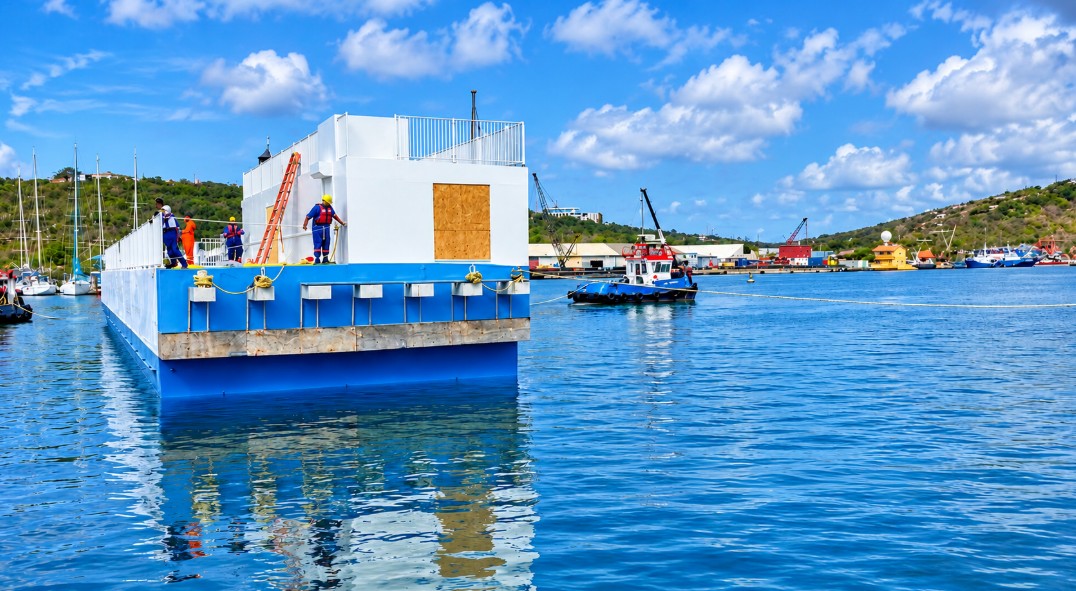
The installation marks an important step toward the completion of a project designed to give visitors an entirely new perspective on Curaçao's underwater environment.
Panomara will allow visitors to experience the island's coral reef and marine life without entering the water. Rather than observing fish inside traditional aquarium tanks, visitors will descend into an underwater viewing area and watch marine animals in their natural habitat.
The observatory features an approximately 40-meter-long submerged viewing space equipped with 22 large windows overlooking the surrounding reef and marine ecosystem.
A Vision Years in the Making
According to the Sea Aquarium's management, Panomara represents the realization of a long-standing vision developed by Adriaan "Dutch" Schrier, whose concept was to reverse the traditional aquarium experience.
"This is the (sometimes obsessive) vision of Adriaan 'Dutch' Schrier becoming reality: putting people in an aquarium and leaving the fish in nature," the management said.
The concept reflects the Sea Aquarium's original philosophy of bringing visitors as close as possible to marine life while allowing animals to remain in their natural surroundings.
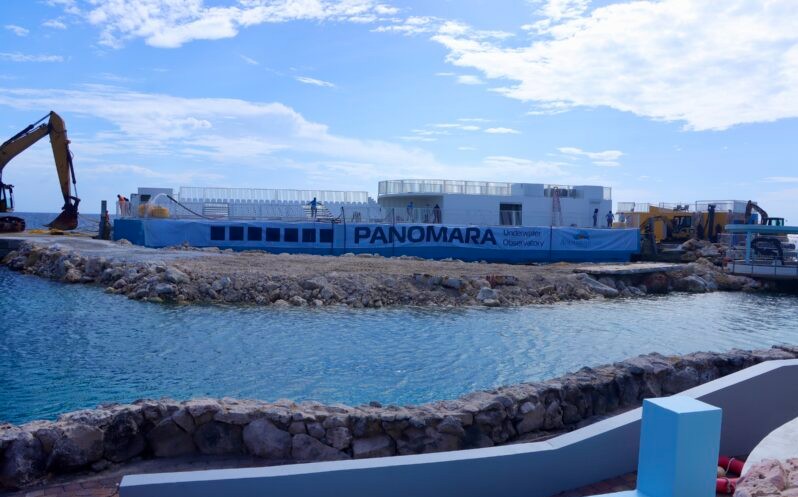
"The aquarium originally started with the idea of bringing people as close as possible to marine life. Panomara is the biggest step we have ever taken toward realizing that idea," the management added.
Unlike conventional aquariums, where marine animals are kept in enclosed exhibition tanks, Panomara will place visitors inside a submerged observation structure surrounded by the open sea.
The project is intended to offer an immersive experience while creating opportunities for education and greater awareness of Curaçao's marine environment.
Final Construction and Testing Still Required
Although Panomara has now reached its permanent location, the observatory is not yet ready to receive visitors.
During the coming months, the structure will undergo additional construction work, interior installation, and technical testing to prepare it for public use.
The Sea Aquarium expects to open the attraction in early 2027.
Once operational, access to Panomara will be included in the regular admission price to Curaçao Sea Aquarium, allowing visitors to experience the underwater observatory as part of their park visit.
New Attraction for Tourism, Education and Research
The Sea Aquarium expects Panomara to become a new landmark for Curaçao and an important addition to the island's tourism attractions.
Beyond its appeal to visitors, the observatory is intended to provide opportunities for marine education and scientific research.
By allowing people to observe coral reefs and marine organisms directly in their natural environment, the facility could help increase public understanding of marine ecosystems and the importance of protecting them.
The project also aims to contribute to sustainable tourism by combining visitor experiences with environmental awareness.
According to the Sea Aquarium, particular attention is being given to protecting the surrounding reef as the project moves toward completion.
The successful installation represents one of the most significant milestones in the development of Panomara, bringing Curaçao closer to introducing an underwater attraction that its developers describe as the largest of its kind in the world.
With the structure now in place, attention will shift to completing the remaining work and preparing the observatory to welcome its first visitors in 2027.