WILLEMSTAD – Curaçao now has a new digital platform dedicated to preserving and sharing the history of its neighborhoods, including the origins of their names, important historical events, and notable individuals who helped shape local communities.
The website, called “Rais di mi Pais” (Roots of My Country), officially became available online on October 22, 2026, through the DigitALL platform of Stichting Cultuurfonds Caribisch Gebied (CCG).
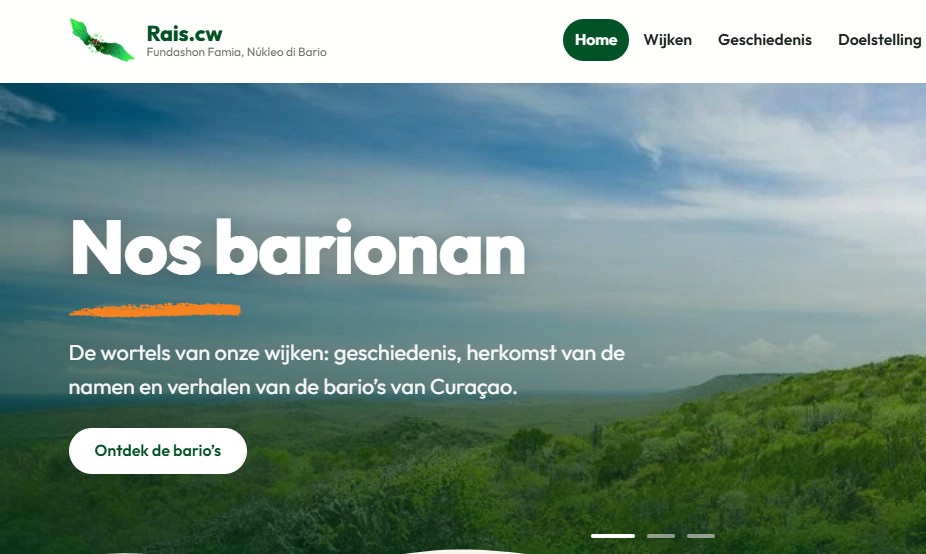
The initiative aims to make information about Curaçao's neighborhoods more accessible to residents, students, researchers, and anyone interested in learning about the island's cultural and historical heritage.
The project is primarily sponsored by CCG and was developed through a collaboration between Fundashon Famia Núkleo di Bario, which was responsible for producing the historical texts and photographs, and technology company B-Smart, which developed the website.
First 100 Neighborhoods Now Available
The October 22 presentation marked the soft launch of the platform, initially featuring information about 100 neighborhoods across Curaçao.
Additional neighborhoods will be incorporated into the website over the coming months, with the complete platform expected to receive its official launch in early 2027.
According to the organizers, the main objective is educational.
Although Curaçao has numerous neighborhoods with distinctive names and histories, many residents are unfamiliar with how these communities received their names, where their boundaries lie, or which significant events took place there.
The website seeks to address these gaps by documenting the historical development and cultural identity of individual neighborhoods.
Preserving Stories From Older Generations
To compile the information, researchers conducted interviews with residents, particularly older community members who possess firsthand knowledge of neighborhood history.
These personal accounts were combined with existing written sources to produce historical profiles that are as comprehensive as possible.
The organizers consider this approach particularly important because valuable information about Curaçao's communities is often preserved through oral traditions and personal memories.
By recording these stories, the project aims to safeguard knowledge that might otherwise disappear as older generations pass away.
The platform also highlights individuals who played important roles in their neighborhoods, as well as historical events that contributed to the development of local communities.
Educational Resource for Schools
Fundashon Famia Núkleo di Bario hopes the website will become an important educational resource, particularly for younger generations.
Schools and other educational institutions are being encouraged to use the platform to introduce students to the history of their neighborhoods and the broader development of Curaçao.
The organization believes that understanding local history can help young people develop a stronger connection to their communities and a greater appreciation for the island's cultural heritage.
In addition to written information and photographs, the website features three documentaries focusing on the neighborhoods of Tera Kòrá, Scharloo, and Mahuma.
These documentaries were previously produced by Fundashon Famia Núkleo di Bario with sponsorship from UNESCO Curaçao.
Their inclusion provides visitors with an additional opportunity to explore neighborhood history through audiovisual storytelling.
Papiamentu Version Planned
For practical reasons, the website is initially available in English and Dutch.
A Papiamentu version is planned for a subsequent phase of the project.
The English translation was sponsored by B-Smart, which also handled the technical development of the platform.
The organizers recognize the importance of eventually making the information available in Papiamentu, allowing more residents to explore the history of their communities in their own language.
Residents Invited to Contribute Historical Information
One of the project's objectives is to encourage community participation in documenting Curaçao's history.
Residents are invited to visit the website, explore the available information, and contribute additional historical details that may not yet have been included.
The organizers are particularly interested in receiving information about important neighborhood events, historical developments, and individuals whose contributions deserve recognition.
Residents can also identify people with extensive knowledge of particular neighborhoods who may be able to assist with further research.
According to Fundashon Famia Núkleo di Bario, these contributions can help expand the platform and improve the accuracy and completeness of its historical records.
The foundation expressed its appreciation to everyone who contributed to the project, particularly its principal sponsor, Stichting Cultuurfonds Caribisch Gebied, and B-Smart.
With the launch of Rais di mi Pais, Curaçao has gained a new resource for documenting its neighborhood history and making that knowledge available to present and future generations.
The website can be accessed at www.rais.cw.