WILLEMSTAD – Poverty remains one of Curaçao’s most pressing social challenges, with an estimated 30 percent of the population living below the poverty line, according to figures discussed during a seminar organized by the Association of Dutch Caribbean Economists, better known as the “Economenclub.”
The seminar brought together experts from the Centraal Bureau voor de Statistiek (CBS), the Sociaal-Economische Raad (SER), the Ombudsman of Curaçao and social advocate Ana Maria Pauletta to examine the realities of poverty on the island.
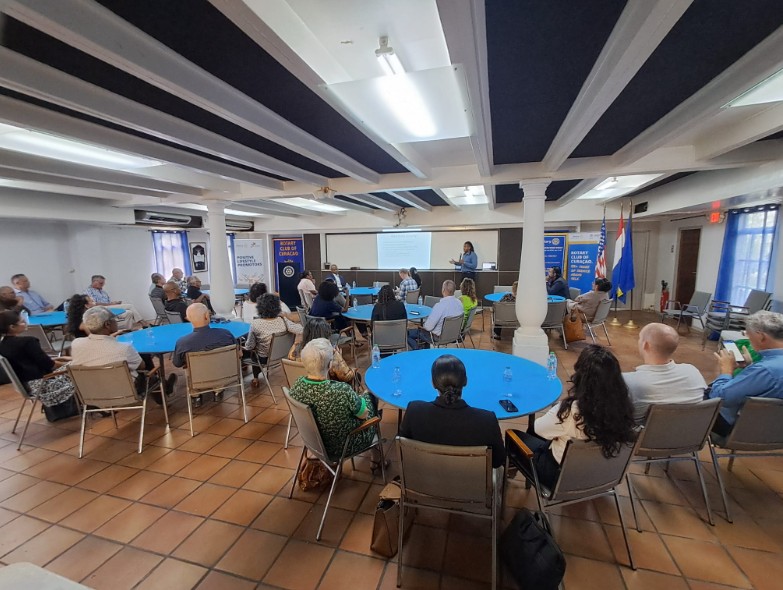
Conference on poverty
One of the key conclusions was that poverty in Curaçao is not limited to the unemployed.
According to participants, having a job does not always protect people from poverty, as wages often fail to keep pace with the cost of living.
That means economic growth alone is not enough to reduce poverty at the household level.
Experts warned that Curaçao’s poverty problem is broader and deeper than often assumed.
Using the Multidimensional Poverty Index developed by CBS, researchers identified several neighborhoods as among the hardest hit by poverty, including Paradijs, Scharloo, Wishi, Otrobanda and Westpunt.
Unlike traditional poverty measurements based only on income, the multidimensional index also measures access to housing, education, health and basic services.
That broader approach paints a more complex picture of hardship.
According to the SER, poverty should no longer be treated as a marginal issue or the sole responsibility of the Ministry of Social Development, Labor and Welfare.
Instead, it should be approached as a structural issue requiring coordinated action from all nine ministries.
Participants emphasized that poverty affects access to essential needs such as clean drinking water, food security, housing and financial stability.
Children growing up in poverty face disadvantages from the beginning, often affecting their education, health and future economic opportunities.
The discussions also highlighted the constitutional responsibility of government.
Article 23 of Curaçao’s Constitution states that guaranteeing livelihood security, fair wealth distribution and public welfare are core responsibilities of the government.
Experts say that responsibility requires more than policy discussions.
It requires action.
With inflation, rising fuel prices and growing pressure on household budgets, the seminar’s findings have renewed calls for stronger anti-poverty measures.
For many participants, the conclusion was clear: poverty in Curaçao is not an isolated problem. It is a national issue demanding urgent structural solutions.