WILLEMSTAD – Nearly 88 percent of the XCG 16 million offered by the Netherlands for a two-year extension of reform cooperation with Curaçao is directed toward the ministries of Finance and Education, raising concerns within the Pisas administration about the limited financial support available for other government priorities.
Prime Minister Gilmar Pisas highlighted the imbalance in a letter sent to the Curaçao Parliament on October 21, ahead of discussions on whether to extend the Mutual Arrangement for Cooperation on Reforms until April 2029.
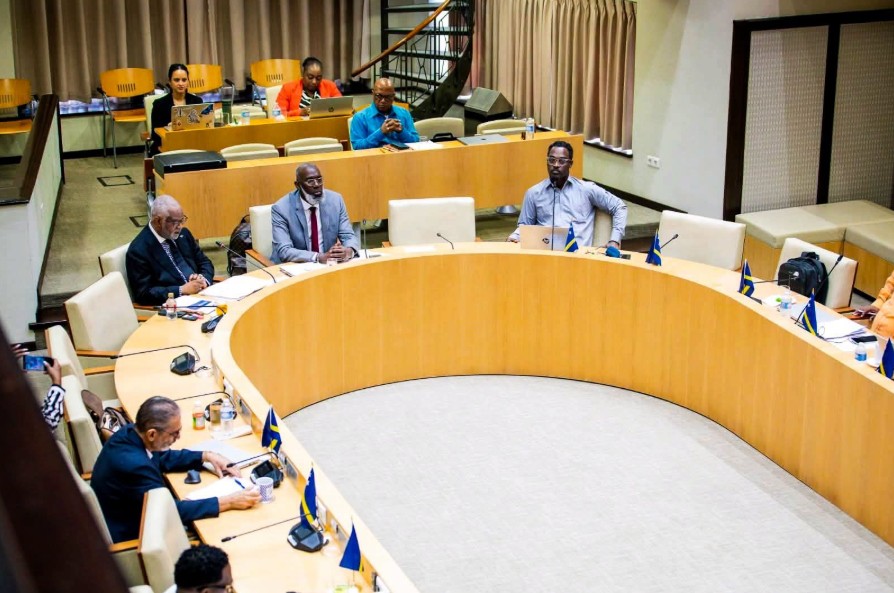
Prime Minister Pisas during the "landspakket" debate in Parliament
The Dutch government has offered EUR 8 million, approximately XCG 16 million, for selected reform projects during the proposed extension.
According to the prime minister, the allocation does not adequately reflect the broader development agenda submitted by Curaçao earlier this year.
The government presented 41 reform priorities to the Netherlands on June 10, covering nearly every ministry and addressing issues ranging from economic development and social protection to healthcare, education, digitalization, and public administration.
However, the Dutch offer is concentrated on modernization of the Tax Department, improvements in financial management, reforms within education, and digital signatures and payment systems.
The proposed distribution means that most of the available resources would support a relatively narrow group of government functions.
Although financial management and tax administration are important components of public-sector reform, the Curaçao government believes the allocation should better reflect the priorities identified across the administration.
Pisas has therefore questioned whether the Dutch proposal provides sufficient room for the government to address other areas it considers essential.
The issue is not simply the total amount of money being offered, but also the conditions determining how that funding can be used.
Under the proposed arrangement, Curaçao would receive financial support for selected reforms rather than unrestricted funding that could be redirected to other priorities.
The government would therefore have to decide whether accepting the offer is preferable to pursuing a broader reform agenda through its own resources or alternative sources of assistance.
The prime minister's letter also emphasizes that several reforms have already taken longer than initially anticipated because of limited implementation capacity, complicated administrative procedures, and the scale of the changes involved.
These challenges have affected the pace of implementation and remain relevant to decisions about future funding.
Pisas wants Parliament to consider whether concentrating most of the available Dutch resources in Finance and Education is consistent with Curaçao's current needs.
The proposed allocation also raises questions about how reforms in areas not covered by the Dutch offer would be financed if the existing agreement is extended.
The government must respond to the Netherlands by November 30, and parliamentary approval is required for the proposed extension.
Until a decision is made, the distribution of the XCG 16 million remains part of the broader discussion over the future direction of reform cooperation between Curaçao and the Netherlands.