WILLEMSTAD – The legacy of slavery remains a deeply sensitive and unresolved issue within the Kingdom of the Netherlands, a reality that became clear during Dutch Prime Minister Rob Jetten’s recent visit to Museo Tula on Curaçao.
Although Jetten received a warm welcome featuring traditional music and guided tours led by young museum guides, the message delivered by the museum itself was direct and uncompromising.
Museo Tula director Jeanne Henriquez personally told the Dutch prime minister that the museum continues to demand reparations for slavery. According to Henriquez, the history of slavery and colonial exploitation is not a closed chapter, arguing that its consequences still contribute to inequality and lost opportunities on Curaçao today.
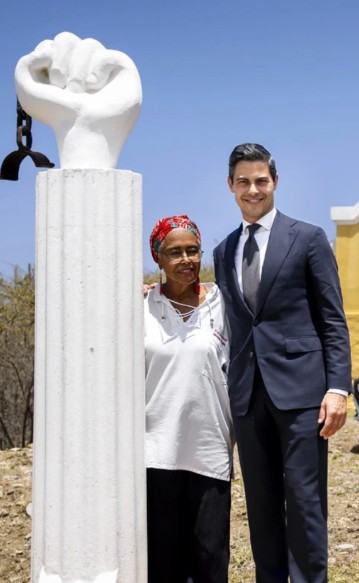
Museo Tula director Jeanne Henriquez and Dutch Prime Minister Jetten
Henriquez stated that reparations remain a necessary step toward what she described as a more just future for the island and the wider Caribbean.
During the visit, Prime Minister Rob Jetten acknowledged criticism surrounding the Dutch government’s recent handling of a United Nations resolution concerning slavery and the transatlantic slave trade.
Jetten admitted that coordination with Suriname and the Caribbean countries within the Kingdom should have been handled “much better.” The controversy erupted after the Netherlands abstained during a UN vote on a resolution describing the transatlantic slave trade as one of the gravest crimes against humanity.
According to Jetten, the Dutch government’s handling of the issue “did not deserve a beauty prize.”
The Dutch abstention sparked criticism across the Caribbean because the vote was cast on behalf of the entire Kingdom without prior consultation with Curaçao, Aruba and Sint Maarten.
The Dutch government has maintained that its abstention was mainly linked to legal concerns surrounding the wording of the resolution. The text proposed applying international legal principles retroactively and also called for discussions on reparations. Authorities in The Hague feared that supporting the resolution could potentially open the door to legal claims for financial compensation.
The issue has also created political debate in the Dutch Parliament. D66 Member of Parliament Heera Dijk requested a parliamentary debate on the Dutch voting decision, but a majority in the House of Representatives declined to support the request.
The developments continue to fuel broader discussions within the Dutch Caribbean about colonial history, reparatory justice and the role of the Caribbean countries within Kingdom decision-making structures.