ORANJESTAD, WILLEMSTAD – Minister of Economic Development Roderick Middelhof has taken a significant step toward eliminating visa requirements for citizens of the Dominican Republic entering Curaçao, securing support from Aruba during an official visit.
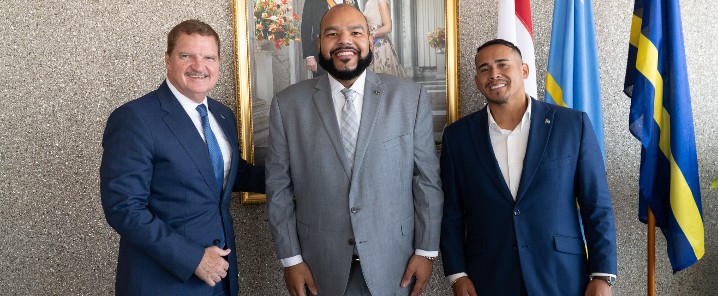
During meetings in Aruba, Middelhof held talks with Prime Minister Mike Eman and Minister of Tourism, Transport and Labor Wendrick Cicilia. The discussions focused on Curaçao’s efforts to remove visa restrictions for Dominican nationals.
Aruba expressed understanding of the importance of the initiative and confirmed its willingness to support Curaçao’s request within the Kingdom of the Netherlands. It was agreed that Aruba will prepare a formal letter backing Curaçao’s proposal to eliminate the visa requirement.
According to research by the Curaçao Tourist Board (CTB), removing the visa obligation could result in an estimated 80,000 additional visitors per year, providing a significant boost to the island’s economy, employment, and tourism sector.
Middelhof described the development as an important milestone in strengthening Curaçao’s economic position and expanding opportunities for growth.
Beyond the visa issue, the meetings also addressed broader cooperation between Aruba and Curaçao, particularly in tourism development. Both sides highlighted the importance of sustainable growth and strategic management of the sector.
A key concern raised by Minister Cicilia was the limited number of flights between Aruba and Curaçao. He emphasized the urgent need to improve air connectivity and called for engagement with airlines to increase flight frequency, noting that stronger connections are essential to support mobility, tourism, and economic ties.
Middelhof acknowledged the concern and indicated that Curaçao would take the request seriously, given the strategic importance of improved regional connectivity.
Prime Minister Eman also stressed the need for closer coordination among the Caribbean countries within the Kingdom. He called for structured dialogue to develop a unified position on the future of the Country Package, urging Aruba, Curaçao, Sint Maarten, and Bonaire to align their perspectives and speak with one voice within the Kingdom framework.
The discussions further explored opportunities to expand regional cooperation in areas such as public healthcare. One proposal involves countries specializing in specific medical fields to improve efficiency and reduce costs. Eman noted that Aruba is already positioning itself as a center for breast cancer treatment, suggesting that such specialization could reduce the need for expensive overseas care.
The meeting underscored the importance of stronger coordination and collaboration between Curaçao and Aruba, with both sides agreeing that more structured engagement will contribute to long-term economic development in the region.
With this outcome, Middelhof highlighted Curaçao’s commitment to achieving tangible results, opening new economic opportunities, and strengthening international partnerships.