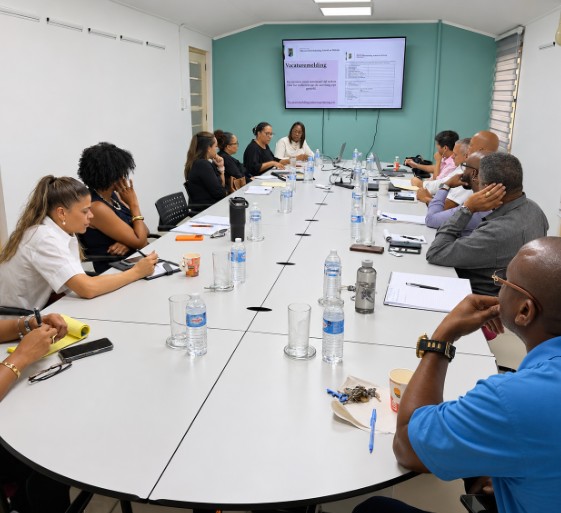
WILLEMSTAD – Fundashon Kas Popular (FKP) and the expert team behind the Mi Kas Awor housing program have held a series of strategic meetings with banks, major construction companies, elderly care institutions, and infrastructure specialists to prepare the next phase of Curaçao's housing initiative.
According to a statement issued on Monday, November 16, 2026, more than 16,000 families have registered for Mi Kas Awor, highlighting the considerable interest in opportunities for homeownership on the island.
The discussions, held during the previous week, focused on establishing the financial, social, technical, and infrastructural conditions necessary to develop a sustainable, long-term housing program.
The initiative aims to connect mortgage financing, construction capacity, infrastructure development, and the social needs of families seeking affordable housing.
Banks Discuss Mortgage Financing
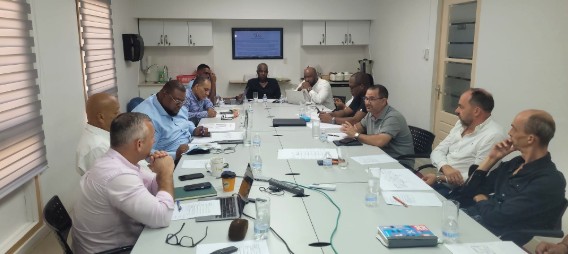
On November 12, FKP met with the Curaçao Bankers Association and its affiliated banks to present the financial model behind Mi Kas Awor and discuss the potential role of commercial banks in providing mortgage financing.
The discussions explored how financial institutions could participate in supporting families seeking to purchase homes through the program.
Both sides intend to continue their dialogue through a technical session focusing on payments during different stages of construction, monitoring construction progress, and defining the responsibilities of participating institutions.
FKP emphasized that these discussions remain preliminary and do not constitute mortgage approvals or financial commitments by the banks.
The meetings are intended to establish a clearer framework for potential future cooperation.
Housing Opportunities for Elderly Residents
Another important component of the discussions involved the development of housing suitable for elderly residents.
FKP met with representatives of major elderly care institutions to explore the possibility of developing adapted housing that combines accessibility with appropriate care services.
The objective is to examine how older residents can maintain their independence and dignity while living in safe communities that accommodate their changing needs.
The concept could eventually contribute to housing solutions that allow elderly residents to remain independent for longer while having access to necessary support.
However, FKP stressed that the initiative remains in the exploratory phase, and no final decisions have been made.
Major Construction Companies Consulted
FKP and Mi Kas Awor also held meetings with representatives of MNO Vervat, Dusron, Jansen de Jong Groep, and RCS.
The discussions focused on the construction industry's capacity to support a long-term housing development program.
Among the issues examined were workforce availability, building materials, logistics, construction capacity, and infrastructure requirements.
These factors will play an important role in determining how future housing developments can be organized and implemented.
FKP clarified that the meetings do not represent contractual commitments.
Any future participation by construction companies must comply with applicable legal procedures and competition regulations.
New Website Simplifies Registration Process
As part of preparations for the next phase, FKP has also launched a redesigned Mi Kas Awor website.
The platform, available at www.mikasawor.com, provides information in Papiamentu, Dutch, and Spanish.
Visitors can find details about the housing model, pilot project, proposed locations, required documentation, and the application assessment process.
Interested families can access the registration portal, while existing FKP tenants have a separate digital platform for their services.
The website is intended to make information more accessible and reduce the administrative burden associated with applying for housing.
Five Public Institutions Connected to Digital Services
One of the most significant developments involves the integration of digital services from five public institutions into the FKP–Mi Kas Awor application process.
These institutions are the Social Insurance Bank (SVB), Tax Inspectorate, Civil Registry (Kranshi), Land Registry (Kadaster), and Ministry of Social Development, Labor and Welfare (SOAW).
The objective is to simplify the verification of applicants' information and reduce the need for families to visit multiple government offices.
Through an application programming interface (API) connection that is already operational in a testing environment, FKP can verify relevant applicant information directly with SVB.
The Tax Inspectorate can verify income information with the applicant's authorization.
Families can also request the specific Civil Registry extract required for Mi Kas Awor online.
Through the Land Registry's digital services, applicants can request documentation confirming whether they own registered real estate.
Individuals receiving social assistance can request the necessary declaration digitally through SOAW.
According to FKP, these improvements represent an important step toward modernizing public services in Curaçao.
The digital connections are expected to reduce waiting times, administrative procedures, and unnecessary visits to government offices.
They will also allow families to complete a substantial portion of the registration process from home using a computer or mobile phone.
FKP expressed appreciation to the directors, department heads, and civil servants of the five institutions for their cooperation in developing these digital services.
Infrastructure Planning for the Next 10 to 15 Years
Beyond financing and construction, FKP is examining the infrastructure investments required to support future residential developments.
The organization held further discussions with Koert van Buiren of Economisch Bureau Amsterdam concerning the infrastructure needed for housing expansion.
The next step will involve identifying infrastructure requirements for individual development locations.
FKP intends to prepare a technical and financial matrix that could contribute to Curaçao's National Investment Agenda for the next 10 to 15 years.
This approach is intended to ensure that housing developments are considered alongside the infrastructure needed to support sustainable residential communities.
International Expertise Supports Housing Strategy
The preparations build on more than three years of work involving local and international experts.
Among those contributing to the development of the Mi Kas Awor model is Luis Felipe Henao Cardona, Colombia's former Minister of Housing.
Henao has provided expertise in housing development and public policy as part of the program's preparation.
According to FKP, he was recently appointed manager of Fondo Milagro in Colombia, where he is responsible for leading reconstruction efforts in regions affected by the August 10, 2026 earthquake.
His involvement reflects the program's efforts to draw on international experience in housing development and large-scale planning.
Preparations Do Not Guarantee Housing Approvals
Despite the progress reported by FKP, the foundation emphasized that the strategic meetings do not anticipate or replace decisions and approvals that remain pending.
The discussions with banks, construction companies, care institutions, and infrastructure experts are intended to strengthen the technical and institutional foundation of the program.
The fact that more than 16,000 families have registered also does not mean that all applicants have been approved for housing or mortgage financing.
Applications will still need to undergo the relevant assessment procedures.
FKP maintains that the ultimate objective of Mi Kas Awor is to improve access to homeownership while supporting the development of safe, accessible, and sustainable communities throughout Curaçao.
With preparations advancing on several fronts, the next phase will be important in determining how the program translates its extensive registration interest into concrete housing opportunities for families on the island.