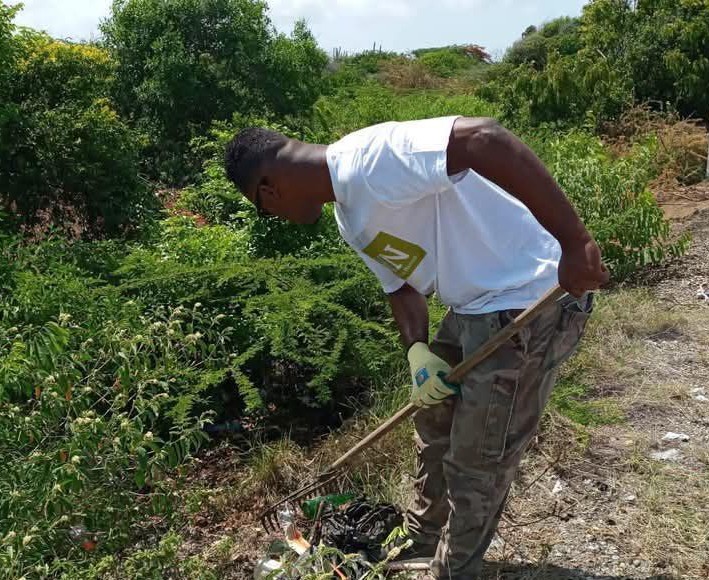
WILLEMSTAD – Ishahier Felipe Monte has introduced a proposal aimed at actively involving citizens in cleaning up Curaçao by financially rewarding people who collect and deliver waste to approved disposal points.
The proposal, presented by the Movementu Futuro Kòrsou (MFK) parliamentarian, would create a system where residents are paid based on the amount of trash they collect and hand over at the landfill or designated waste collection centers.
Ishair Monte
Under the plan, compensation would be calculated per kilogram of waste delivered.
Monte says the idea is designed to rethink environmental policy by turning waste collection into a community-driven effort rather than relying solely on government enforcement and cleanup operations.
“A clean country does not begin only with rules and control, but with citizens who feel involved in the cause. If we stimulate good behavior, a positive movement can grow from within the community itself,” Monte said.
The proposal aims to address littering and waste accumulation in neighborhoods, public spaces and along roadways, while also strengthening civic responsibility and environmental awareness.
Monte is asking the government to explore the creation of a dedicated fund to finance the initiative and support the payment system.
The proposal also includes the possibility of creating a structured weighing and registration system to monitor the waste brought in by participants.
According to Monte, the system could differentiate between types of waste to encourage recycling and environmentally responsible disposal.
That could include incentives for recyclable materials or waste categories that have added environmental value when separated properly.
Beyond environmental benefits, Monte says the plan could also create opportunities for additional income, particularly for young people and individuals looking for work.
He believes the initiative could motivate more residents to become actively involved in maintaining cleaner neighborhoods while generating small but meaningful financial support.
Monte stressed that the proposal must be carefully developed to ensure proper implementation, oversight and sustainable funding.
“This is not about putting a bandage on a bigger problem, but about creating a structural solution where government and community take responsibility together for our environment,” he said.
Illegal dumping and littering remain longstanding challenges on Curaçao, with repeated complaints about waste along roads, vacant lots and public spaces.
Monte argues that direct citizen participation could help strengthen existing cleanup efforts and build a stronger culture of environmental ownership.
If approved, the initiative would represent a new approach to public cleanliness on the island—one that combines environmental policy, community participation and economic incentive.