From an initiative to rescue him from obscurity to the responsibility of keeping his memory alive
On October 16, 1817, Manuel Carlos Piar was executed by firing squad in Angostura, now Ciudad Bolívar. A Curaçao-born man who had made an important contribution to Venezuela’s struggle for independence was put to death following a military trial within that same independence movement. Tomorrow, 209 years later, we commemorate his death. Yet the condition of Plasa Piar confronts us with a painful question: how much respect do we actually show for the cultural heritage that bears his name?
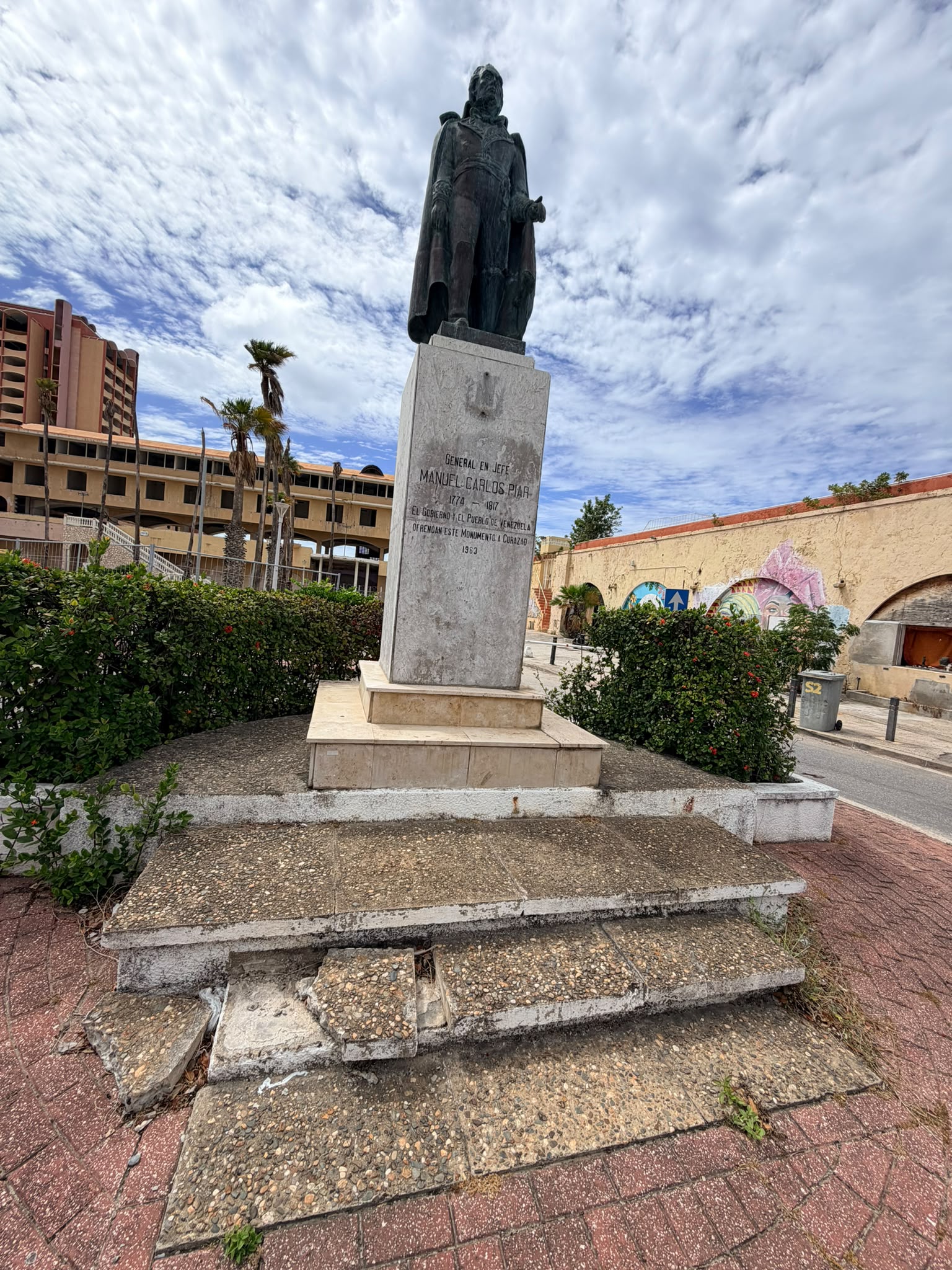
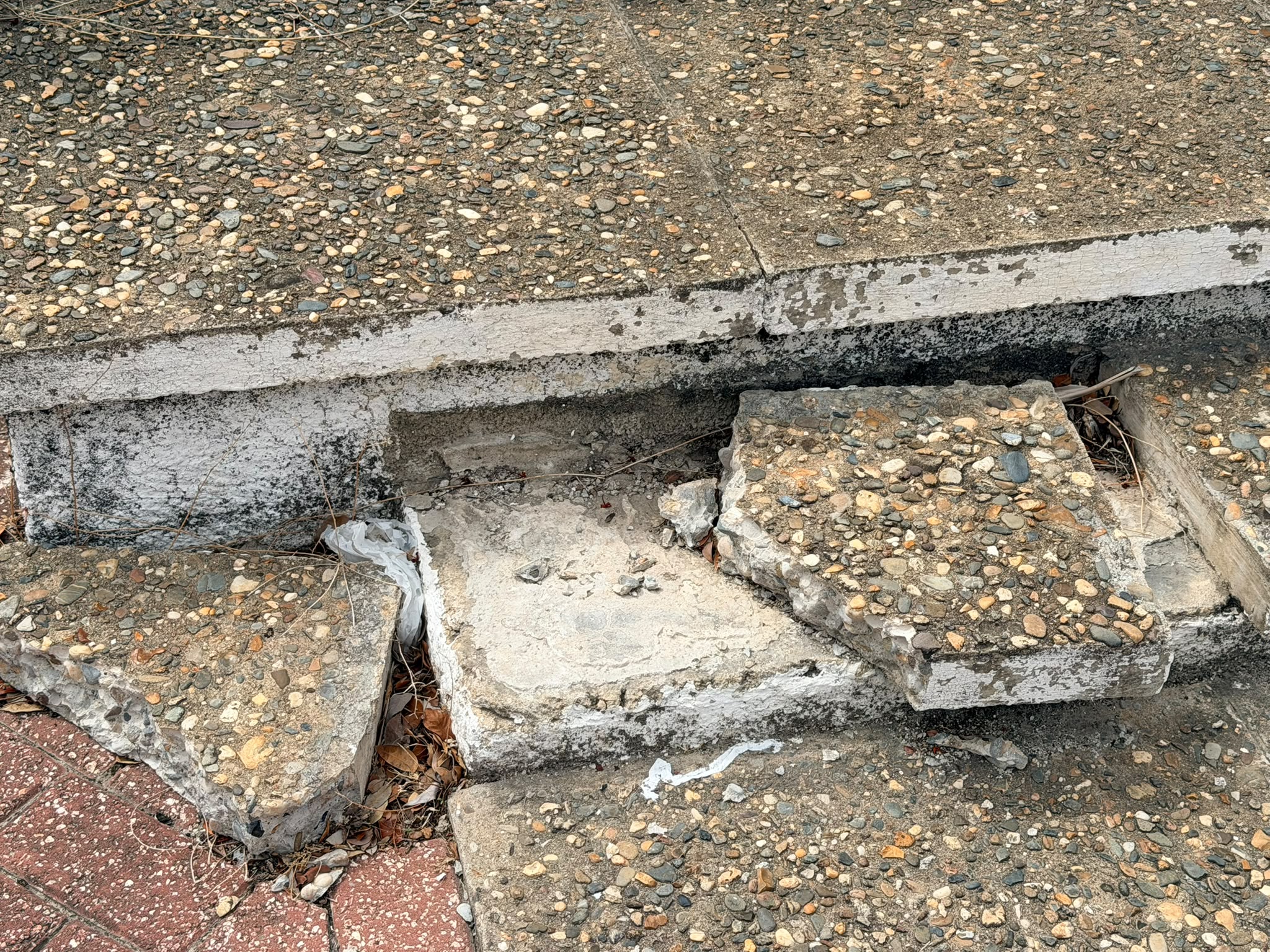
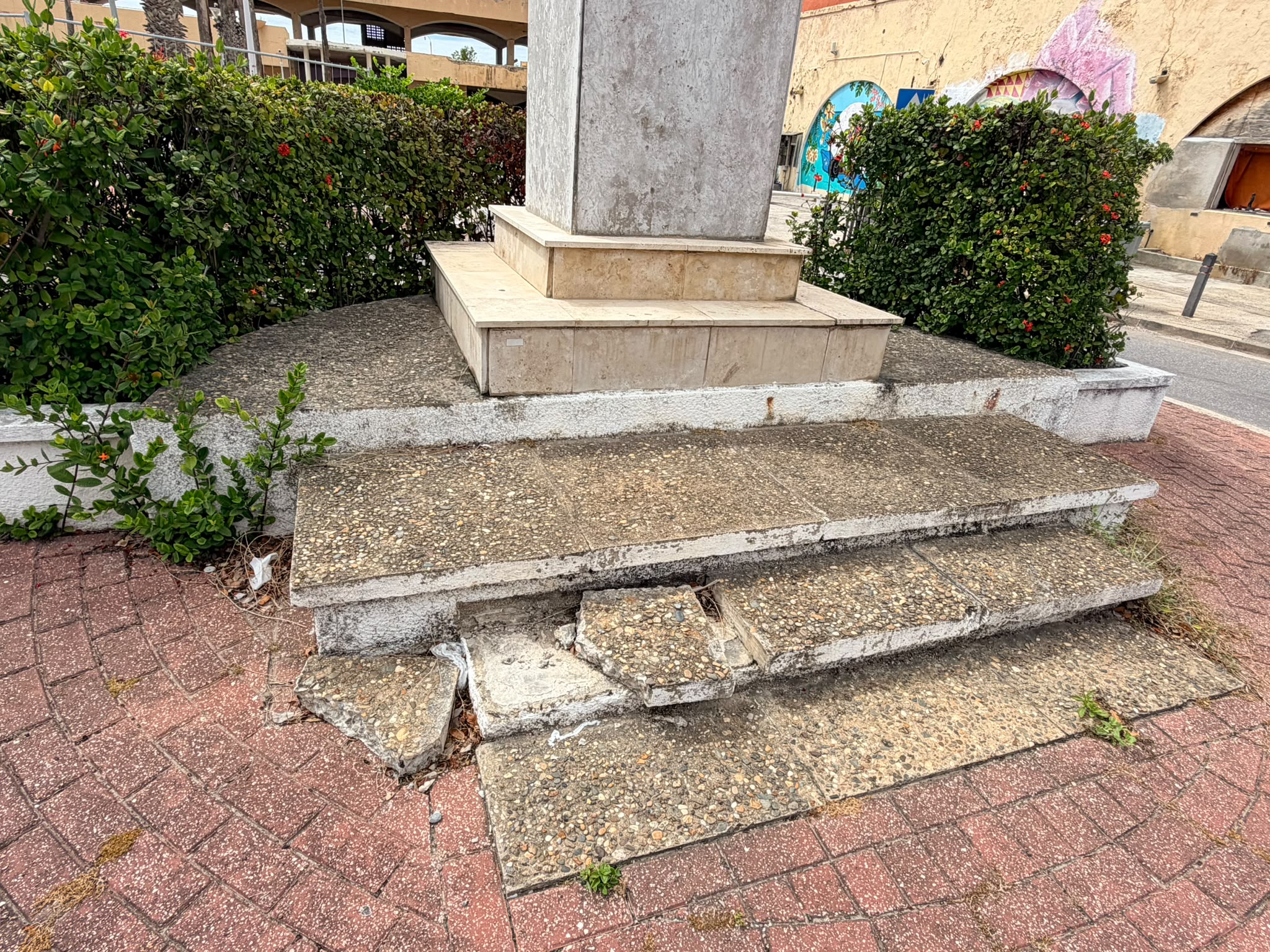
That question arises from repeated observations and publications. According to our observations, neglected plants, litter, overdue painting and a damaged platform mark the site. In our assessment, cars parked there contribute to the damage. We have also repeatedly raised the issue of the copper emblems stolen from the monument. To our knowledge, those reports have not resulted in a visible investigation or a publicly explained response.
On February 4 and 5, 2025, we published articles on manuelcarlospiar.com addressing neglect, parking, damage and components reported stolen. Our appeal for restoration is therefore on record. What the responsible authorities subsequently did remains insufficiently clear to us.
To understand what is at stake, we must return to the origins of the square and its monuments.
On February 7, 1959, the Amigoe newspaper’s Gezien column discussed the Island Executive Council’s decision to name the square in front of the new hotel “Plaza Piar.” The writer welcomed that recognition while criticizing how little the population knew about Piar. He called for research into the original trial documents and for a worthy statue. Naming the square was therefore part of a broader effort to restore Piar’s place in historical awareness.
According to later reporting, Spectator, the school magazine of Radulphus College, helped encourage the establishment of the Stichting Standbeeld Piar, the Piar Statue Foundation. Young people and education thus played a role at the beginning of this initiative. In 1962, a jury selected a design by Dutch sculptor Piet Esser.
According to Amigoe of September 9, 1966, the commission had been awarded in May 1962. The Netherlands Antilles government and Curaçao’s island government each contributed five thousand guilders, while the business community contributed slightly more than five thousand. The monument was a jointly funded undertaking.
But opposition arose to Esser’s portrayal. The newspaper described a Piar facing the firing squad. Curaçao’s Sociedad Bolivariana objected. Venezuelan visitors subsequently offered another statue, which was unveiled on Plaza Piar on July 5, 1963.
Here we must distinguish between two histories. The Venezuelan statue on Plasa Piar is attributed to Santiago Poletto Lamberti. Esser’s sculpture eventually found a home at the Curaçaosch Museum. An inventory of sculptures gives 1973 as its installation year; that date still requires confirmation from the museum archives. The museum itself lists the Piar statue in front of its main entrance.
An interview with Esser in Amigoe on September 20, 1966, helps us understand the dispute more clearly. The sculptor explained that his intention was precisely to portray Piar resisting injustice. In his conception, the raised arms expressed a forceful defence. He denied intending to diminish Piar’s dignity and maintained that he had not altered the previously approved design.
Esser also corrected the report that the sculpture was lying somewhere on a Rotterdam quay. It was at the bronze foundry in the Haarlemmermeer. His disappointment concerned the failure to install it and the lack of replies to his letters.
The recovered newspaper photograph makes that artistic choice visible: a man with raised arms and a face turned upward. My reading is of a human being defending himself. Such a portrayal also asks the viewer to consider the circumstances of his condemnation.
This raises a fundamental question. Who determines how a historical figure may be represented? The Sociedad Bolivariana could express its objections. But the sources found do not establish that it possessed any formal authority to prohibit installation on its own. To assess the decision-making process, we need the terms of the commission, correspondence and board minutes. Documented protest is not proof of a legal prohibition.
Responsibility therefore also rested with those who commissioned the work and the officials involved. Who had approved the design? Who decided to postpone installation? And why did a paid-for work of art remain without a destination for so long?
On August 9, 1967, Amigoe reported that Esser’s sculpture had already spent months in a Public Works warehouse on Curaçao. Meanwhile, the Island Executive Council had commissioned Johan Hartog to write a biography of Piar. His life was receiving renewed attention while his statue still awaited placement.
The chronicle by Antonio José Valdez Medérico dated October 13, 2024, which prompted our present reflection, also brings Piar back into focus. It describes his military career, the victory at San Félix and the path to his trial and execution. That history deserves study, including critical verification of its individual details. Commemoration requires us to take both his contribution and the difficult questions surrounding his death seriously.
This brings us to today’s responsibilities. Where is the Ministry of Education, Science, Culture and Sport in fulfilling its role in passing on our history and developing our national consciousness? What do our students learn about Manuel Carlos Piar, his contribution to Venezuela’s independence and the debate surrounding his monuments on Curaçao? How are historical sources being made accessible to teachers, students and the public?
The initiative that emerged from a school magazine makes these questions especially pertinent. More than sixty years ago, an educational community helped set a movement in motion to make Piar visible. How are we giving that effort substance and continuity today?
Education, scholarly research and culture can reinforce one another here. Research helps distinguish documented facts from inherited accounts. Education teaches young people to understand sources and ask questions. Culture creates opportunities to make that history visible, discuss it and pass it on.
A national identity gains substance when people can investigate their history, including its painful and contested dimensions. The two Piar statues offer a concrete opportunity: two portrayals of the same man, expressing different ideas about heroism, dignity and injustice. They can open conversations about who wrote our history and who decides which memories receive a place in public space.
We may therefore expect a visible contribution from the ministry: teaching materials grounded in verified sources, cooperation with the National Archives and the Curaçaosch Museum, and a commemorative programme involving schools and the community. The physical preservation of Plasa Piar also requires coordination with the responsible custodians and public services.
As of October 15, 2026, no publicly confirmed programme for the annual commemoration has come to our attention. This calls for clarification from the responsible cultural authorities. A lack of information does not, by itself, prove that nothing is being organized. But a commemoration intended to reach the community requires timely and visible communication.
Meanwhile, the condition of Plasa Piar demands concrete answers. Who manages the monument? What has been done about the reports of missing emblems? When will the platform and its surroundings be restored? How will further damage from parking be prevented? And if relocation or redevelopment is being considered, where can the public inspect those plans?
Those who draw on cultural heritage to strengthen national consciousness must also help ensure that this heritage is understood, maintained and passed on. The condition of Plasa Piar calls for that responsibility to be put into practice.
Naming a square, unveiling a statue and laying a wreath all have meaning. That meaning remains alive when maintenance, research, education and public accountability follow.
Rescuing Piar from obscurity was once a deliberate choice. Allowing him to disappear again behind litter, damage and official silence would be a choice made by our generation. Our respect for cultural heritage must become visible in what we do to preserve it.
Tico Vos
RAIS | Rekobrando Através di investigashon Spiritu di Pasado