WILLEMSTAD – Member of Parliament Suzanne Camelia-Römer of opposition party MAN wants the Curaçao government to consider introducing annual wage agreements, structured salary scales, and tax incentives for private businesses that reward employees through higher wages.
The proposals form part of written parliamentary questions submitted to Minister of Social Development, Labor and Welfare Charetti America-Francisca, as the opposition party seeks to establish a national framework for salary development.
Camelia-Römer argues that employees should have opportunities to advance financially based on their experience, professional development, and performance, rather than remaining dependent on adjustments to the statutory minimum wage.
According to the parliamentarian, many private sector workers spend years earning the same basic salary even after completing additional training or taking on greater responsibilities.
She believes the government should encourage employers to establish transparent systems that allow employees to progress to higher salary levels.
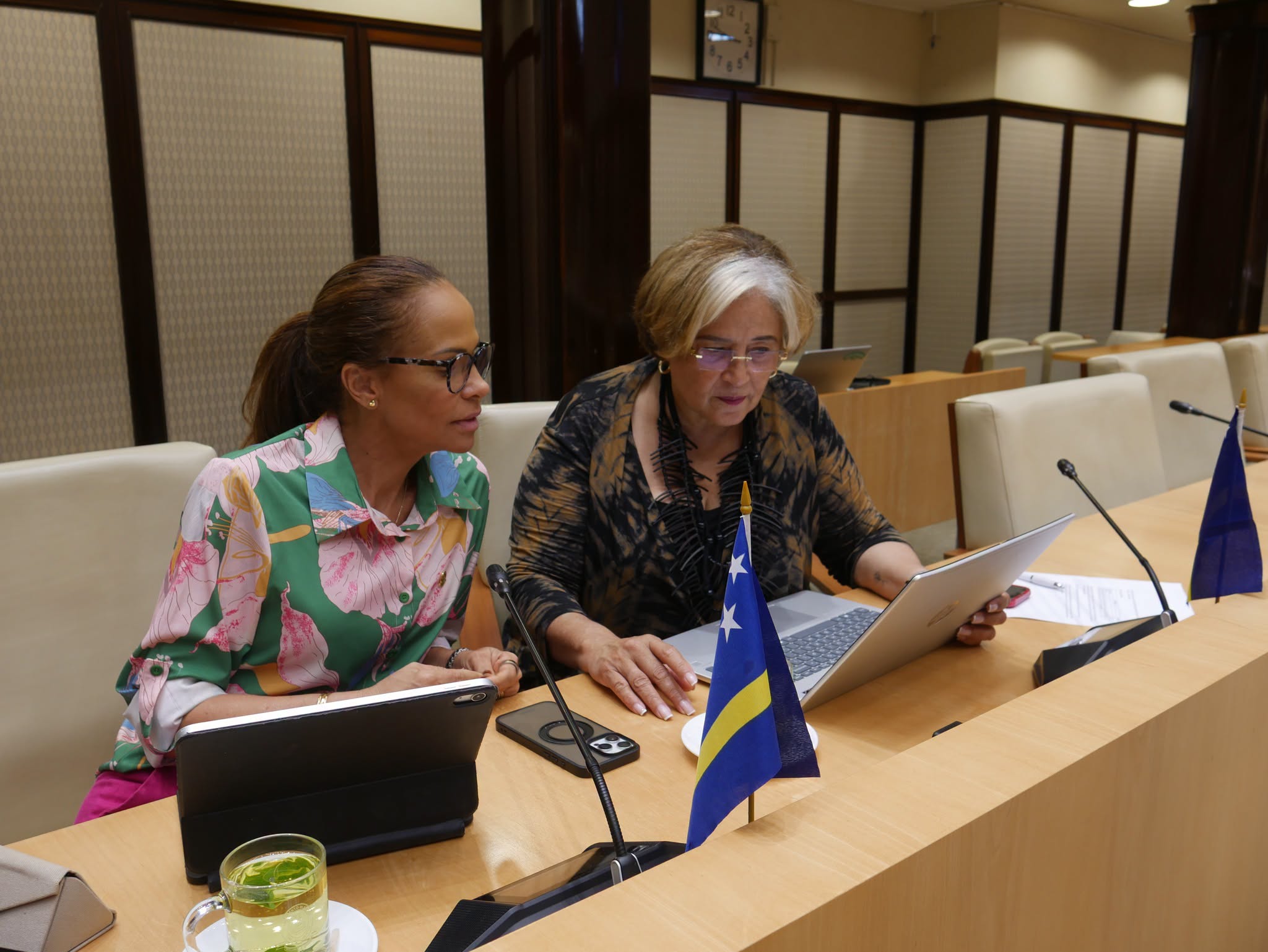
Opposition MPs Giselle Mc William and Suzanne Camelia-Romer
Annual Wage Agreements Between Employers and Unions
One of Camelia-Römer's main proposals is to request advice from the Social and Economic Council (SER) on establishing nationwide agreements for annual wage development.
Under such an approach, the government, employers, and trade unions could negotiate arrangements based on economic indicators and developments in the labor market.
The parliamentarian suggests using data from the Central Bureau of Statistics (CBS) and the Central Bank of Curaçao and Sint Maarten (CBCS) to help determine appropriate wage adjustments.
This would create a more structured approach to salary development, taking into consideration economic growth, inflation, and other relevant indicators.
The proposal does not specify a fixed annual percentage increase. Instead, Camelia-Römer wants the government to examine whether a system of recurring wage agreements could provide employees with greater financial stability.
Salary Scales for Larger Companies
Another proposal involves introducing salary scales within larger private sector companies.
Under such a system, employees would have clearly defined opportunities to move to higher pay levels based on their years of service, job performance, and additional education or professional qualifications.
Camelia-Römer believes this could help address situations in which experienced employees continue receiving minimum wages despite their professional development.
Structured salary scales could also provide greater transparency about how salaries are determined and what employees must do to qualify for increases.
The parliamentarian wants the government to examine whether such arrangements could become part of a broader national wage policy.
Tax Incentives for Employers
MAN-PIN is also asking the government to consider tax incentives for businesses that introduce demonstrable wage policies allowing employees to share in their companies' financial success.
Under the proposal, employers that provide structured salary growth or link employee compensation to business performance could potentially qualify for tax benefits.
Camelia-Römer wants Minister America-Francisca to investigate whether such incentives would be feasible.
The proposal remains an idea for government consideration and has not been presented as an approved tax measure.
Questions About Lower Minimum Wages for Young Workers
The parliamentarian is also pressing the government on the unequal minimum wage rates that apply to younger employees.
According to MAN, legislation intended to eliminate the difference in statutory minimum wages for workers aged 18 through 20 has still not entered into force.
Camelia-Römer wants clarification about the delay and when the government intends to implement the legislation.
The issue forms part of the party's broader argument that workers should receive fair compensation regardless of whether they are employed by the government or a private business.
MAN-PIN maintains that the country's economic development should create opportunities for improved living standards throughout the workforce.
The parliamentary questions now place the responsibility on Minister America-Francisca to clarify the government's position on national wage agreements, salary progression, employer incentives, and the minimum wage rules affecting younger workers.