WILLEMSTAD – Klein Curaçao has begun the 2026 seabird breeding season on a promising note, with conservationists reporting the first-ever nesting of the Royal Tern on the island and the possible arrival of the Brown Noddy as a breeding species.
According to conservation organizations, the small island has become Curaçao's most important and species-rich breeding site for seabirds and is internationally recognized as a protected Ramsar wetland.
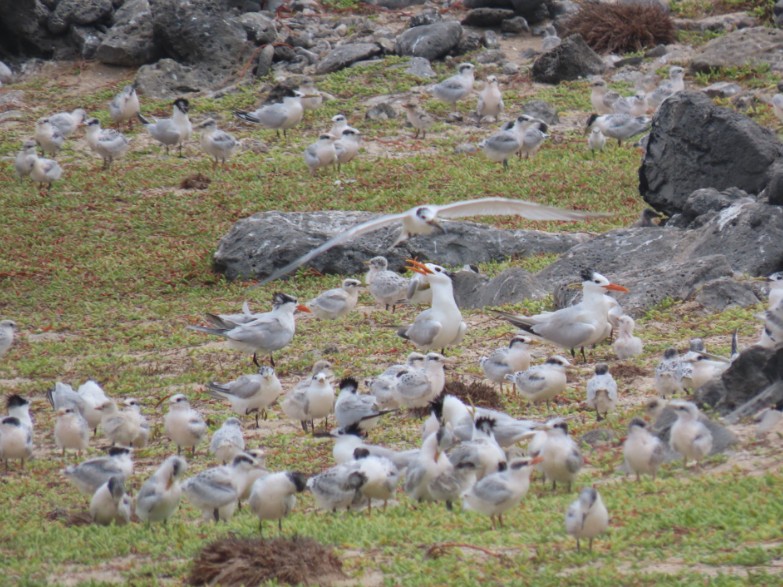
Hundreds of Sandwich Terns (Thalasseus sandvicensis) are currently nesting on Klein Curaçao, alongside dozens of Laughing Gulls (Leucophaeus atricilla) and Common Terns (Sterna hirundo). This year also marks the first confirmed breeding of the Royal Tern (Thalasseus maximus), while conservationists are monitoring what could become the first recorded nesting of the Brown Noddy (Anous stolidus).
Ecological Recovery Continues
The island's ecological recovery follows decades of conservation work and has been documented in a scientific study published in the Journal of Field Ornithology in 2023, led by marine researcher Dolfi Debrot.
According to the study, goats were removed from Klein Curaçao in 1996, followed by the eradication of feral cats in 2001. Between 2000 and 2005, extensive restoration efforts were carried out, including the replanting of native vegetation.
Before those restoration measures, seabird breeding activity had almost disappeared. For decades, the Least Tern (Sternula antillarum) was the only seabird known to nest on the island.
Field observations conducted in 2021 and 2022 documented nine breeding species of seabirds and coastal birds. Two of those—the Sooty Tern (Onychoprion fuscatus) and the Bridled Tern (Onychoprion anaethetus)—were recorded breeding in Curaçao for the first time.
The number of breeding pairs has increased dramatically over the years, growing from a maximum of approximately 140 pairs of a single species in 2002 to more than 430 breeding pairs in 2021 and around 650 pairs in 2022.
Historical records indicate that centuries ago Klein Curaçao supported large seabird colonies, including boobies.
Visitors Asked to Protect Nesting Birds
Conservationists stress that the breeding colonies remain highly vulnerable.
Most tern species build shallow nests directly on the ground, making their eggs and chicks difficult to see because of their natural camouflage. As a result, nests can easily be damaged if visitors unknowingly walk through breeding areas.
Loose dogs and cats also pose a threat, while the island's intense sunshine can quickly overheat eggs and young chicks if adult birds are forced to abandon their nests after being disturbed.
Monitoring and Conservation Efforts
Klein Curaçao Conservation (KCC) coordinates weekly monitoring of the island's bird populations in cooperation with participating charter boat operators, conservationist Rob Wellens and a team of volunteers.
The organization has installed signs around sensitive breeding areas to keep visitors at a safe distance and is continuing efforts to control rat populations, which prey on unattended eggs and chicks.
Depending on the species, the breeding season runs from May through the end of September.
KCC, local tour operators and the Government of Curaçao are urging visitors to respect restricted areas and cooperate with conservation measures to ensure the continued recovery of one of the island's most important wildlife habitats.