PHILIPSBURG – Curaçao and its partners within the Kingdom of the Netherlands have reaffirmed their commitment to attracting, retaining and developing Caribbean talent through a new Brain Gain agenda covering 2027 to 2030.
The agreement was reached during the Four-Country Ministerial Consultation on Education, Science and Culture, held in Philipsburg, Sint Maarten, on November 17 and 18, 2026.
Curaçao's Minister of Education, Science, Culture and Sports, Sithree van Heydoorn, attended the meeting with his delegation, joining representatives from Aruba, Sint Maarten and the Netherlands. Bonaire, Saba and Sint Eustatius were also represented.
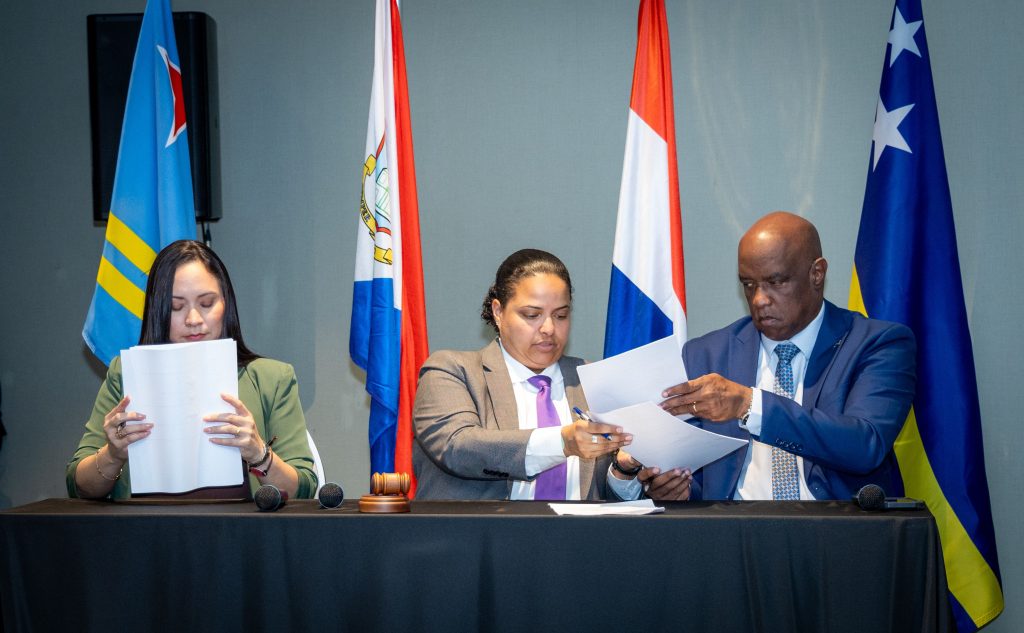
Three ministers of Education of the Dutch Caribbean
The Brain Gain initiative is designed to encourage Caribbean professionals and graduates to return to their home countries, remain connected to their communities and contribute their knowledge and expertise to local development.
The ministers agreed on a 2027–2030 work agenda containing eight priority areas intended to create a more coordinated and structural approach involving governments, educational institutions and the private sector.
The initiative reflects a shared recognition that education policies should not focus exclusively on helping students obtain qualifications, but also on creating opportunities for their knowledge and skills to benefit their home countries.
Connecting Education to Employment and Economic Development
The new Brain Gain agenda aims to strengthen cooperation between educational institutions, government agencies and businesses.
Such cooperation is intended to improve the connection between education and the needs of the labor market, while supporting the development of local professional expertise.
For Curaçao, this approach could help address challenges related to retaining qualified professionals and ensuring that young people see opportunities to build careers on the island.
The ministerial discussions emphasized the importance of human capital development, innovation and long-term socioeconomic growth.
Although the eight priority areas were confirmed during the consultation, the Ministry of Education's announcement did not provide a detailed breakdown of each area.
The participating countries will need to translate the agenda into concrete initiatives during the coming years.
Greater Cooperation in Science and Cultural Heritage
The ministerial consultation also addressed stronger cooperation between higher education institutions and scientific research organizations throughout the Kingdom.
In addition, the countries discussed ways to improve collaboration in culture and cultural heritage, with an emphasis on making more effective use of available expertise and resources.
Special attention was given to safeguarding intangible cultural heritage, including traditions, practices and forms of cultural expression passed down through generations.
One of the most significant cultural objectives is the preparation of the first joint Caribbean nomination for UNESCO recognition.
The participating countries are working toward submitting this nomination in March 2029.
The initiative is intended to strengthen cooperation in protecting and promoting the Caribbean's shared cultural heritage.
Curaçao Calls for Long-Term Results
Minister Sithree van Heydoorn used the consultation to advocate a more results-oriented approach to cooperation within the Kingdom.
He emphasized that the ministerial meetings should increasingly focus on strategic challenges affecting the future of education, workforce development, innovation and economic progress.
Van Heydoorn proposed more frequent strategic discussions among the ministers to ensure that cooperation produces lasting benefits for the participating countries.
He also supported Aruba's proposal to structurally include representatives from Bonaire, Saba and Sint Eustatius in future consultations.
The two-day meeting concluded with a renewed commitment to cooperation in education, science and culture, including the implementation of the Brain Gain agenda and continued preparations for the joint UNESCO nomination.