CARACAS – Venezuelan National Assembly President Jorge Rodríguez and opposition leader Dinorah Figuera held a high-profile meeting in Caracas on Thursday, opening what appears to be a new channel of political dialogue between the government and opposition sectors after years of confrontation.
The meeting took place at the Federal Legislative Palace and is being described as one of the most significant political contacts between the ruling movement and opposition representatives in recent years. According to statements issued after the meeting, both sides agreed to move forward with a technical and political dialogue process focused on institutional and electoral issues, including the future composition of Venezuela's National Electoral Council (CNE).
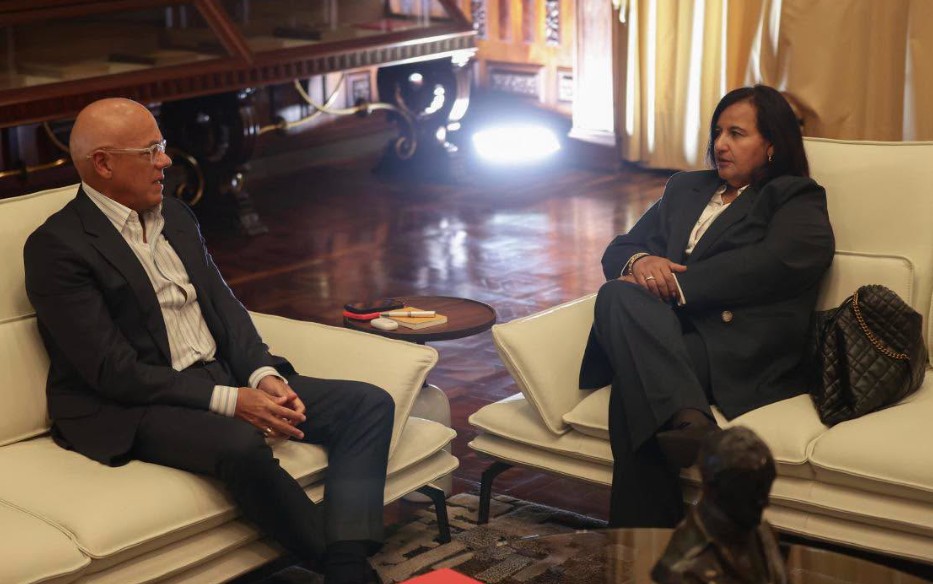
Figuera's return to Venezuela is particularly noteworthy. The opposition politician, who had been living in Spain for several years after leaving the country amid political tensions, arrived in Caracas this week as part of a broader effort aimed at promoting negotiations between different political sectors. Prior to the meeting, she had indicated that she would also hold discussions with U.S. representatives during her visit.
According to information released by Venezuela's National Assembly, the talks are intended to establish a framework for strengthening democratic institutions, promoting political participation, and advancing dialogue on electoral reforms. While neither Rodríguez nor Figuera provided extensive details after the meeting, official statements described the discussions as a first step toward strengthening democracy and consolidating peace in the country.
The meeting has attracted international attention. The U.S. State Department publicly welcomed the talks, describing them as an important step toward rebuilding democratic institutions and creating conditions for broader political participation. Washington indicated that discussions surrounding the National Electoral Council and electoral guarantees are among the key issues under consideration.
Political analysts say the image of Rodríguez and Figuera seated at the same table carries significant symbolic weight. For years, the two represented opposing political camps that frequently accused each other of undermining Venezuela's democratic institutions. Their willingness to engage in direct dialogue is being viewed by some observers as a potential sign of a changing political landscape.
The discussions come amid broader efforts to reshape Venezuela's political system following months of international pressure for institutional reforms and electoral guarantees. Whether the dialogue will lead to concrete agreements remains uncertain, but the meeting marks the most visible public rapprochement between government and opposition figures in several years.
For now, both sides have agreed to continue discussions through a newly established technical and political working group, signaling that the process may extend beyond a single meeting and could play a role in determining Venezuela's political future.