WILLEMSTAD – Young people at Curaçao’s Juvenile Detention and Correction Center (JJIC) have designed their own school bags as part of a collaborative project in which their ideas were turned into finished products by clients of the Curaçao Detention and Correction Center (SDKK).
The project, carried out by JJIC, Fundashon Amigunan di G.O.G. and SDKK, combines creativity, vocational skills and rehabilitation under the theme “Design Your Own Bag.”
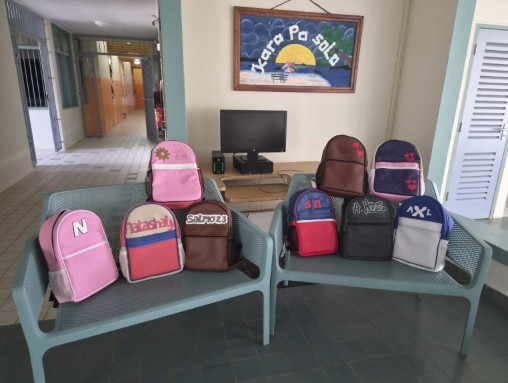
The JJIC participants were given the opportunity to put their ideas on paper, choosing their own designs, colors and styles. Their drawings were then handed over to SDKK clients working in the detention center’s upholstery workshop.
As part of the Baglab and Back-to-School projects, the SDKK participants transformed the designs into actual bags, producing unique items based on the ideas created by the young people.
According to SDKK, the initiative represents more than simply producing school bags. It creates a connection between the creativity of young people at JJIC and the vocational skills being developed by detainees preparing for their eventual return to society.
Participants in the Baglab project receive daily guidance from Suhaily Olbina. Through the program, they work on developing practical skills while also learning creativity, precision and responsibility.
For SDKK, the initiative forms part of its broader rehabilitation efforts by providing participants with opportunities to discover their talents, learn a trade and develop skills that could improve their prospects after detention.
The project also demonstrates how a relatively simple idea can become a tangible product when participants are provided with guidance and an opportunity to develop their abilities.
SDKK expressed satisfaction with the cooperation between the detention center, JJIC and Fundashon Amigunan di G.O.G., as well as with the quality of the bags produced.
The finished bags will now be used by the JJIC youth during the new school year, allowing them to carry school bags based on designs they created themselves.
The organizations described the project as an example of how two groups receiving guidance within Curaçao's correctional system can contribute to each other's development: one young person creates the idea on paper, another participant uses vocational skills to turn that idea into reality.