WILLEMSTAD – New investigative reporting from the United States raises serious questions about Curaçao’s involvement in an effort to influence Washington’s Venezuela policy at the same time that the island’s state-owned refinery companies were commercially tied to the Global Oil network of the Sargeant family.
At the center of the story is a reported $200,000 contribution by Curaçao Refinery Utilities (CRU), a state-owned company ultimately controlled by the Government of Curaçao, to an influence campaign in Washington that sought a softer U.S. approach toward Venezuela.
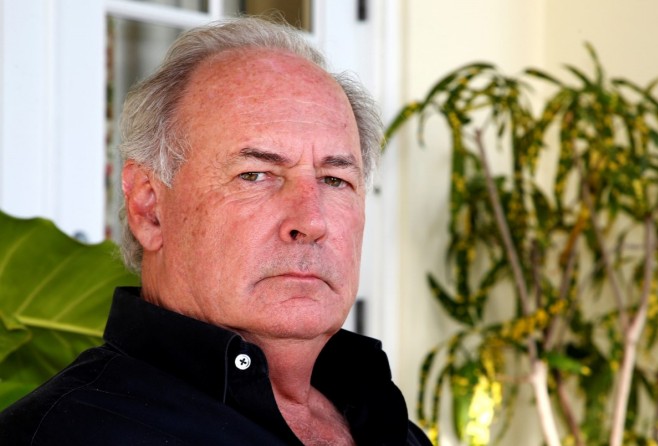
Harry Sargeant III
The revelation becomes particularly significant for Curaçao because CRU is part of the 2BAYS refinery structure and had entered into agreements with Global Oil Management Group for the planned restart of asphalt production at Emmastad. Global Oil’s Curaçao project was itself dependent to a considerable extent on access to Venezuelan crude and petroleum products.
The connections now emerging create a chain running from Curaçao through Global Oil, Washington and Venezuela — while official Curaçao financial documents simultaneously show that Global was failing to meet financial obligations to the island’s refinery companies.
CRU reportedly put $200,000 into Washington campaign
An August 31 investigation by Whale Hunting, written by Bradley Hope, says former U.S. congressman Aaron Schock was hired by Florida energy businessman Harry Sargeant III for strategic consulting as Sargeant sought to protect commercial interests affected by U.S. policy toward Venezuela.
According to the investigation, five companies and investors with Venezuela exposure financed the broader effort. Chevron reportedly committed $100,000, while CRU contributed $200,000. Fidera and Mangart Capital Management reportedly contributed $50,000 each, while another $80,000 was routed through a Taiwanese company.
Whale Hunting described CRU as part of a Curaçao refinery chain that was commercially connected to a Sargeant company. Crucially, the investigation says the money from Curaçao came from a government-owned company. It also reported that questions were sent to both the refinery company and the Curaçao government asking who had authorized the payment, but neither had answered by publication.
Separate reporting based on the POLITICO investigation also says participants in the campaign identified CRU as having contributed $200,000, based on messages reviewed by the publication.
That leaves Curaçao with an important unanswered question: who approved spending $200,000 from a state-owned company on an American political-policy campaign concerning Venezuela?
The Global Oil connection
The connection is not merely political.
Global Oil Management Group signed agreements in 2023 with the Curaçao refinery organization to use part of the former Isla complex for asphalt production. The project was presented as a major step toward restarting industrial activity at Emmastad.
Global's president behind the Curaçao project is Harry Sargeant IV. The broader Sargeant energy network, however, has long been associated with Harry Sargeant III, whose dealings in Venezuela and Washington are at the center of the new investigations.
When the Curaçao partnership was announced, the project was promoted as potentially creating hundreds of technical jobs. Sargeant publicly described the partnership as a way to restart refinery activity and produce asphalt for the American infrastructure market.
CRU was not a distant observer. Earlier reporting on the arrangement said CRU would provide Global with services including shipping and movement, security, laboratory services and firefighting.
The Global project was also closely linked to Venezuela.
In February 2025, Global Oil Management Group President Harry Sargeant IV told Argus that Global's license for its Curaçao operation allowed it to purchase Venezuelan crude. He acknowledged that changes in U.S. sanctions policy could affect the Curaçao project and potentially delay its start if alternative heavy crude had to be found.
That commercial dependence is important because the Washington campaign described by POLITICO and Whale Hunting was seeking precisely the type of softer Venezuela policy that could preserve commercial access.
Curaçao money and a campaign for softer Venezuela policy
According to Whale Hunting, the political objective was to strengthen the more accommodation-oriented approach associated with U.S. envoy Richard Grenell against the harder Venezuela line associated with Secretary of State Marco Rubio and Mauricio Claver-Carone.
The investigation explicitly notes that the participating companies did not necessarily share identical objectives and that their contributions do not prove they acted together or expected a specific commercial benefit.
That distinction is important.
There is no evidence in the documents reviewed by Curaçao Chronicle that CRU committed a crime, that Curaçao officials participated in illegal lobbying, or that its $200,000 contribution purchased any specific U.S. government decision.
But there is a legitimate public-interest question over why a Curaçao government-owned company was financing an American campaign designed to influence U.S. Venezuela policy while that same company had major commercial exposure to businesses dependent on U.S. sanctions decisions.
Federal investigators began examining whether the broader influence effort crossed U.S. lobbying or foreign-influence laws, according to the reporting. Sargeant's lawyer has maintained that Schock performed legitimate strategic consulting and that Sargeant was not under FBI investigation.
Global was meanwhile not meeting obligations to Curaçao
The situation becomes even more striking when Curaçao's own financial records are examined.
The Curaçao Ministry of Finance's second-quarter 2026 Financial Management Report states explicitly that 2BAYS' liquidity position is under pressure partly because Global has not fulfilled its financial obligations.
The report identifies three pressures: retaining personnel in anticipation of refinery activity, Global failing to meet its financial obligations, and Curoil leaving contractual debts to CRU unpaid.
This means that by 2026, Curaçao's government was formally reporting financial problems involving Global — the business group whose planned asphalt operation had been one of the central hopes for reviving activity at Emmastad.
The first-quarter report went further. It said Bullenbaai's improving terminal revenues reduced 2BAYS' financial deficit somewhat, but not completely, and concluded that choices would have to be made concerning 2BAYS' future relationship with both Global and Curoil.
That produces an uncomfortable chronology: a Curaçao state company reportedly contributed $200,000 to a U.S. campaign connected to a policy environment favorable to Venezuela-related commercial activity, while the Curaçao refinery organization later reported that Global itself was not meeting its financial obligations.
Bullenbaai changes the equation
Meanwhile, the part of Curaçao's petroleum infrastructure that is actually generating significant activity is no longer the promised Global asphalt operation at Emmastad.
It is Bullenbaai.
The latest Ministry of Finance report says interest in finding an operator is now concentrated on the Bullenbaai terminal, while there is little interest in operating the Emmastad refinery. The government company has consequently shifted its strategy away from intended oil-and-gas production toward terminal, storage and logistics services.
The same report states that Bullenbaai is operating at its available storage capacity following the reopening of the Venezuelan market and that the operation is under CRU's responsibility. 2BAYS believes this activity is increasing the terminal's market value ahead of the possible recruitment of an external operator.
Recent local reporting confirms that Global's failure to meet its obligations is one of the pressures facing 2BAYS, while the government's strategy increasingly revolves around Bullenbaai rather than restarting conventional refining at Emmastad.
Sargeant forced out of major Venezuelan oil investment
At the same time, Harry Sargeant III's position in Venezuela has dramatically changed.
According to Bloomberg reporting included in the documents reviewed by Curaçao Chronicle, Sargeant agreed in August to sell his offshore company Bluwaves Properties Ltd. for $300 million. Through Bluwaves, he held a minority stake in North American Blue Energy Partners, or NABEP, one of Venezuela's largest private-sector oil producers.
The Trump administration had placed intense pressure on Sargeant to divest. Treasury froze assets of the offshore company while issuing a license allowing him to unwind his interest.
A separate Bloomberg report said Bluwaves held a minority interest in NABEP and described Sargeant as having moved for years between political access in the United States and relationships at the highest levels in Venezuela.
Whale Hunting reports that Bluwaves was subsequently added to the U.S. Specially Designated Nationals list on August 18.
These actions concern Sargeant's Venezuelan investment structure and should not automatically be interpreted as sanctions against Global Oil Management Group's Curaçao operation. No evidence reviewed for this article establishes that the Curaçao agreement itself has been sanctioned.
Separate allegations involving Global Oil Terminals
The Whale Hunting investigation raises another, separate issue concerning Global Oil Terminals, a Sargeant company involved in Venezuelan asphalt.
According to documents reviewed by the publication, the U.S. Treasury granted Global Oil Terminals a specific license in May 2024 to purchase Venezuelan asphalt. The company subsequently bought 41 cargoes containing approximately 1.53 million metric tons of asphalt products, valued by PDVSA at roughly $193 million.
Treasury revoked that license on March 28, 2025, while allowing a wind-down period. Financial transactions had to end by April 2, while cargo operations involving already purchased products could continue until May 27.
Whale Hunting reports that Venezuelan bank BANDES issued certificates on April 1 recording two purported Global Oil Terminals cash payments totaling $43.226 million. Sources familiar with the transactions alleged that the money did not actually arrive and that the certificates were manufactured to create credit for later asphalt shipments.
However, the investigation itself stresses important limitations: the documents do not independently prove that the money was not transferred, they do not establish that Sargeant ordered or knew about any manufactured certificates, and no criminal charge arising from the payments has been publicly announced.
Those qualifications are essential.
What Curaçao now needs to answer
For Curaçao, the most immediate issue is therefore not whether allegations surrounding Sargeant in Venezuela can automatically be transferred to 2BAYS. They cannot.
The stronger investigative question is much closer to home.
CRU reportedly spent $200,000 on an American campaign intended to shape Venezuela policy. CRU was simultaneously commercially connected to the Sargeant business network. Global's Curaçao asphalt plans depended significantly on Venezuelan petroleum access. And Curaçao's own Ministry of Finance now says Global has failed to fulfill financial obligations, contributing to pressure on 2BAYS' liquidity.
There are consequently several questions that the government, 2BAYS and CRU have yet to publicly clarify: who authorized the $200,000 payment; under which CRU budget or contract it was made; what service CRU expected in return; whether the Supervisory Board or shareholder was informed; whether government approval was required; and whether the payment was subjected to legal review concerning U.S. lobbying and foreign-influence rules.
There is another financial question: exactly how much does Global currently owe CRU or 2BAYS?
The Ministry of Finance confirms the failure to meet financial obligations but does not quantify Global's outstanding debt in the section reviewed by Curaçao Chronicle.
That number matters because CRU is not a private company risking only private capital. It forms part of Curaçao's publicly owned refinery infrastructure.
Three years after Global Oil was presented as an important part of the revival of Curaçao's refinery area, asphalt production has still not begun on the scale originally promised. Bullenbaai, rather than Global's Emmastad project, has emerged as the functioning center of Curaçao's renewed petroleum activity.
And now a new question has been added to the long list surrounding the refinery: why did a Curaçao government-owned company spend $200,000 helping finance a Washington influence campaign connected to Venezuela policy, and who in Curaçao authorized it?