INTERNATIONAL – Curaçao’s extraordinary 4-3 comeback victory over Costa Rica is drawing attention across international sports media, with outlets describing the result as “historic,” “epic” and a “comeback of legend” after the Blue Wave overturned a 3-0 halftime deficit in San José.
The victory Thursday night at the Estadio Ricardo Saprissa Aymá quickly spread beyond Curaçao and Costa Rica, particularly through Spanish-language media across Latin America.

ESPN’s coverage was especially harsh on Costa Rica, describing the result as an embarrassment for the Central American football power after it appeared to have complete control of the match. Costa Rica led 3-0 at halftime through Orlando Sinclair and two goals from Carlos Mora before collapsing during the second half.
International news agency EFE described it as a “very painful defeat” for Costa Rica and highlighted how three substitutes introduced by Curaçao coach Dick Advocaat completely transformed the match. Its report was subsequently carried by international outlets including Infobae.
Those substitutions proved decisive.
Advocaat introduced Kenji Gorré, Tahith Chong and Jordi Paulina in the 57th minute. Gorré scored twice, Chong added another and Paulina completed the comeback in the 82nd minute. Curaçao therefore went from 3-0 down to 4-3 ahead in approximately 20 minutes.
Spanish sports platform Flashscore went even further with its headline, declaring that Curaçao remains “in World Cup mode” and had produced a “comeback of legend” against Costa Rica.
In the United States, Spanish-language newspaper El Diario NY called it a “historic comeback,” emphasizing that Curaçao achieved the result away from home after trailing by three goals.
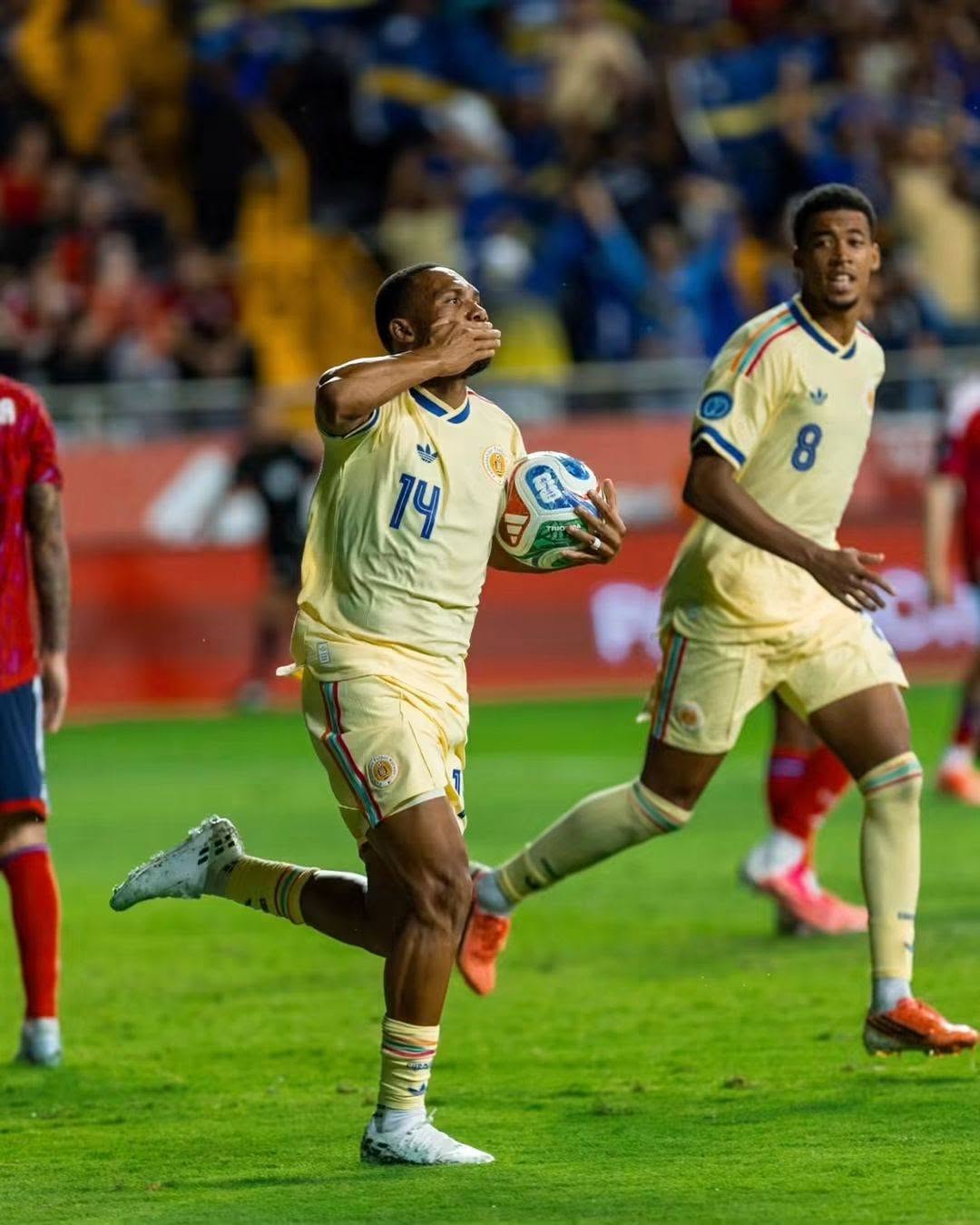
Mexican broadcaster TUDN repeatedly characterized the turnaround as “epic” in its coverage. The broadcaster also highlighted the emotional reaction of Advocaat after the final whistle, showing the veteran Dutch coach visibly moved following one of Curaçao’s most remarkable international victories.
Claro Sports described the match as a dramatic turnaround achieved in only 20 minutes and emphasized the impact of Advocaat’s second-half substitutions.
The strongest reactions, unsurprisingly, came from Costa Rica and elsewhere in Central America.
Costa Rican football outlet Everardo Herrera used the headline “Monumental Shame for Costa Rica Against Curaçao,” describing the defeat at the Saprissa as a night of terror for the national team.
Honduran newspaper La Prensa similarly portrayed the result as a humiliation for Costa Rica, noting that what had looked like a celebration at halftime turned into a nightmare as Curaçao scored four unanswered goals. It also reported that Costa Rican supporters eventually shouted “olé” while Curaçao circulated the ball during the closing stages.
The reaction illustrates how Curaçao’s international football status has changed. The Blue Wave is no longer being covered internationally merely as a small Caribbean team producing an occasional surprise. Following its historic qualification for the 2026 FIFA World Cup, performances such as Thursday’s victory are increasingly being viewed as further evidence of Curaçao’s development as a serious regional competitor.
ESPN’s match statistics underline how much more there was to the result than simply four goals in the second half. Curaçao finished with 62 percent possession, completed 410 passes at 86 percent accuracy compared with Costa Rica’s 210 completed passes at 72 percent, and created four big chances compared with one for the hosts.
Concacaf itself highlighted the comeback in its official match report and confirmed that the victory puts Curaçao among the early leaders of Group A after the opening round.
The result also created immediate pressure in Costa Rica. Head coach Fernando Batista faced calls for his departure from supporters inside the stadium but said afterward that he remained confident in his work. Batista acknowledged that Costa Rica played “45 very good minutes and 45 very bad minutes” and admitted that his second-half changes did not work.
For Curaçao, however, the international headlines tell a very different story.
A team representing one of the smallest countries in international football went into one of Central America’s most intimidating stadiums, fell three goals behind and then scored four times in the second half to leave with three points.
After Curaçao’s historic World Cup appearance earlier this year, the message emerging from international coverage of Thursday night’s match is becoming increasingly clear: the Blue Wave continues to make the football world take notice.