WILLEMSTAD – The Governor of Curaçao, His Excellency Mauritsz de Kort, paid an official working visit to Museo Tula on Friday, March 13, 2026, where the legacy of slavery and its cultural impact were central themes.
The visit began with a musical presentation led by Vernon Chatlein, showcasing traditional Curaçaoan music styles such as muzik di zumbi, seú, and tambú. The performance highlighted the origins of these genres and their cultural and spiritual significance as forms of expression deeply rooted in the island’s history and slavery past.
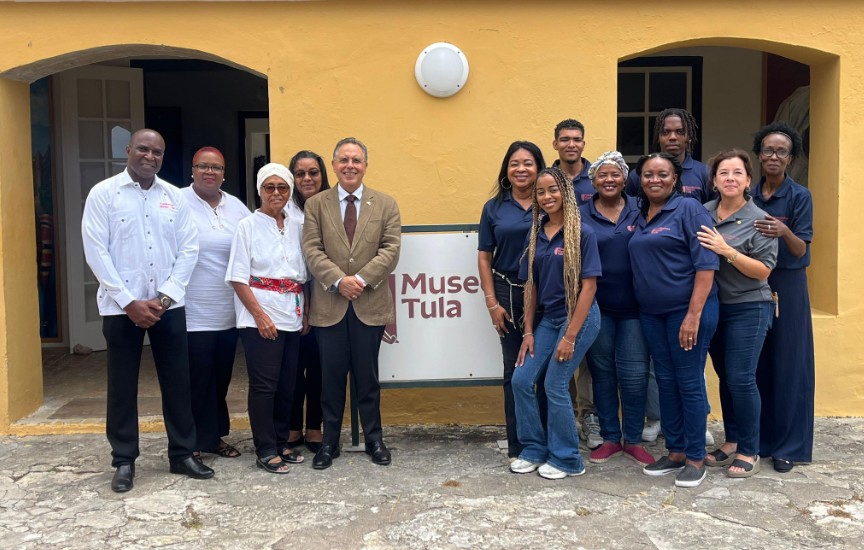
Following the performance, the governor received a guided tour of the museum, located at Landhuis Knip. During the tour, discussions focused on the need for investments in and around the historic site, as well as plans for projects aimed at increasing awareness and understanding of Curaçao’s slavery history, particularly the legacy of national hero Tula.
The visit concluded with a dialogue session that addressed the importance of continued conversation in the period following the formal apologies issued by King Willem-Alexander and the Dutch government for the country’s role in slavery.
Participants reflected on the meaning of recognition and the need to move forward collectively toward greater understanding, healing, and connection.
The cultural dimension of Curaçao’s history was also emphasized, including the significance of tambú as a key element of the island’s heritage and identity.
Governor De Kort expressed appreciation for the work carried out by the museum, its board members, and volunteers in preserving this important part of Curaçao’s history and creating space for education, reflection, and dialogue.