WILLEMSTAD – Governor of Curaçao Mauritsz de Kort received representatives of Roelofs Mediation at the Governor’s Palace on Monday, October 26, 2026, to discuss the development of mediation in criminal cases and restorative justice initiatives aimed at resolving conflicts and promoting accountability among young people.
The meeting focused on the importance of dialogue, personal responsibility and rehabilitation within Curaçao’s justice system, as well as the role of restorative practices in schools and communities.
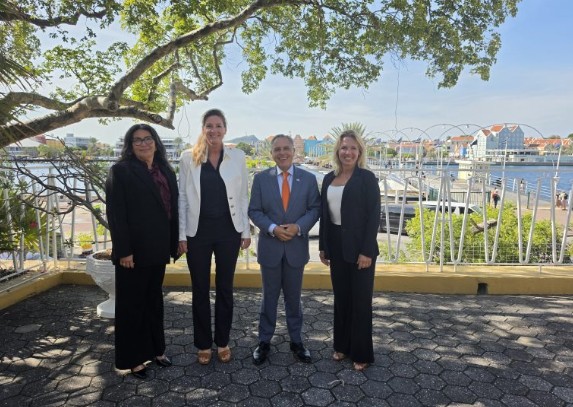
Since 2020, Roelofs Mediation has been working alongside the Public Prosecutor’s Office and the judiciary to develop mediation in criminal cases on the island.
This approach provides victims and suspects with an opportunity to engage in structured discussions under professional guidance. The objective is to address the consequences of criminal behavior, encourage accountability and explore opportunities for repairing the harm caused.
Unlike traditional criminal proceedings, which primarily focus on determining criminal responsibility and imposing sanctions, restorative justice emphasizes the impact of an offense on those involved and the possibility of resolving certain consequences through dialogue.
The approach does not necessarily replace criminal proceedings but can complement the justice system by providing an additional opportunity for victims and suspects to address the harm resulting from an offense.
Restorative justice methods are also being introduced in Curaçao’s educational environment.
Initiatives such as Youth Courts and Restorative Circles are designed to help students resolve disagreements constructively, understand the consequences of their actions and take responsibility for their behavior.
Youth Courts provide a framework in which young people can participate in addressing conflicts and behavioral issues, while Restorative Circles encourage open communication and collective problem-solving.
These initiatives are supported by Curaçao’s Ministry of Education, Science, Culture and Sports (OWCS).
The programs aim to promote a school environment in which conflicts can be addressed through dialogue and mutual understanding rather than relying exclusively on disciplinary measures.
During the meeting with Governor De Kort, representatives discussed the broader significance of these approaches for the administration of justice, youth development and public safety in Curaçao.
The discussions highlighted the potential role of restorative practices in strengthening accountability, improving communication and helping prevent conflicts from escalating.
The meeting also underscored the importance of cooperation between justice authorities, educational institutions and organizations working to promote alternative approaches to conflict resolution.