WILLEMSTAD – Behind the glitter, music, and endless energy of Curaçao Carnival lies a story of dedication, sacrifice, and friendship. One group that embodies this spirit is Grupo Viva, a carnival group built not by big sponsors or corporate backing, but by a close-knit circle of friends driven by love for Carnival and community.
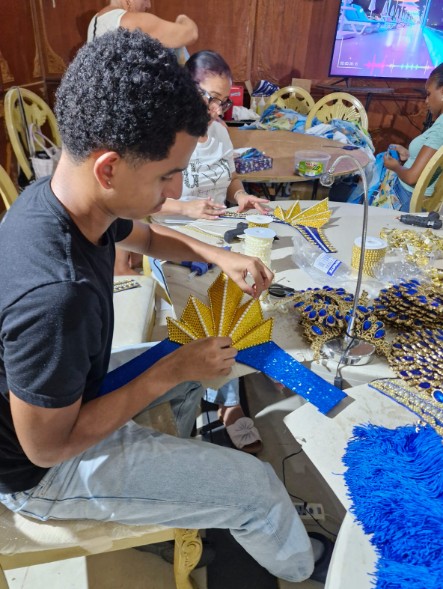
Preparations for the Group's presentation
Vice-president Sharvelo Felomina explains that Grupo Viva did not start as a formal organization with a long-term business plan. Instead, it grew organically from a group of friends who had participated in Carnival for years and eventually decided: “Why not start something of our own?” What followed was not just the creation of a carnival group, but the birth of a living, growing family.
From the beginning, Grupo Viva was never meant to be exclusive or limited to relatives and close acquaintances. Its strength lies precisely in its openness. Friends bring friends, networks expand, and before long, people who never knew each other are marching side by side, united by music, costume, and shared effort. According to Sharvelo, that sense of belonging is what makes the group strong and popular year after year.
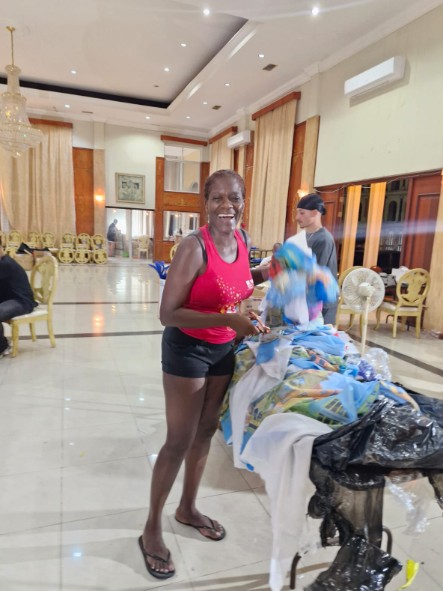
Hard work for the best result
But building a carnival group is far from easy.
Participating in the Grand Parade comes with significant costs. Without major sponsorship, Grupo Viva relies primarily on member contributions and creative fundraising. Depending on the year, members pay between 1,650 and 1,950 guilders to cover costumes, music, logistics, and preparation. Even then, every cent must be carefully stretched. Where floats once dominated, Grupo Viva now opts for more affordable alternatives, focusing on vibe, creativity, and togetherness rather than excess.
Preparation is intense and time-consuming. Months before Carnival, members are already busy organizing, fundraising, planning costumes, and dividing responsibilities. Everyone has a role. Teams are formed, tasks are assigned, and leadership is shared. From arranging jump-ins to coordinating music and costumes, the workload is heavy – and it all happens after regular work hours.
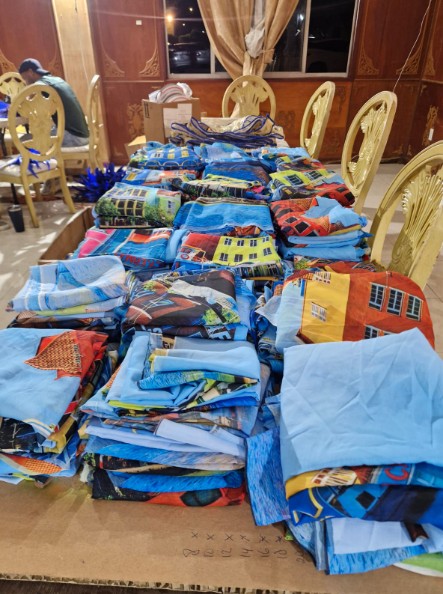
It's taking shape
One of the biggest challenges is music. Live bands are expensive, but they are also essential to the Carnival experience. Without music, there is no movement; without movement, there is no group. Balancing quality with affordability is a constant struggle, and every year decisions must be made about what is possible and what is not.
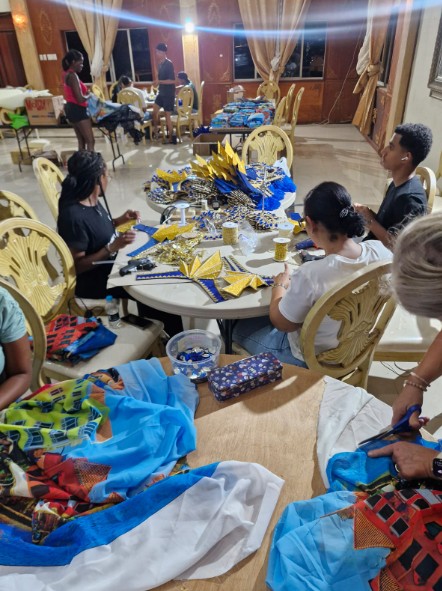
Volunteers are always helping
Yet despite the obstacles, Grupo Viva keeps going.
Not because there are trophies to be won – although competition exists – but because the group’s philosophy is simple: have fun, together. Winning prizes is nice, Sharvelo says, but it is not the main goal. The true reward is marching together, overcoming challenges as a team, and creating memories that last far beyond Carnival Sunday and Monday.
There are moments of doubt, stress, and exhaustion. Costs rise. Time is limited. Expectations are high. But each year, when the group finally steps onto the parade route, all of that fades away. What remains is pride, joy, and the realization that something beautiful has been built – not with money, but with commitment.
Grupo Viva’s story is a reminder that Curaçao Carnival is not only about spectacle. It is about people. About friendships that turn into families. About perseverance in the face of challenges. And about choosing joy, even when the road to the parade is long and difficult.
As Sharvelo puts it simply: “If there’s no prize, that’s okay. If there is, that’s okay too. The most important thing is that we enjoy it – together.”
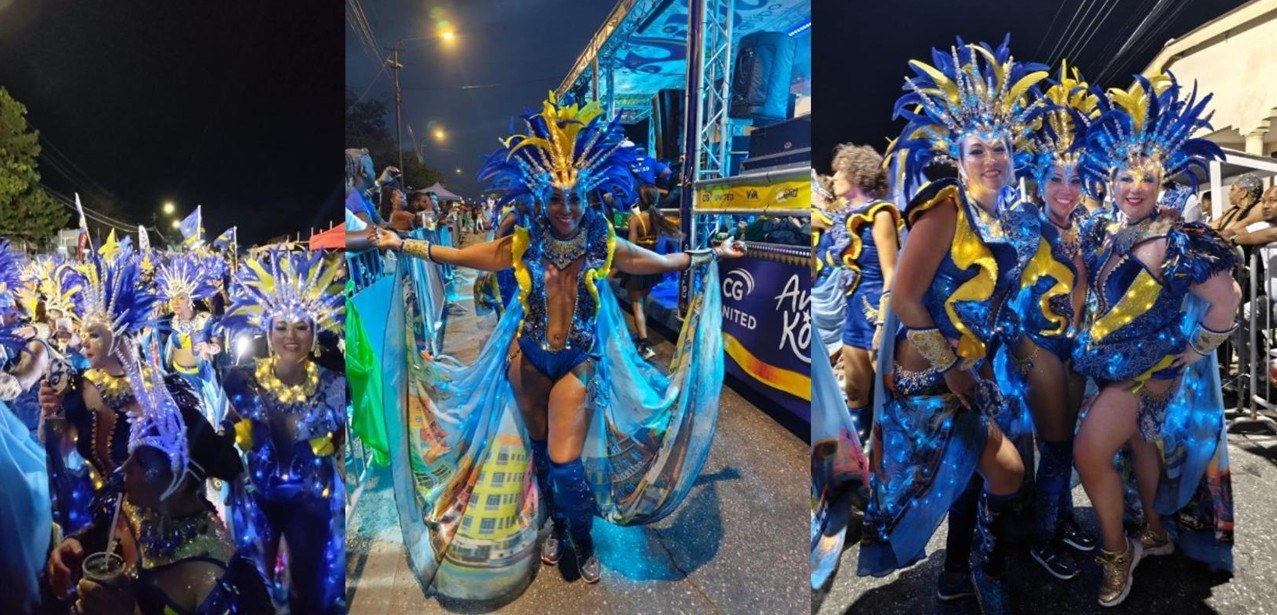
The end result at the Big Parade