WILLEMSTAD – Fundashon Kas Popular (FKP) has presented the Board of Financial Supervision (Cft) with an extensive overview of its Mi Kas Awor housing program, its efforts to bring years of outstanding financial statements up to date, and a development pipeline that could ultimately create capacity for as many as 13,809 homes over the next 15 years.
The presentation took place on Friday, October 9, during a visit by Cft Secretary Han van Midden and a delegation of experts responsible for the Curaçao portfolio.
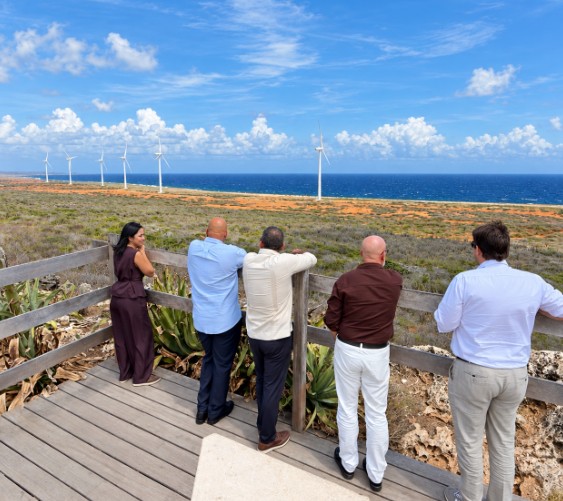
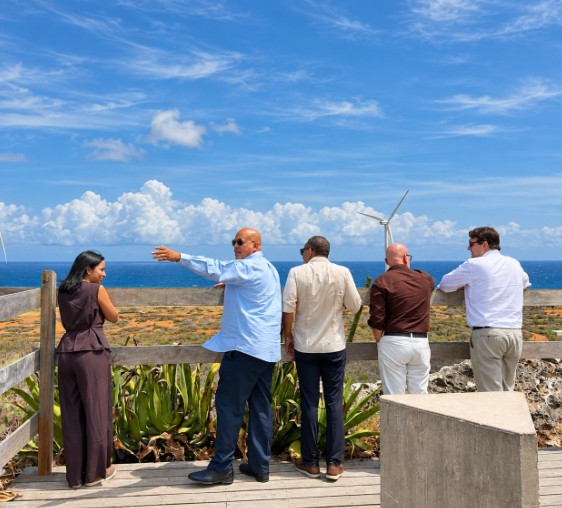
The visit combined a technical and financial presentation with a tour of eight locations identified as part of FKP's housing development plans. Together, the sites for which housing capacity has already been estimated represent the potential for more than 1,400 homes, although the projects are at different stages and FKP emphasized that the figures are projections rather than guaranteed construction numbers.
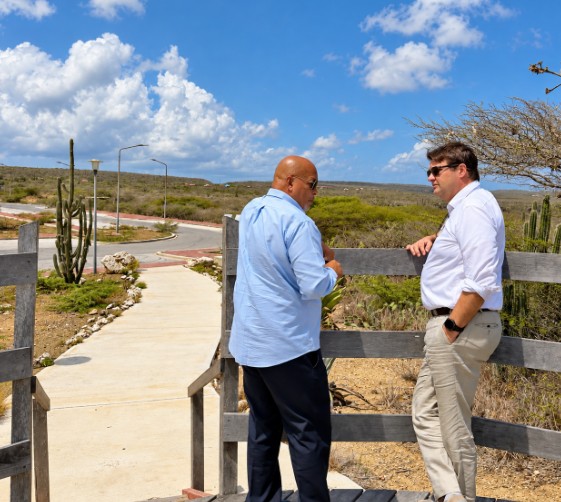
The visit provided the financial supervisor with a closer look at how FKP intends to translate the Mi Kas Awor concept into actual housing developments while simultaneously strengthening its own financial administration.
Mi Kas Awor Financing Model Explained
During the first part of the meeting, FKP specialists and an international economist supporting the program gave the Cft delegation a detailed presentation on Mi Kas Awor.
The presentation covered the program's financing model, financial structure, relevant figures and projections for housing development in Curaçao.
A central element of the model is the use of targeted public funding to mobilize additional financing from other sources.
According to FKP, government contributions could be combined with bank financing, household savings and private capital from contractors to make homeownership accessible to families across different income levels.
Instead of relying exclusively on government financing to construct housing, the model is intended to use public resources as part of a broader financing structure that attracts additional capital.
FKP says the approach is designed to combine social policy with financial responsibility and economic development, with the ultimate objective of allowing more Curaçao families to purchase their own homes.
At the same time, the program is expected to generate broader economic activity through construction, employment, mortgage lending, household savings and investment by private contractors.
FKP Working Through Years of Outstanding Financial Statements
The Cft delegation also received an update on FKP's financial administration, including its efforts to eliminate a significant backlog in annual financial statements.
According to FKP, the organization is following a process agreed upon with the Curaçao government and based on advice from financial experts. The foundation is using what is known as a "samenstellingstraject," or compilation process, to bring its outstanding accounts up to date.
FKP reported that its annual financial statements for 2015 through 2018 have now been completed.
The financial statements for 2019 and 2020 are scheduled to be completed before the end of 2026.
The organization then expects to complete the financial statements covering 2021 through 2023 during the first quarter of 2027, working together with its external accountant.
The process is particularly relevant because FKP is preparing to play a significant role in a long-term housing program involving public resources, private financing and potentially thousands of homes.
According to the foundation, bringing the accounts up to date is therefore necessary to strengthen transparency, financial accountability and the administrative foundation required for a long-term housing development program.
Cft Delegation Taken to Eight Development Locations
Following the presentation, FKP took the Cft delegation on a tour of eight locations across Curaçao.
The purpose was to demonstrate how the financial and development plans presented during the meeting relate to actual land and projects that are either underway, being prepared or still at the initiative stage.
One of the locations was Amerikaweg, where an extension of Hòfi Moonchi is being considered. The site covers approximately 6,251 square meters. Development has not yet begun, and the number of homes that could eventually be constructed there still has to be determined during further planning.
The delegation also visited Wechi phases 1A and 1B. This is by far one of the larger locations in the current pipeline, covering approximately 120 hectares and with capacity for more than 500 homes.
Different sections of the Wechi project are currently in various stages, including delivery, completion, preparation and initial development. FKP's indicative timetable for the different components runs from 2026 through 2028.
224 Homes Projected at Tera Kòrá
Another important location is Tera Kòrá 2B at Kaya Karbonstein.
FKP has identified the site as a starting point for a Mi Kas Awor project with projected capacity for 224 homes. The project is currently in the preparation phase.
At Ser'i Papaya, on the site of the former Dòdò Palm school, FKP sees the possibility of developing more than 72 homes. That location remains at the initiative stage, meaning considerable planning and preparation will still be necessary before construction can begin.
Fortuna Pariba is another significant component of the development pipeline.
FKP estimates that the location could accommodate more than 156 homes. The project is connected to resources from the European Development Fund and is being prepared to move toward the implementation stage.
At Sapaté, near Nos Welita, FKP identified approximately 2.65 hectares with projected capacity for more than 138 homes. That project remains in the initiative phase.
More Than 300 Homes Considered Near Vetter
The Cft delegation was also shown an approximately 21-hectare area near Vetter where FKP estimates that more than 300 homes could eventually be developed.
This project is also still at the initiative stage.
The eighth location was New Orleans, on a side road off Weg naar Santa Catharina. This development is further along in the preparation process and has an indicative capacity of approximately 37 homes.
Combined, the locations for which FKP has already calculated indicative capacity could accommodate more than 1,400 homes.
However, the foundation stressed that the sites are not all construction-ready. Some are being prepared or developed, while others remain concepts requiring additional decisions, planning, financing and permits.
Oostpunt Could Add Another 75 Hectares
Beyond the eight sites visited by the Cft, FKP is looking at two additional areas that could substantially increase the amount of land available for future Mi Kas Awor developments.
Approximately 75 hectares at Oostpunt could eventually become available for housing development.
However, the legal and administrative process necessary for the Curaçao government to obtain control over the land has not yet been finalized.
FKP therefore does not consider the Oostpunt land currently available for development.
Another 7.3 hectares at Zorgendal could also become part of the housing land reserve.
According to FKP, an agreement in principle concerning the allocation of the Zorgendal property dates back to 2013, but formal access to the land has still not been completed.
If the outstanding legal and administrative procedures involving Oostpunt and Zorgendal are eventually completed and the properties are formally made available to FKP, they could significantly strengthen the foundation's future development capacity.
Potential for 13,809 Homes Over 15 Years
The eight sites presented to the Cft represent only part of FKP's longer-term strategy.
According to projections presented during the visit, the available land portfolio, combined with additional government land that would still have to be formally transferred or made available to FKP, could create capacity for as many as 13,809 homes during a 15-year period.
That figure illustrates the scale of FKP's ambitions but should not be interpreted as a commitment that nearly 14,000 homes will actually be constructed.
FKP explicitly described the numbers and development dates as projections and indicative planning.
Whether the homes can eventually be built will depend on several factors, including the timely availability of land, infrastructure, financing, government approvals, subsidies, construction permits, capacity within the construction industry and continuity of the Mi Kas Awor program itself.
This distinction is particularly important because several of the locations included in the development pipeline remain at an early stage.
Housing Ambition Meets Financial Oversight
The Cft visit brought together two issues that will be central to the future of FKP: the urgent demand for housing and the financial and administrative capacity required to deliver large-scale development responsibly.
The foundation is simultaneously attempting to clear a backlog of financial statements dating back years while preparing a housing strategy that could involve substantial public and private investment over the coming decade and beyond.
For the Cft, which supervises Curaçao's public finances, the presentation offered insight not only into the physical development possibilities but also into the financing structure behind Mi Kas Awor and FKP's efforts to strengthen its financial administration.
FKP says the objective is ultimately to create a sustainable system in which government support can help families mobilize mortgages, savings and other financing to become homeowners, rather than treating public housing exclusively as government-funded construction.
The potential economic effects would extend beyond housing. A program of this scale could generate construction activity, employment, demand for building materials, additional mortgage lending and other economic activity.
But realizing that ambition will depend on turning projected land capacity into financially viable and properly approved projects.
For now, the eight locations shown to the Cft provide the clearest picture of the immediate pipeline: more than 1,400 potential homes spread across projects ranging from early-stage concepts to developments moving toward implementation.
The larger target of up to 13,809 homes represents the longer-term vision.
Whether Curaçao can achieve that scale over the next 15 years will depend on FKP and the government securing the land, financing, infrastructure, permits and institutional capacity needed to turn that vision into actual homes.