WILLEMSTAD – Business operations are indispensable to good policing, yet they do not always receive the attention they deserve within police organizations. This was one of the central messages of the Business Operations Conference, held in Curaçao on 12 and 13 November 2026.
Almost 80 staff members and managers from the police forces of Aruba, Curaçao, Sint Maarten and the Caribbean Netherlands, together with the Recherche Samenwerkingsteam (RST), attended the conference. It was the first time an event of this kind had been organized for business operations staff from these organizations. The conference was organized by the Board of Police Chiefs and the Caribbean Platform of Heads of Business Operations (PHBC). Its purpose was to bring staff from the different organizations together and work towards the further development of business operations during the period 2027–2030.
The heart of the organization
In his opening address, Carl John, Chair of the Board of Police Chiefs, described business operations as the heart of the police organization. A wide range of support activities takes place behind the visible work of the police. Business operations staff are responsible for, among other things, recruiting and training personnel, managing vehicles and buildings, maintaining functioning ICT systems and ensuring the responsible use of financial resources.
For the Caribbean police forces, this is not always straightforward. Business operations departments are relatively small and must carry out a wide range of duties with limited staffing. Specialist expertise is not always available, and employees often perform several roles. Cooperation and the sharing of expertise between the police forces are consequently important.
Business operations deserve a recognized position
Raymond Ellis, Chief of Police of Curaçao, addressed the position of business operations within the police during his keynote session. He emphasized that the expertise of business operations staff should be put to better use in important decisions. Expanding investigative capacity, for example, has implications for workforce planning, training and accommodation.
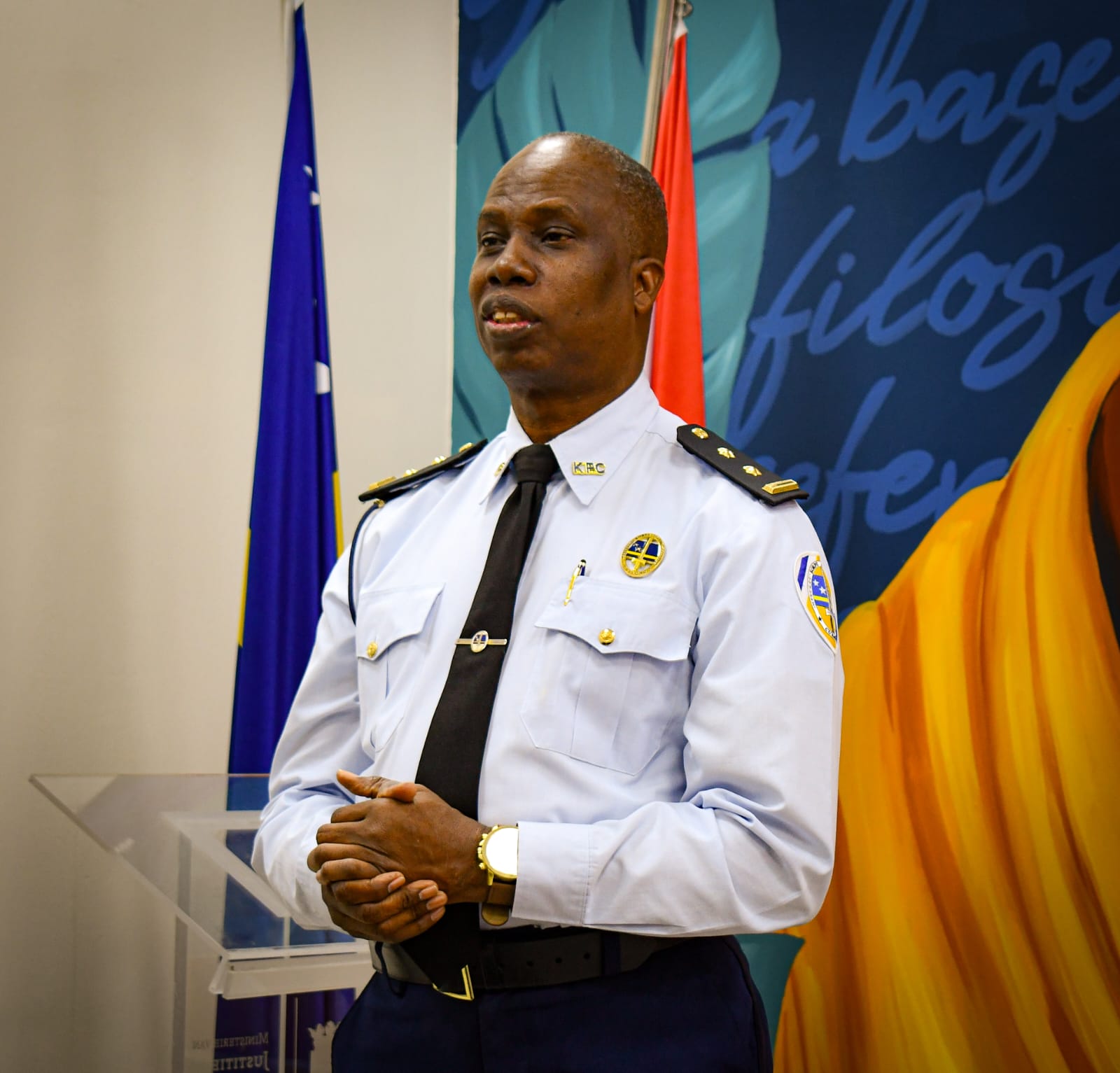
Raymond Ellis, Chief of Police of Curaçao
Ellis also expressed his appreciation for the staff who ensure that police organizations can function on a daily basis. In his view, strengthening the position of business operations also requires attention to the professional development of these employees and opportunities for them to contribute their knowledge and experience to the development of the police forces.
Working together towards business operations in 2030
The Business Operations Development Plan 2027–2030 was central to the conference. The plan sets out eight areas for further professional development of business operations, including digitalization, staffing and capacity, and procurement and contract management.
During working sessions, participants discussed the improvements needed and where the police forces could cooperate more closely, for example by sharing specialist expertise, organizing joint training and exchanging working methods. The thematic discussion groups gave employees working in the same professional field an opportunity to exchange experiences from their daily work. For many participants, it was also the first time they had met their colleagues from the other islands in person.
Attention to professional development
In addition to the working sessions, participants could attend masterclasses on artificial intelligence, personal development, business operations in small island states, and dealing with competing interests and resistance in the workplace. The masterclasses focused on practical issues that employees encounter in their work. Topics included the potential uses of AI in business operations and how small island states can deal with their limited scale and capacity.
Next steps
The conference generated ideas and proposals for the further development of the Business Operations Development Plan 2027–2030. Discussions showed that business operations departments across the different police forces often face similar difficulties. Participants therefore saw opportunities to learn more from each other's experiences and expressed a wish for events of this kind to be held more frequently. The PHBC will use the outcomes of the conference in its further work on the plan.