THE HAGUE – The Dutch Royal House has acknowledged that some colonial-era objects held in the Royal Collections may not have been acquired lawfully or voluntarily, following an independent provenance investigation into more than 1,000 artifacts from former Dutch colonies, including Indonesia, Suriname, and the Caribbean.
The findings are contained in a report commissioned by the Stichting Historische Verzamelingen van het Huis Oranje-Nassau (SHVON), the foundation responsible for managing the historical collections of the House of Orange-Nassau. Queen Máxima serves as chair of the foundation.
According to the foundation, the conclusions and recommendations of the independent committee will be fully adopted. SHVON also announced plans to make the research data publicly available to facilitate what it described as “an open dialogue with stakeholders from the countries of origin.”
Questions Surround Colonial-Era Acquisitions
The report concludes that the majority of colonial objects in the Royal Collections consist of gifts for which no direct evidence of coercion was found. However, researchers identified several artifacts for which there are what they describe as “serious doubts” regarding whether they were obtained voluntarily.
Among the most sensitive examples is the thunder gun of Raden Intan, an Indonesian resistance leader from Lampung who was killed by Dutch military forces in 1856. The weapon later entered the Royal Collections after being presented to King William III.
Researchers also highlighted a shield from Aceh that was likely seized during a Dutch military expedition to Samalanga in 1877. According to the report, the shield probably belonged to an Acehnese military commander who died during fighting with Dutch troops.
Another object raising concerns is a gold amulet necklace from Aceh that was presented to Queen Wilhelmina in 1909 shortly after intense military operations in the region. The report states that the circumstances surrounding the gift, combined with the deferential language used in the accompanying correspondence, raise significant questions about whether the gift was truly voluntary.
Colonial Context Cannot Be Ignored
The committee emphasized that colonial-era gifts cannot be viewed separately from the unequal power relationships that existed within the colonial system.
According to the researchers, gifts frequently served as instruments for demonstrating loyalty to Dutch colonial authorities and were often exchanged in environments shaped by military pressure, occupation, or political subordination.
The report argues that the Netherlands cannot unilaterally determine whether the continued possession of such objects is justified. Instead, SHVON intends to engage in discussions with representatives of former colonies regarding the future of artifacts for which significant concerns exist.
Relevance for the Caribbean
While many of the examples highlighted in the report originate from Indonesia, the investigation also examined colonial objects from Suriname and the Caribbean, making the findings relevant to ongoing discussions about colonial heritage throughout the Kingdom of the Netherlands.
The report comes amid growing international debate about the restitution of cultural artifacts and broader efforts to address the legacy of colonialism.
In recent years, governments, museums, and cultural institutions in former colonial powers have increasingly faced calls to investigate the origins of historical collections and return objects acquired through coercion, warfare, or unequal colonial relationships.
Part of Broader Historical Reassessment
The provenance investigation forms part of a wider reexamination of the Netherlands’ colonial past.
King Willem-Alexander previously announced a separate historical study into the role of the House of Orange-Nassau in Dutch colonial history, reflecting a broader effort to better understand and acknowledge the monarchy’s historical connections to slavery, colonialism, and overseas territories.
The publication of the report is expected to contribute to ongoing discussions within the Kingdom about historical responsibility, cultural heritage, and the future of colonial-era artifacts held in Dutch institutions.
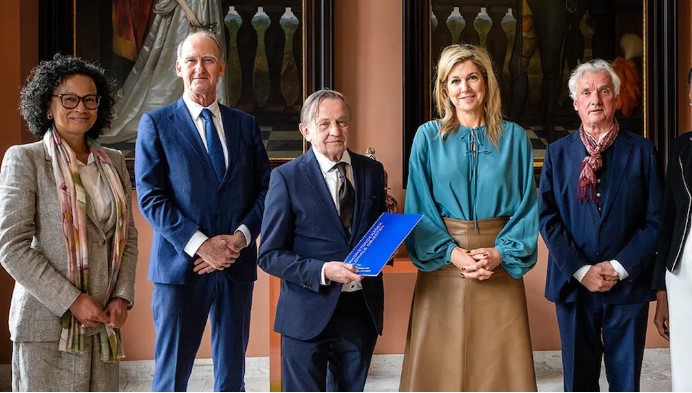
Presentation of the Report on the Provenance Investigation of Colonial Objects in the Royal Collections to Queen Máxima at Huis ten Bosch Palace. Photo: Martijn Beekman.