THE HAGUE – Dutch State Secretary for Kingdom Relations Eric van der Burg has outlined a long-term ambition to fundamentally change how the Netherlands manages its relationship with the Caribbean parts of the Kingdom. His objective is to eventually eliminate the separate Kingdom Relations portfolio, place Bonaire, Sint Eustatius and Saba directly under the Ministry of the Interior, and end the practice of discussing Curaçao, Aruba and Sint Maarten (CAS islands) as though they were subordinate territories within the Dutch national budget.
The proposal represents a potentially significant change in the administrative and political approach to relations within the Kingdom of the Netherlands. It also raises questions about how the Netherlands would organize its financial commitments, constitutional responsibilities and cooperation with the three autonomous Caribbean countries if the separate portfolio were eventually abolished.
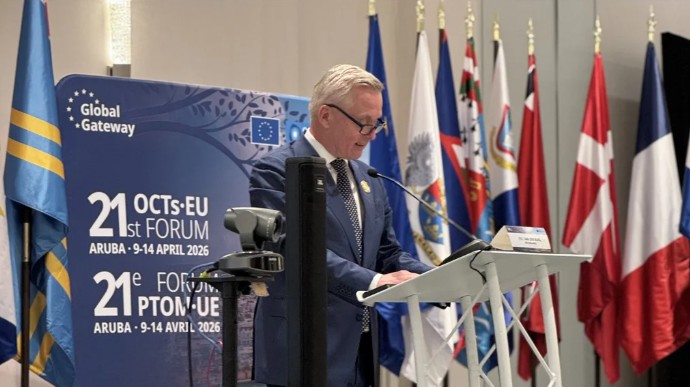
Dutch State Secretary for Kingdom Relations Eric van der Burg
Van der Burg made the remarks on Thursday, October 8, during the Dutch House of Representatives' debate on the 2027 Kingdom Relations budget.
"My ambition is ultimately to be able to abolish the Kingdom Affairs portfolio," the state secretary told Parliament.
He explained that Bonaire, Sint Eustatius and Saba should fall naturally under the Ministry of the Interior because they are part of the Netherlands, while Curaçao, Aruba and Sint Maarten should be treated as equal countries within the Kingdom rather than subjects of a Dutch domestic budget debate.
The remarks were confirmed in the official parliamentary summary of the debate published by the Dutch House of Representatives.
A Different Approach to the Kingdom
The state secretary's comments touch on a longstanding distinction within the constitutional structure of the Kingdom.
Since October 10, 2010, Curaçao and Sint Maarten have been autonomous countries within the Kingdom of the Netherlands, joining Aruba, which obtained its separate autonomous status in 1986.
The three countries are responsible for most of their internal affairs, including healthcare, education, taxation and economic policy.
The Netherlands is the fourth country within the Kingdom.
Bonaire, Sint Eustatius and Saba, meanwhile, became public entities of the Netherlands following the dissolution of the Netherlands Antilles in 2010.
Although the six Caribbean islands are frequently discussed together in Dutch parliamentary debates, their constitutional positions are fundamentally different.
Van der Burg's proposal seeks to reflect that distinction more clearly in the Dutch government's administrative structure.
Under his preferred approach, Bonaire, Sint Eustatius and Saba would be treated as integral parts of the Netherlands, with the relevant Dutch ministries assuming their responsibilities directly.
Curaçao, Aruba and Sint Maarten would instead be approached as autonomous countries participating in a constitutional partnership.
For Curaçao, the proposal is particularly relevant because the island has repeatedly emphasized its autonomous status and the principle of equality among the four countries of the Kingdom.
However, Van der Burg did not announce a formal restructuring plan, legislative proposal or implementation timetable.
His statement represents a long-term political objective rather than an approved government decision.
What Would Happen to Financial Relations With Curaçao?
One of the most important questions concerns the future organization of financial relations between the Netherlands and the autonomous Caribbean countries.
The Kingdom Relations budget currently includes expenditure and financial arrangements involving Curaçao, Aruba and Sint Maarten.
These include various forms of cooperation, institutional support and financial commitments.
The Netherlands also maintains significant creditor relationships with the Caribbean countries through outstanding loans and refinancing arrangements.
Eliminating the separate Kingdom Relations portfolio would therefore require decisions about where these responsibilities would be placed within the Dutch government.
It would not automatically terminate existing agreements, financial obligations or cooperation programs.
Nor would it change Curaçao's constitutional status.
The Charter for the Kingdom of the Netherlands would continue to determine the constitutional relationship among the four countries.
Van der Burg's comments nevertheless suggest that the Dutch government should reconsider whether the present budgetary structure adequately reflects the autonomous position of Curaçao, Aruba and Sint Maarten.
The distinction is important.
The Dutch Parliament has legitimate responsibility for scrutinizing expenditure from the Dutch national budget. At the same time, Curaçao has its own Parliament, government and national budget.
A future administrative arrangement would therefore have to preserve Dutch parliamentary oversight of Dutch public expenditure without treating the autonomous Caribbean countries as though they were Dutch municipalities.
The state secretary did not explain how such a system would operate in practice.
Poverty Remains a Major Problem in Caribbean Netherlands
Although the proposed future of Kingdom Relations was one of the most significant constitutional issues raised during the debate, much of the discussion focused on poverty and living conditions in Bonaire, Sint Eustatius and Saba.
According to figures cited in the Dutch Parliament, approximately one-third of residents in the Caribbean Netherlands live below the poverty line.
That proportion is more than twelve times higher than in the European Netherlands.
The figures illustrate the substantial differences in living standards that continue to exist within the same country.
To address these problems, the Dutch government has allocated an additional €30 million annually to improve income security and reduce the cost of living in the Caribbean Netherlands.
The funding was welcomed by some parliamentary parties but criticized by others.
D66 parliamentarian Heera Dijk welcomed the additional resources, arguing that the high level of poverty requires government intervention.
However, PVV parliamentarian Elmar Vlottes strongly opposed the additional expenditure.
He described the €30 million allocation as a disgrace, arguing that residents of the European Netherlands are also experiencing pressure on their purchasing power.
According to Vlottes, previous government investments have already contributed to improvements in purchasing power on the Caribbean islands.
His position drew attention to a broader political disagreement over the extent of the Dutch government's financial responsibility for its Caribbean territories.
Van der Burg, however, emphasized that Bonaire, Sint Eustatius and Saba are not foreign territories requesting assistance from the Netherlands.
They are part of the Netherlands itself.
That distinction formed an important part of his response to criticism of additional expenditure on the islands.
Questions Over How the €30 Million Will Be Spent
The debate also exposed disagreements over the intended use of the poverty reduction funding.
Some parliamentarians questioned whether money specifically allocated to improve income security should be used to finance infrastructure projects that would normally fall under regular government responsibilities.
The proposed investments include water infrastructure and telecommunications facilities.
In written answers submitted to Parliament on October 8, Van der Burg explained that the €30 million allocated for 2027 would be used primarily for investments and subsidies involving utility services.
The objective, according to the state secretary, is to reduce household expenses structurally rather than rely indefinitely on subsidies.
The approach follows recommendations from the Committee on the Social Minimum in the Caribbean Netherlands, which called for measures to address the high cost of living.
The committee previously recommended increasing minimum benefits, minimum wages and child allowances.
According to Van der Burg, the previous Dutch government had already acted on several of those short-term recommendations.
The current administration is concentrating on longer-term measures intended to reduce household expenses.
For 2028 and subsequent years, the state secretary is working with the Ministry of Social Affairs and Employment and the island governments on a broader structural package.
Further details are expected in the Dutch government's 2027 Spring Memorandum.
Water and Electricity Infrastructure at Center of Debate
The use of poverty reduction funds for utility infrastructure generated particular criticism.
PRO parliamentarian Mikal Tseggai questioned why investments in basic infrastructure should be financed from money intended to combat poverty.
She referred specifically to replacing the seawater intake system essential for drinking-water production on Bonaire, repairing leaking water pipelines and improving the fiber-optic network on Sint Eustatius.
According to Tseggai, such investments would ordinarily be considered regular infrastructure responsibilities in the European Netherlands.
Van der Burg defended the approach.
He argued that subsidies are not necessarily sustainable over the long term and that improving utility infrastructure can reduce operating costs and, ultimately, household expenses.
The state secretary also provided additional information about expected reductions in electricity costs.
On Saba, renewable energy production is expected to increase from approximately 31 percent to 90 percent in October 2027.
According to the government, this could produce an electricity tariff reduction of approximately USD 0.20 per kilowatt-hour beginning January 1, 2028.
Sint Eustatius already generates approximately 55 percent of its electricity from solar energy, making it less vulnerable to fluctuations in diesel prices.
Additional renewable energy investments are expected to increase that proportion further.
On Bonaire, additional wind energy is expected to become available from July 2028.
Van der Burg acknowledged that infrastructure investments take time before residents experience their financial benefits.
The government has also expanded energy assistance for low-income households on Bonaire, Sint Eustatius and Saba by €2 million for 2026 and 2027.
The additional funding is intended to reach more households and provide greater assistance to those struggling with energy costs.
Additional Funding Proposed for Emergency Preparedness
Security and emergency preparedness were another important part of the parliamentary debate.
VVD parliamentarian Ingrid Michon-Derkzen's colleague Den Hollander and JA21 parliamentarian Annabel Nanninga raised concerns about the vulnerability of the Caribbean islands to disruptions involving essential supplies.
They proposed allocating an additional €200,000 to strengthen emergency preparedness and strategic reserves in Bonaire, Sint Eustatius and Saba.
The objective is to improve the islands' ability to respond to crises that could interrupt the availability of essential goods.
Van der Burg responded positively to the proposal.
The parliamentary discussion reflects increasing concern about the ability of small island communities to withstand prolonged disruptions to transportation, supply chains and essential services.
Unlike larger countries, Caribbean islands have limited alternative routes for obtaining food, fuel, medical supplies and other necessities.
Disruptions involving ports, airports or international shipping can therefore have immediate consequences.
The proposal also comes amid heightened geopolitical uncertainty in the Caribbean region.
Venezuela Discussed as Regional Security Concern
The security situation involving Venezuela was also raised during the budget debate.
Van der Burg told the Dutch Parliament that there were no immediate direct risks at that moment arising from the situation in Venezuela.
However, he acknowledged that developments in the neighboring country remain a subject of discussion within the Kingdom.
According to the state secretary, the issue is addressed in the Kingdom Council of Ministers, where the Ministers Plenipotentiary representing Curaçao, Aruba and Sint Maarten participate.
This is significant because matters involving foreign relations, defense and certain aspects of Kingdom security fall within the responsibilities of the Kingdom rather than exclusively within the authority of the individual countries.
For Curaçao and Aruba, developments in Venezuela have particular importance because of their geographical proximity.
Van der Burg's comments indicate that the Dutch government continues to address the issue through Kingdom-level institutions, even while he advocates a different administrative approach to relations with the autonomous Caribbean countries.
PVV Wants Bonaire Placed Under Direct Dutch Control
Another controversial proposal came from the PVV, which called for the elected government of Bonaire to be placed under direct Dutch supervision.
PVV parliamentarian Elmar Vlottes argued that administrative problems on Bonaire justified stronger intervention by the Dutch government.
He proposed placing the island's Executive Council and Island Council under supervision and transferring authority to the Dutch government, potentially through the Kingdom Representative.
Van der Burg rejected the suggestion that such an intervention could be implemented simply through a political decision.
He emphasized that Bonaire is a fully recognized part of the Netherlands with its own democratically elected Island Council and Executive Council.
The island's elected institutions have responsibilities established by law.
According to the state secretary, taking over those responsibilities would require a proper legal basis, including legislative action.
The Dutch government can hold the island administration accountable and use existing legal instruments when necessary, but it cannot simply disregard the island's democratic institutions.
Van der Burg also indicated that he would visit Bonaire to discuss administrative concerns with the island government.
His objective, he explained in written parliamentary answers, is to reach concrete and achievable agreements to improve governance rather than take over the island's administration.
A Constitutional Debate With Implications for Curaçao
For Curaçao, the most consequential aspect of the parliamentary proceedings may ultimately be Van der Burg's ambition to eliminate the separate Kingdom Relations portfolio.
The proposal raises fundamental questions about how the Kingdom should function more than sixteen years after the constitutional changes of October 10, 2010.
The current system places four countries with different responsibilities and levels of administrative autonomy within one constitutional framework.
The Netherlands simultaneously acts as an autonomous country, a constituent country of the Kingdom and the government responsible for Bonaire, Sint Eustatius and Saba.
That combination has frequently created confusion in political discussions.
When Dutch parliamentarians debate Caribbean affairs, they may be discussing matters involving Dutch public entities, autonomous Caribbean governments or responsibilities belonging to the Kingdom as a whole.
Van der Burg's proposal would seek to separate those different relationships more clearly.
For Curaçao, the principle of equality is especially important.
The country has its own democratic institutions and is responsible for most domestic policy decisions.
However, financial cooperation, Kingdom legislation, international relations and shared constitutional responsibilities continue to connect Curaçao with the Netherlands.
Any future restructuring would therefore have to clarify how those relationships would be maintained.
Abolishing a separate administrative portfolio would not, by itself, resolve disagreements over financial supervision, debt refinancing, Kingdom responsibilities or the division of authority among the countries.
Those issues would still require political agreement and, where necessary, legal changes.
Nevertheless, the state secretary's remarks suggest that at least part of the Dutch government is reconsidering whether the current institutional structure reflects the constitutional reality of the Kingdom.
No Timetable for Abolishing Kingdom Relations
Despite the significance of Van der Burg's statement, no concrete timetable has been announced for abolishing the Kingdom Relations portfolio.
There is also no indication that the Dutch government has formally approved such a restructuring.
For now, the existing constitutional and administrative arrangements remain in place.
The Dutch House of Representatives is scheduled to vote on the motions submitted during the budget debate on Tuesday, October 13.
A separate vote on the 2027 Kingdom Relations budget will take place later.
The proposed €200,000 allocation for emergency preparedness and other parliamentary initiatives therefore still have to pass through the relevant decision-making procedures.
For Curaçao, Aruba and Sint Maarten, the debate nevertheless introduces a potentially important new direction in Dutch thinking about Kingdom relations.
The central question is whether the Netherlands should continue administering its relationships with the autonomous Caribbean countries through a separate portfolio or develop a structure that more clearly distinguishes cooperation among equal countries from the administration of Dutch territory.
Van der Burg has made his preference clear.
Whether that ambition eventually becomes government policy will depend on political decisions in The Hague and the practical arrangements needed to preserve the Kingdom's constitutional and financial responsibilities.
For Curaçao, the development deserves attention because it concerns not simply the organization of a Dutch ministry, but the way the country's autonomous position is recognized within the broader Kingdom.
And sixteen years after Curaçao obtained its current constitutional status, that distinction remains politically significant.