WILLEMSTAD – The reopening of Venezuela's oil market could create new economic opportunities for Curaçao's oil storage and transshipment facilities at Bullenbaai, but uncertainty remains about the role of American sanctions and the existence of new commercial agreements.
Dutch Foreign Minister Tom Berendsen did not provide concrete answers about these issues when questioned in the Dutch House of Representatives during the parliamentary debate on his ministry's budget last Wednesday.
JA21 Member of Parliament Michiel Hoogeveen wanted to know what the Netherlands was doing to help Curaçao benefit from renewed activity in Venezuela's petroleum industry.
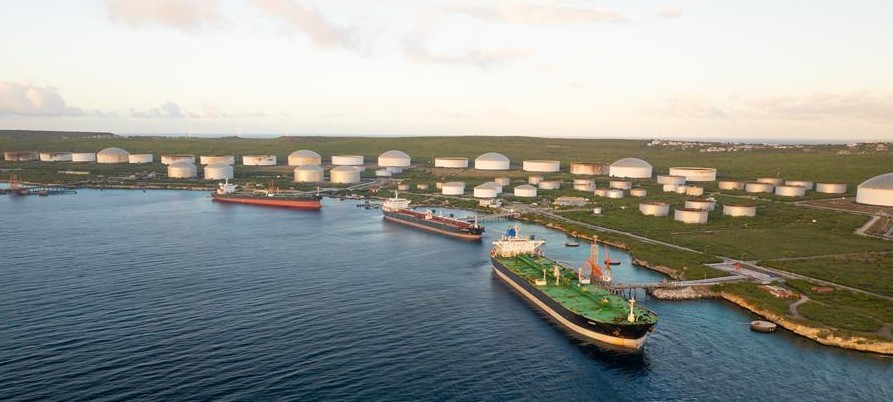
Bullen Bay Curaçao
He specifically identified Bullenbaai as a potential logistics center for the storage and transshipment of Venezuelan crude oil.
According to Hoogeveen, the reopening of Venezuela's oil market offers opportunities for Curaçao to strengthen its position in regional energy transportation.
The parliamentarian also referred to increasing storage and transshipment activity at Bullenbaai, which he associated with developments in Venezuela's oil sector.
Questions About Agreements With Venezuela
Hoogeveen asked the Dutch government to identify the economic arrangements reached with Venezuela following the restoration of diplomatic relations with Caracas.
His questions followed a meeting in New York in late September involving Dutch Prime Minister Rob Jetten, Curaçao Prime Minister Gilmar Pisas, and Venezuelan interim President Delcy Rodríguez.
The meeting raised expectations about possible improvements in economic cooperation between Curaçao and Venezuela.
However, Berendsen did not identify any new oil storage, transshipment, or energy agreements resulting from the discussions.
Instead, the minister emphasized the historical importance of Venezuela to Curaçao's economy.
He noted that the island's refinery was originally designed to process Venezuelan crude oil, illustrating the close relationship between the two economies.
Although he confirmed that relations with Venezuela are gradually normalizing, he provided no details about new commercial arrangements.
American Sanctions Remain a Major Question
One of Hoogeveen's principal concerns was the impact of United States sanctions on potential oil transactions involving Curaçao.
The parliamentarian asked what role the Netherlands was playing in discussions with Washington to facilitate legitimate commercial activities involving Venezuelan petroleum.
American sanctions have complicated oil-related transactions involving Venezuela for several years, particularly where companies require specific authorizations to conduct business.
An example of these difficulties emerged in April 2025, when the tanker Dhalkut remained in waters around Curaçao for months without authorization to dock at Bullenbaai.
The vessel was awaiting permits, and American sanctions may have played a role in the delays.
The situation demonstrated how international regulatory requirements can affect maritime activities even when facilities and commercial opportunities are available.
Berendsen did not explain whether the Netherlands is currently negotiating with Washington about sanctions affecting Curaçao.
He also did not indicate whether any new American licenses or exemptions have been obtained for oil-related activities.
Bullenbaai's Economic Potential
Bullenbaai has long played an important role in Curaçao's petroleum infrastructure.
Its storage and transshipment facilities could potentially benefit from increased movement of Venezuelan crude oil through the Caribbean.
Such activities could generate revenue from storage, maritime services, logistics, and related business operations.
However, realizing those opportunities depends on more than the availability of infrastructure.
Commercial agreements, regulatory approvals, international sanctions compliance, and reliable oil shipments are all important considerations.
The Dutch government's acknowledgment of Venezuela's economic importance does not, by itself, establish that additional oil activities can proceed.
Curaçao Still Awaiting Concrete Answers
The parliamentary exchange leaves several important questions unanswered.
It remains unclear whether new agreements have been reached concerning Venezuelan crude oil, whether the Netherlands is actively seeking additional sanctions exemptions for Curaçao, and what concrete measures are being considered to strengthen Bullenbaai's position.
For Curaçao, these questions are directly connected to the island's ambitions to make productive use of its existing petroleum infrastructure.
While the Dutch government has expressed support for resolving the debt dispute with Venezuela, no comparable commitments were announced regarding the expansion of oil-related commercial activities.
The future of Bullenbaai's role in Venezuelan oil transportation therefore remains dependent on further diplomatic, regulatory, and commercial developments.