WILLEMSTAD – Curaçao must strengthen its historical research, build political consensus, and establish a national reparations task force before entering potential negotiations with the Netherlands over the legacy of slavery and colonialism. This was among the central recommendations presented by Member of Parliament Suzanne Camelia-Römer during a well-attended public lecture at Museo Tula.
The lecture, titled "Curaçao and Reparatory Justice," took place on Sunday, November 8, at Landhuis Kenepa and was organized by Fundashon Museo Tula. The venue was filled with participants interested in understanding the latest international developments concerning reparations and the steps Curaçao could take to develop its own national strategy.
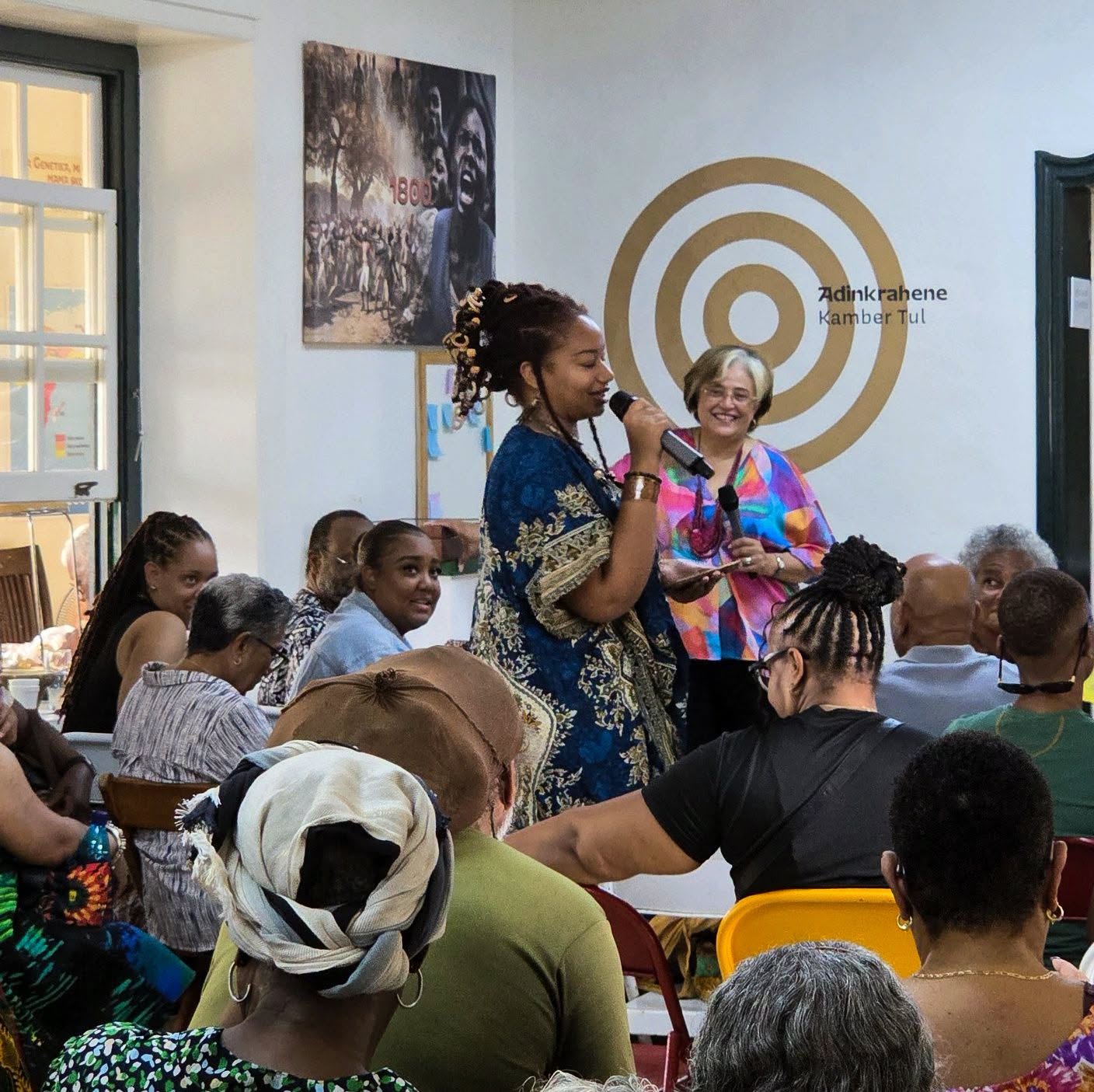
A moment during the meeting
Camelia-Römer shared her observations and conclusions from the Third CARICOM Regional Conference on Reparations, held in Barbados in September 2026.
Her presentation focused on the evolution of the Caribbean reparations movement, the importance of regional cooperation, and the institutional preparations Curaçao would need to undertake before pursuing formal discussions about reparatory justice.
CARICOM's Revised Reparations Strategy
A major part of the presentation examined CARICOM's Ten-Point Plan for Reparatory Justice, originally introduced in 2014 and revised in 2026.
According to the presentation, the revised framework places greater emphasis on legal, political, diplomatic, and developmental approaches to reparations.
It also seeks to strengthen cooperation between Africa and the Caribbean to build broader international support for addressing the historical consequences of slavery and colonialism.
Camelia-Römer outlined several strategic priorities discussed during the Barbados conference, including closer Africa-Caribbean relations, the development of coordinated negotiation strategies, historical research, education, and stronger cooperation between national and international organizations.
These developments provide a regional framework that Curaçao could consider when formulating its own position.
However, Camelia-Römer emphasized that the island must first address important domestic challenges.
Curaçao Must Strengthen Its Preparations
During the lecture, Camelia-Römer reviewed significant milestones in Curaçao's historical development, beginning with Tula's uprising against slavery in 1795.
She also referred to the recognition of Papiamentu, the rehabilitation of Tula as a national hero, and the official apologies issued by the Dutch government and King Willem-Alexander for the Netherlands' history of slavery.
Although these developments represent important steps toward historical recognition, Camelia-Römer argued that further preparation is necessary to translate recognition into a structured process of reparatory justice.
Among the challenges identified were insufficient historical research, political divisions, limited institutional capacity, and the risk of entering negotiations without adequate preparation.
She warned that these weaknesses could undermine Curaçao's ability to develop a coherent and effective national position.
Proposal for a National Reparations Task Force
One of the principal recommendations was the establishment of a National Reparations Task Force to help coordinate Curaçao's approach.
Camelia-Römer also proposed involving organizations connected to the history of slavery in policy discussions, expanding historical research, and establishing an archive to support documentation and public access to relevant information.
Another recommendation was to develop a national agenda addressing decolonization, reparations, and healing.
Such an agenda would provide a framework for determining Curaçao's priorities and coordinating its efforts with the broader CARICOM strategy.
The presentation also emphasized the importance of building widespread national support before entering negotiations with the Netherlands.
According to Camelia-Römer, the success of any reparations process will depend not only on negotiations themselves but also on preparation, unity, and credible historical evidence.
From Historical Recognition to Concrete Action
The discussion highlighted the distinction between acknowledging historical injustices and developing policies to address their continuing consequences.
While official apologies and recognition have contributed to public awareness, Camelia-Römer's proposals focus on the institutional and political work needed to move the process forward.
Her recommendations suggest that Curaçao should determine its own priorities while maintaining close cooperation with regional partners pursuing reparatory justice.
The proposals presented during the lecture were recommendations for consideration, rather than government decisions or measures already approved for implementation.
For Curaçao, the central message was that meaningful progress toward reparatory justice requires a coordinated national approach supported by historical research, institutional preparation, and broad participation.
The lecture concluded with an opportunity for participants to ask questions, share their perspectives, and offer recommendations concerning the island's future approach to reparations.