KANSAS CITY – As Curaçao takes on Ecuador tonight in the 2026 FIFA World Cup, the national team will be playing in one of the most iconic sports venues in the United States—a stadium that may be entering the final chapter of its long and storied history.
The match will be played at Arrowhead Stadium in Kansas City, Missouri, home of the NFL's Kansas City Chiefs and one of the largest and most recognizable stadiums in North America.
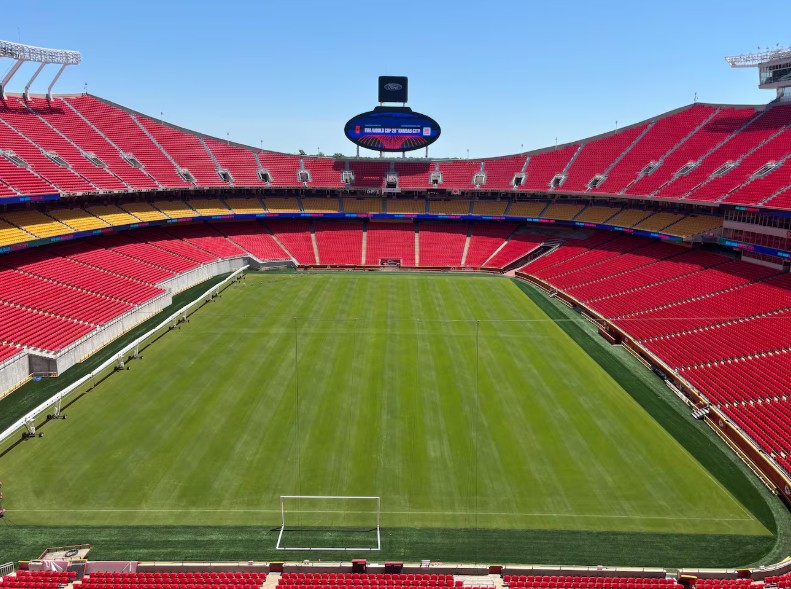
Photo credit: KCTV 5
Opened in 1972, Arrowhead Stadium has a seating capacity of more than 76,000 spectators. For the World Cup, the venue's capacity has been adjusted to approximately 72,000 to 73,000 seats to meet FIFA requirements. The stadium is part of the Truman Sports Complex, which also includes neighboring Kauffman Stadium, home of Major League Baseball's Kansas City Royals.
For football fans from Curaçao and around the world, Arrowhead has become known this summer as one of the host venues of the World Cup. In the United States, however, it is famous for something else: its atmosphere. The stadium has repeatedly set records for crowd noise during Kansas City Chiefs games, with sound levels exceeding 140 decibels, making it one of the loudest sports venues ever recorded.
The sheer size of the stadium dwarfs many well-known European venues. By comparison, Amsterdam's Johan Cruijff ArenA seats approximately 55,000 spectators, while Rotterdam's De Kuip accommodates around 51,000. Arrowhead can host more than 20,000 additional fans.
Despite its iconic status, the future of the stadium is far from certain.
The Kansas City Chiefs have been exploring plans for a new state-of-the-art domed stadium across the state line in Kansas. The proposed project is estimated to cost around $3 billion and would provide the franchise with a modern indoor facility capable of hosting major events, including future Super Bowls. Arrowhead's open-air design limits its ability to host the NFL's championship game, which is typically awarded to cities with warm climates or indoor stadiums.
If the Chiefs eventually relocate, local officials and media outlets believe Arrowhead could become obsolete by the end of the decade. Some reports have even suggested that demolition could become a realistic option if a long-term use for the facility cannot be found.
The future of neighboring Kauffman Stadium is also uncertain. The Royals have been pursuing plans for a new downtown baseball stadium, raising questions about the long-term survival of the entire Truman Sports Complex.
That makes tonight's World Cup match a particularly unique moment for Curaçao. Not only is the island nation competing on football's biggest stage, but it is doing so in a stadium that has been part of American sports history for more than half a century and could be approaching its final years as a major international venue.
While thousands of Curaçao supporters focus on the action on the pitch against Ecuador, city leaders and sports executives are already looking toward a future that could reshape the sporting landscape of Kansas City—and potentially bring an end to one of America's most beloved sporting cathedrals.