PANAMA CITY – Members of the Curaçao Parliament have emphasized the importance of strengthening healthcare legislation, improving disease prevention, and learning from regional experiences following two days of discussions at the Latin American and Caribbean Parliament (PARLATINO) headquarters in Panama.
The meetings, held on November 12 and 13, 2026, brought together parliamentarians, senators, and representatives from several countries to examine common challenges facing healthcare systems throughout Latin America and the Caribbean.
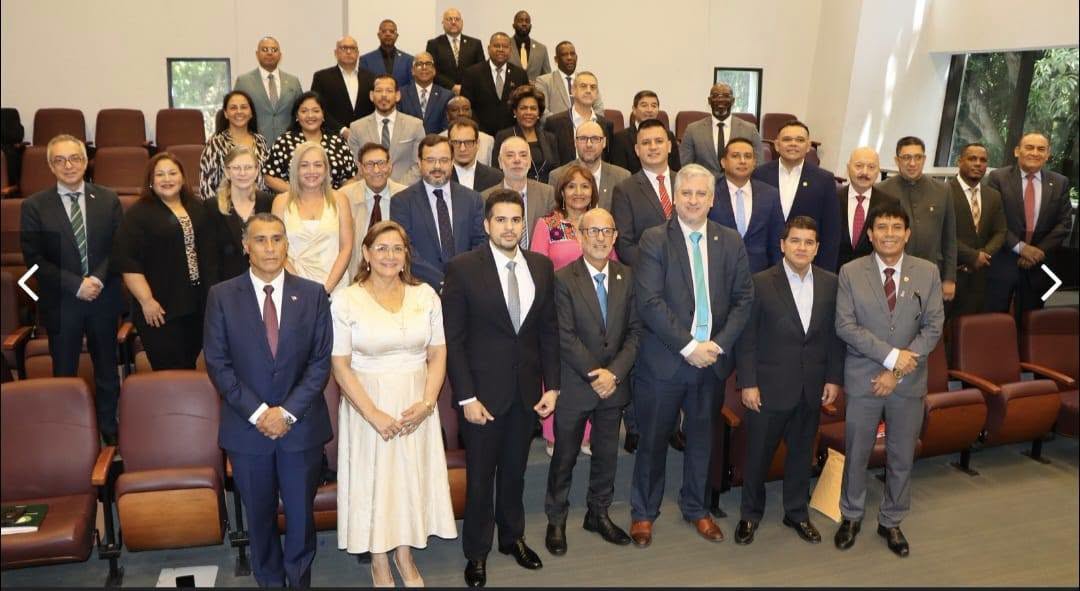
PARLATINO Delegates
Among the main topics were healthcare financing, chronic disease prevention, mental health, disability rights, and the development of legislation aimed at improving access to quality healthcare.
In a statement following the meetings, MFK parliamentarian Juniel Carolina described the discussions as valuable opportunities for Curaçao to learn from the experiences of other countries while contributing its own perspectives on healthcare challenges.
According to Carolina, understanding how other countries organize, finance, and manage their healthcare systems can provide important insights into the difficulties Curaçao faces in delivering sustainable and accessible healthcare.
Healthcare Financing and Chronic Diseases Among Main Concerns
During the meetings, participants examined different healthcare models, including unified systems and systems organized through separate institutions.
Discussions focused on how these systems operate, the sources used to finance healthcare services, and the challenges governments face in maintaining quality care while controlling costs.
Special attention was given to the prevention and treatment of chronic illnesses, particularly diabetes and hypertension.
These conditions represent significant public health challenges across the Caribbean, where governments must address both the medical consequences of chronic diseases and the financial pressure they place on healthcare systems.
Participants also exchanged experiences concerning hospital care, patient treatment, and preventive healthcare programs.
For Curaçao, Carolina said, these discussions offered a broader perspective on issues that are also relevant to the island's healthcare system.
He emphasized that international parliamentary exchanges should not be limited to presenting national experiences but should also provide opportunities to identify successful approaches that could be adapted locally.
Mental Health Identified as Regional Priority
Mental health emerged as another major subject during the discussions.
PARLATINO participants considered the possibility of developing a regional Model Law on Mental Health that countries could use as a reference when creating or updating their national legislation.
Such model laws are intended to provide legislative guidance rather than impose identical legal requirements on participating countries.
Each country would be able to adapt the proposed principles to its own legal system, institutional structure, and healthcare needs.
The initiative reflects growing regional recognition of the importance of mental healthcare and the need for legislative frameworks that support appropriate services and patient protection.
Carolina emphasized that model laws can be useful instruments for strengthening national legislation because they allow countries to draw on shared experiences while maintaining their own legislative authority.
Regional Health Roadmap Under Discussion
The meetings also addressed the need to develop a broader regional health roadmap covering several emerging and existing public health challenges.
Among the areas identified were epidemiological surveillance, the control of zoonotic diseases transmitted between animals and humans, rare diseases, climate change, and food safety.
These issues increasingly require cooperation between countries because infectious diseases, environmental threats, and food safety risks are not confined to national borders.
Participants discussed the importance of coordinated approaches that could strengthen public health preparedness and improve the exchange of information across the region.
The proposed roadmap would provide a framework for identifying common priorities and encouraging cooperation among participating countries.
Lessons Must Be Shared in Curaçao
Carolina stressed that the knowledge gained during international parliamentary meetings should not remain confined to discussions in Panama.
According to the parliamentarian, the experiences and information collected should be shared with colleagues from different political factions in the Curaçao Parliament, as well as institutions and professionals working in the healthcare sector.
He believes this exchange could contribute to more informed legislative discussions and help identify practical improvements for Curaçao's healthcare system.
Carolina noted that hearing how other countries address healthcare financing, disease prevention, treatment, hospital services, and patient care helps parliamentarians better understand the challenges facing their own communities.
He also highlighted the importance of evaluating international best practices to determine whether they could contribute to improving healthcare delivery in Curaçao.
The meetings were attended by two members of the Curaçao Parliament, although Carolina's statement did not identify the second representative.
Healthcare as a Fundamental Right
The discussions reinforced the importance of regional cooperation, parliamentary dialogue, and the exchange of expertise in strengthening public healthcare throughout Latin America and the Caribbean.
Carolina emphasized that healthcare must remain a fundamental right and that parliamentarians have a responsibility to contribute to legislation and public policies that protect the population and promote better health outcomes.
For Curaçao, the challenge will be translating the lessons from the regional discussions into concrete parliamentary initiatives and policy improvements.
The potential development of model legislation on mental health, combined with regional cooperation on chronic diseases and healthcare financing, could provide opportunities for future discussions about strengthening the island's healthcare system.
The meetings concluded with a renewed emphasis on cooperation and the shared responsibility of governments and legislators to improve healthcare access, prevention, and the well-being of their populations.