WILLEMSTAD – Curaçao is celebrating 15 years as an Associate Member of UNESCO, marking an important milestone in its international cooperation in education, science, culture and sustainable development. The anniversary was highlighted during a meeting between Governor Mauritsz de Kort, UNESCO Caribbean Director and Representative Eric Falt, and Marva Browne, Secretary-General of the Curaçao National Commission for UNESCO.
The meeting took place on Monday, October 26, 2026, at the Governor's Palace, where discussions focused on the achievements of the past fifteen years and opportunities to strengthen cooperation in the future.
Among the topics discussed were the preservation of Willemstad's UNESCO World Heritage status, the protection and promotion of Papiamentu, the safeguarding of Curaçao's cultural heritage and the possibility of designating part of the island as a UNESCO Biosphere Reserve.
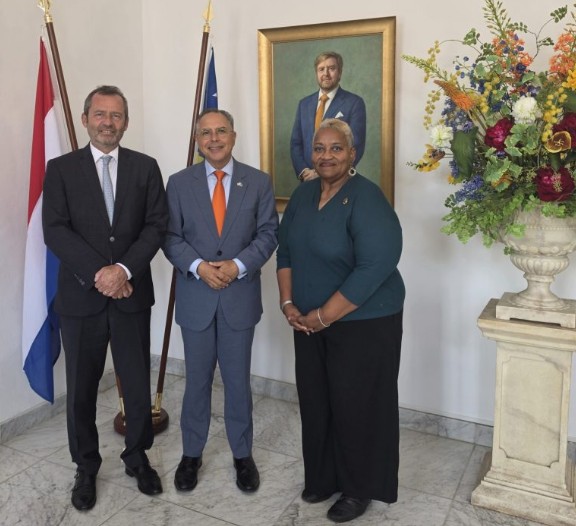
Eric Falt, His Excellency Mauritsz de Kort, and Ms. Marva Browne
The proposed designation would fall under UNESCO's Man and the Biosphere (MAB) Programme, which promotes the conservation of biodiversity while supporting sustainable development and the responsible use of natural resources.
Authorities are exploring whether Curaçao could nominate an area for recognition under the program. No specific location or timetable for a possible nomination has been announced.
Fifteen Years of International Cooperation
Curaçao officially became UNESCO's seventh Associate Member on October 25, 2011, during the organization's 36th General Conference in Paris.
The admission followed the constitutional changes of October 10, 2010, when Curaçao became an autonomous country within the Kingdom of the Netherlands.
According to Marva Browne, the constitutional transition created new opportunities for Curaçao to establish its own international partnerships and participate more actively in UNESCO programs, regional initiatives and international discussions.
Over the past fifteen years, Curaçao has expanded its involvement in several areas of UNESCO's work, including quality education, multilingualism, youth empowerment, scientific cooperation, cultural and natural heritage protection, freedom of expression and sustainable development.
The Curaçao National Commission for UNESCO has worked with government institutions, educational organizations, universities, cultural institutions, civil society groups, youth organizations and international partners to advance these objectives.
Its activities have also included promoting media and information literacy, disaster risk reduction and global citizenship.
Browne emphasized that the anniversary represents more than a celebration of membership. It is also an opportunity to recognize the partnerships and achievements that have strengthened Curaçao's international position.
A UNESCO Relationship Dating Back 43 Years
Although Curaçao is celebrating fifteen years of its own Associate Membership, its relationship with UNESCO extends much further into the past.
In 1983, the Netherlands Antilles became UNESCO's first Associate Member, establishing a relationship that continued through the constitutional changes of 2010.
Browne played a significant role during both periods.
She served as the last Secretary-General for UNESCO under the former Netherlands Antilles and subsequently became the first Secretary-General of the Curaçao National Commission for UNESCO following the constitutional transition.
Reflecting on this experience, Browne described it as a unique privilege to have witnessed the closing of one chapter and the beginning of another.
She noted that the past fifteen years have brought challenges but also significant progress through stronger partnerships, greater international visibility and increasing recognition of Curaçao within UNESCO.
According to Browne, the anniversary should also recognize the contributions of individuals and organizations that helped establish and strengthen Curaçao's relationship with the international organization.
Protecting Willemstad, Papiamentu and Cultural Heritage
During the meeting with Governor De Kort, particular attention was given to protecting Curaçao's cultural identity and historical heritage.
One of the priorities discussed was maintaining the historic district of Willemstad's position on the UNESCO World Heritage List.
The preservation of Papiamentu was another important subject, reflecting the language's central role in Curaçao's cultural identity.
The discussions also addressed broader efforts to protect cultural traditions and heritage for future generations.
Education and youth development remained central themes, with the participants emphasizing the importance of continuing to invest in young people through international cooperation and educational opportunities.
Curaçao Explores UNESCO Biosphere Reserve
Another significant topic was the possibility of Curaçao participating more extensively in UNESCO's Man and the Biosphere Programme.
The program seeks to promote a balanced relationship between people and nature by encouraging biodiversity conservation alongside sustainable economic and community development.
A UNESCO Biosphere Reserve designation could provide an international framework for protecting a selected natural area while promoting research, environmental education and sustainable activities.
The government and relevant partners are examining whether an area of Curaçao could qualify for nomination.
Such a designation would require further preparation and assessment, and the discussions do not mean that Curaçao has already received biosphere reserve status.
The initiative reflects growing attention to environmental protection and the importance of preserving Curaçao's natural resources while supporting responsible development.
Looking Toward the Next Chapter
Governor De Kort's meeting with Falt and Browne reaffirmed the ambition to build on Curaçao's longstanding cooperation with UNESCO.
The participants emphasized continued investment in education, youth, cultural heritage and environmental protection, both in Curaçao and across the wider Caribbean region.
For Browne, the anniversary is an opportunity to reflect on the progress made since 2011 while recognizing that the relationship with UNESCO is an ongoing commitment.
"Our story with UNESCO did not begin fifteen years ago, and it does not end with this anniversary," she stated.
She described the partnership as a continuing journey rooted in history, strengthened by achievements and inspired by responsibility toward future generations.
The anniversary therefore marks not only fifteen years of Associate Membership but also a renewed commitment to international cooperation, cultural preservation and sustainable development as Curaçao prepares for the next chapter of its relationship with UNESCO.