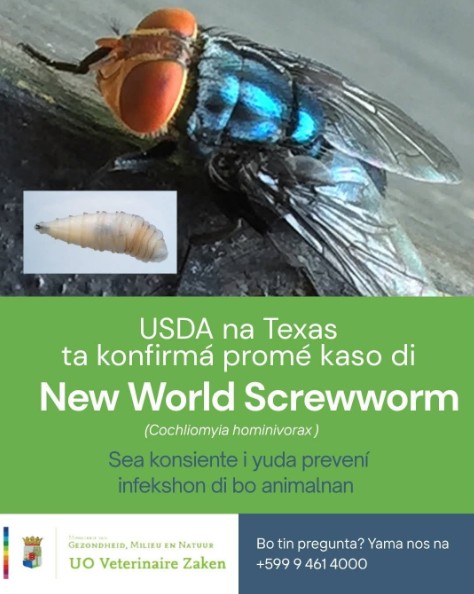
WILLEMSTAD – Curaçao's Veterinary Affairs Department is urging livestock owners, animal importers, and veterinarians to remain vigilant following the confirmation of the first case of New World Screwworm in Texas by the United States Department of Agriculture (USDA).
Authorities warn that the parasite, known scientifically as Cochliomyia hominivorax, is currently spreading rapidly through parts of Mexico and Central America and poses a potential threat to Curaçao through the importation of animals or travelers entering the island with pets.
The New World Screwworm is a parasitic fly that lays its eggs in open wounds on living animals. Once the eggs hatch, the larvae feed on living tissue, burrowing deeper into the flesh and causing severe and rapidly expanding wounds. Veterinary officials warn that untreated infestations can become fatal within one to two weeks.
According to Veterinary Affairs, farmers and animal owners should closely monitor their animals for signs of infection. Symptoms may include wounds that worsen quickly, foul-smelling lesions, bloody discharge, visible larvae in wounds, animals isolating themselves from the herd, reduced appetite or milk production, restlessness, and repeated licking or biting of affected areas.
Officials are advising livestock owners to inspect their animals daily, particularly if they have wounds. Any injury, no matter how small, should be treated and covered immediately. Farmers are also encouraged to avoid procedures that create wounds, such as castration or ear tagging, during periods when fly activity is high.
Suspected cases should be reported to Veterinary Affairs without delay so that appropriate measures can be taken.
Authorities also noted that the New World Screwworm is a zoonotic parasite, meaning humans can become infected through open wounds. Although the parasite is not currently present in Curaçao, officials stressed the importance of maintaining strict vigilance to prevent its introduction to the island.
The warning comes as regional animal health authorities continue monitoring the spread of the parasite across the Americas, where outbreaks have raised concerns about livestock health, agricultural losses, and potential impacts on public health.