WILLEMSTAD – Nearly one year after a study visit to the Netherlands, a group of 16 education professionals in Curaçao continues working on the development of citizenship education, with the aim of preparing students to become responsible and active members of society.
The initiative brings together representatives from Curaçao's seven school boards and the University of Curaçao (UoC). Since November 2025, the group has been examining how citizenship education can be incorporated into the local education system in a way that reflects Curaçao's social, cultural and educational environment.
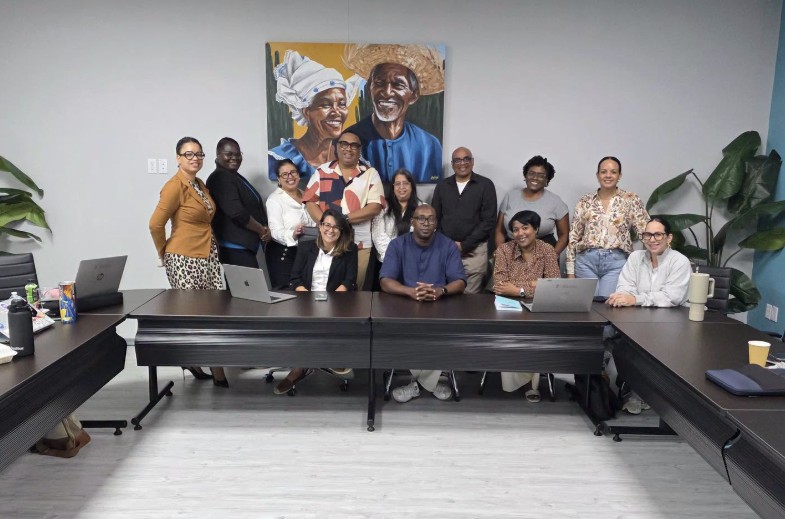
The project centers on two fundamental questions: What makes someone a good citizen, and how can schools prepare young people to understand their responsibilities and their place in society?
Learning from the Netherlands Without Copying Its System
In November 2025, the group traveled to the Netherlands to study how citizenship education is organized and implemented in Dutch schools.
The purpose of the visit was not to adopt the Dutch model directly but to gain knowledge and practical experience that could be adapted to Curaçao's circumstances.
Following their return, the participants divided into three specialized working groups, known as Special Interest Groups (SIGs), each responsible for a specific aspect of developing citizenship education.
The first group focuses on defining the learning objectives students should achieve. Its task is to determine what students should know, understand and be able to demonstrate in relation to citizenship.
The second group concentrates on developing teaching materials that educators can use to introduce and strengthen citizenship education in their classrooms.
The third group addresses teacher professional development, examining how educators can acquire the knowledge, skills and confidence needed to teach citizenship effectively.
Together, these three areas are intended to establish a foundation for integrating citizenship education into Curaçao's school system.
Work Continues Across All Three Areas
According to the initiative's organizers, the working groups have remained active since November 2025, making progress on learning objectives, educational materials and professional development.
Their work reflects an effort to develop an approach that can be applied in Curaçao's classrooms while taking account of the island's particular characteristics.
The participation of representatives from all seven school boards is intended to bring different educational perspectives into the development process.
The involvement of the University of Curaçao also provides an academic dimension to the initiative.
Rather than treating citizenship education as a subject that can simply be imported from another country, the group is working toward an approach suited to the needs of Curaçao's students and teachers.
Working Group to Determine Next Steps
The full group of 16 education professionals is scheduled to meet again this week to bring together the results achieved by the three Special Interest Groups.
During the meeting, participants will review their progress and determine the next steps in the development process.
The announcement does not specify when citizenship education will be formally introduced or expanded in schools, whether a final curriculum has been completed, or when the proposed teaching materials will become available.
Nevertheless, the continued work demonstrates that the initiative has progressed beyond its initial exploratory phase in the Netherlands.
The central objective remains to equip schools with the educational goals, classroom resources and teacher preparation necessary to help young people develop an understanding of citizenship and their role in Curaçaoan society.
With the working groups preparing to consolidate their findings, the next phase will be important in determining how the initiative can move from curriculum development toward practical implementation in schools across Curaçao.