WILLEMSTAD – Curaçao-born conservationist and tourism operator Quinten Knipping is playing a key role in wildlife conservation efforts in South Africa through the relocation and protection of endangered rhinos at Mapesu Private Game Reserve.
Knipping, who manages the reserve, has been involved in the transfer of a significant number of rhinos from the African Parks Rhino Rewild initiative to Mapesu as part of broader efforts to establish secure and sustainable rhino populations in Southern Africa.
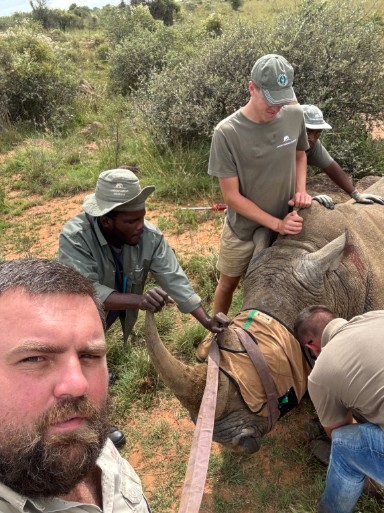
The exact number of relocated rhinos has not been disclosed publicly for security reasons linked to ongoing anti-poaching operations.
Located in South Africa’s Limpopo Province near the Mapungubwe National Park UNESCO World Heritage area, Mapesu Private Game Reserve covers approximately 12,500 hectares and is home to the Big Five along with several endangered and protected species.
Under Knipping’s management, the reserve has participated in multiple wildlife reintroduction and conservation programs involving lions, elephants, cheetahs, African wild dogs, and rhinos. Several of those initiatives were carried out in cooperation with leading African conservation organizations and species management programs.
The reserve has gained recognition for combining wildlife conservation with sustainable tourism and regenerative land management practices.
“Conservation requires long-term commitment, strong partnerships, and secure protected areas,” Knipping said. “Being entrusted with these animals is an enormous responsibility and something we are extremely proud of at Mapesu.”
In addition to species protection, the reserve is involved in habitat restoration, ecosystem management, anti-poaching support, and conservation-focused tourism.
Mapesu offers several accommodation concepts aimed at both international and domestic visitors, including safari lodges, wilderness camps, glamping experiences, and family-oriented bush accommodation.
Visitors can participate in Big Five game drives, walking safaris, birdwatching activities, and cultural heritage excursions connected to the Greater Mapungubwe region.
Knipping said he hopes his journey from Curaçao to wildlife conservation in Africa can inspire young people from the Caribbean to pursue international ambitions in conservation, sustainability, tourism, and environmental protection.
“Coming from a small island does not limit what you can achieve internationally,” he said. “I hope more young people from Curaçao and the Caribbean realize they can make a meaningful impact anywhere in the world.”
Across Africa, partnerships between private game reserves and conservation organizations are increasingly viewed as essential in protecting endangered species such as rhinos from poaching, habitat loss, and population decline.