WILLEMSTAD – The future of financial supervision over Curaçao is returning to the agenda of discussions between the island's government and the Netherlands, with preparations underway for a new evaluation of the Kingdom Financial Supervision Act in 2027.
The issue was discussed on Thursday, October 15, during a meeting between Curaçao's Council of Ministers, chaired by Prime Minister Gilmar Pisas, and Dutch State Secretary for the Interior and Kingdom Relations Eric van der Burg.
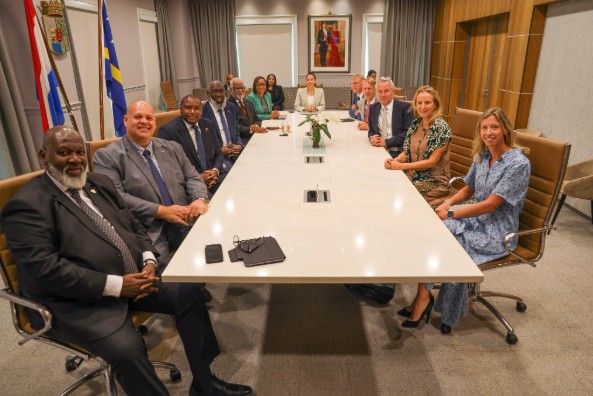
State Secretary's meeting with the Council of Ministers in Willemstad
The discussions also addressed the appointment of Curaçao's representative to the Board of Financial Supervision, known as the College financieel toezicht (Cft).
The upcoming evaluation is particularly significant because Curaçao and Sint Maarten have been subject to financial supervision under Kingdom legislation since becoming autonomous countries on October 10, 2010.
The legislation was intended to promote sound public financial management, sustainable government finances, and compliance with established budgetary standards.
However, more than 16 years after the introduction of the supervision framework, both countries remain subject to oversight.
In October 2024, the Kingdom Council of Ministers decided to continue financial supervision after an independent evaluation concluded that Curaçao and Sint Maarten had not yet demonstrated consistent, structural compliance with the legal budgetary standards.
Although the evaluation acknowledged the economic recovery following the COVID-19 pandemic, it concluded that the conditions for ending supervision had not been met.
The committee recommended the development of clearer criteria for assessing compliance, better use of the flexibility available under the legislation for strategic investments, and stronger independent financial institutions.
The next evaluation must take place no later than 2027.
Against this background, the October 15 discussions come at a time when Curaçao continues to face scrutiny over its financial planning and borrowing proposals.
In August 2026, local news outlet Curaçao.nu reported that the Cft was still unable to determine whether the government's planned borrowing complied with the statutory interest burden limit because essential financial information had not been provided.
According to that report, Curaçao's draft 2027 budget included plans to borrow approximately XCG 190 million for investments.
Under the Kingdom Financial Supervision Act, the annual interest burden of the collective public sector is subject to a ceiling based on average revenues over the preceding three years.
The absence of complete information makes it more difficult for the supervisory body to assess whether additional borrowing remains within the legal framework.
The government's meeting with Van der Burg did not disclose whether the missing information has since been supplied or whether the concerns raised by the Cft have been resolved.
Another matter discussed was the appointment of Curaçao's member of the Cft.
The board has undergone changes in its leadership during 2026.
Former Dutch minister Hans Hoogervorst became chairman of the financial supervision boards on February 1, succeeding Lidewijde Ongering. Paul Hilbers, a former senior official of De Nederlandsche Bank and the International Monetary Fund, joined as the Netherlands' representative on the same date.
The Curaçao government's statement did not identify a candidate for its own seat or indicate when the appointment process is expected to be completed.
The composition of the Cft is relevant because the institution advises on government budgets, monitors financial developments, and reports concerns about compliance with the supervision framework.
The board itself does not replace the authority of Curaçao's elected government or Parliament, but its assessments form part of the Kingdom's financial oversight arrangements.
For Curaçao, the 2027 evaluation will provide another opportunity to examine whether the current supervision system is achieving its objectives and what conditions would be necessary for greater financial autonomy.
The government has not announced any agreement with the Netherlands to reduce or terminate supervision.
For now, the existing framework remains in place, while the two governments prepare for another assessment of Curaçao's public financial management and its ability to meet the statutory standards.