WILLEMSTAD – Curaçao's government is heading toward a stronger-than-expected tax revenue performance in 2026, with Finance Minister Charles Cooper announcing that tax collections are approximately XCG 90 million above expectations as of November 1.
Cooper shared the announcement on social media on Sunday, November 1, crediting the employees and management of the country's tax administration for their efforts in achieving the government's revenue targets.
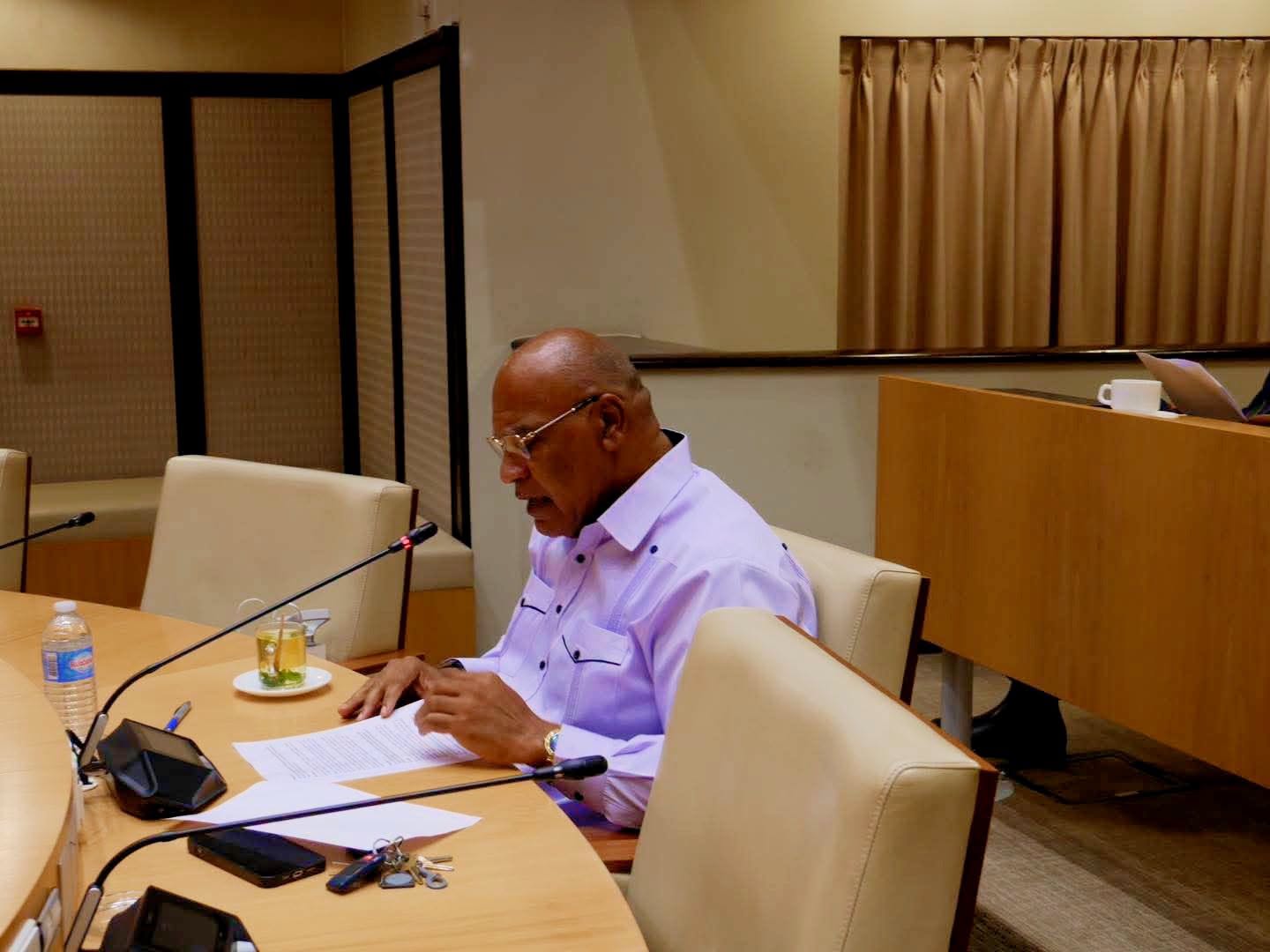
Minister Charles Cooper
The minister specifically praised Jamila and her team, the Tax Collector's Office (Ontvanger) and its employees, as well as Miguel Jackson, whom he recognized for helping ensure that the established targets are achieved.
The announcement represents another indication that government tax revenue is outperforming the original budget projections for 2026.
However, the XCG 90 million mentioned by Cooper refers to additional tax collections and should not automatically be interpreted as an overall government budget surplus. The final fiscal balance also depends on government expenditures and other revenue sources.
Strong Tax Performance Already Visible Earlier This Year
Cooper's announcement follows earlier figures from the Board of Financial Supervision (Cft), which showed that Curaçao had already collected substantially more tax revenue than anticipated during the first half of 2026.
According to figures published in September, tax revenue reached XCG 1.047 billion during the first six months of the year, exceeding the budgeted amount for that period by approximately XCG 84 million.
The stronger performance was largely driven by profit tax, turnover tax and property tax collections.
Total government revenue reached XCG 1.142 billion during the first half of 2026, compared with XCG 1.036 billion during the corresponding period in 2025 and XCG 998 million in 2024.
The higher revenue contributed to a preliminary surplus of approximately XCG 189 million on the ordinary government budget during the first half of the year.
At the time, the Cft urged the government to formally adjust its 2026 budget to reflect both the additional revenue and higher expenditures.
Minister Credits Tax Administration Employees
In his latest announcement, Cooper emphasized the contribution of the officials responsible for tax assessment, collection and revenue management.
By specifically recognizing Jamila, the Tax Collector's Office and Miguel Jackson, the minister highlighted the work being carried out within the government's financial administration to meet collection targets.
The announcement did not provide a detailed breakdown of which taxes contributed most to the additional XCG 90 million or how much of the amount came from current tax obligations compared with the collection of outstanding tax debts.
It also remains unclear whether the figure represents the latest year-to-date variance against the budget or an updated estimate for the full financial year.
Nevertheless, the minister's statement indicates that the government remains confident about its tax collection performance as 2026 approaches its final two months.
Strong Revenue Figures Come Amid Scrutiny of Tax Collection Practices
The positive financial announcement comes at a time when the Tax Collector's Office is also facing increased scrutiny over its internal procedures and administrative controls.
On October 23, Cooper submitted two completed reports from the government auditing foundation SOAB to Curaçao Parliament.
The investigations examined an integrity complaint involving the Tax Collector's Office and the handling of advances related to tax refunds.
A third investigation concerning compliance with the government's general tax collection guidelines remains unfinished.
The reports have raised questions about administrative controls, documentation and the consistent application of collection procedures.
The matter has also attracted attention in the Netherlands.
On October 30, Dutch parliamentarian Nicole Maes submitted written questions to the Dutch government concerning SOAB's findings and the oversight of tax collection practices in Curaçao.
The questions address the handling of individual tax cases, previous concerns raised by financial supervisors and the measures being taken to strengthen accountability.
These investigations concern the administration and oversight of tax collection and do not, by themselves, contradict the higher revenue figures announced by Cooper.
Additional Revenue Does Not Eliminate Budgetary Challenges
Although higher tax collections provide the government with additional financial resources, Curaçao continues to face substantial expenditure pressures.
The Cft has previously emphasized the importance of maintaining financial discipline and avoiding structural spending commitments that cannot be supported by reliable recurring revenue.
The financial supervisor has also raised concerns about uncertainties surrounding the 2027 budget, including projected revenue from a proposed tourist entry tax and unresolved financial challenges affecting Curaçao Medical Center.
The additional XCG 90 million announced by Cooper could improve the government's financial position, but its ultimate effect will depend on expenditure developments, outstanding obligations and the final year-end accounts.
With November and December still remaining in the financial year, the government has not yet presented a final audited result for 2026.
For now, Cooper's announcement points to continued strength in tax collection and provides a positive signal for the country's public finances, while questions remain about the final budget outcome and the ongoing reforms within the tax administration.