CARTAGENA – Colombian authorities have intercepted 7.6 tons of cocaine destined for the Netherlands in what President Abelardo de la Espriella described as the largest cocaine seizure at the port of Cartagena in the past ten years.
The massive shipment was discovered by Colombia's National Police during an anti-narcotics operation conducted with support from the United States Drug Enforcement Administration (DEA). The drugs were concealed in a shipment of powdered panela, an unrefined cane sugar product commonly exported from Colombia.
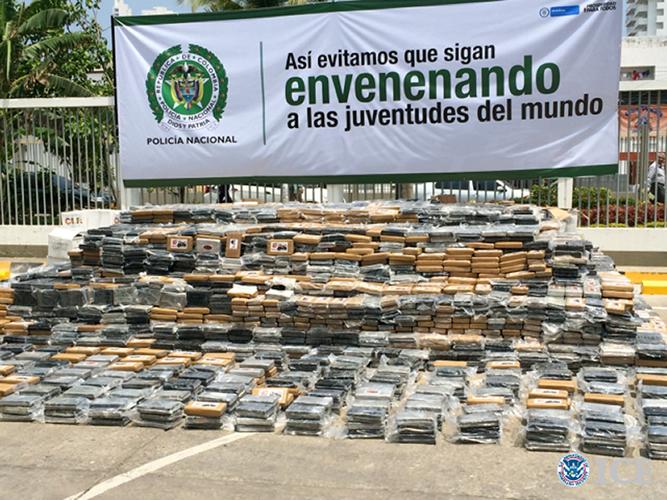
The operation prevented the cocaine from leaving Colombia for the European market, where authorities believe the shipment would have generated substantial revenue for international drug trafficking organizations.
President De la Espriella publicly highlighted the seizure on October 20, describing it as an important achievement in his administration's campaign against organized crime and international drug trafficking.
Cocaine Hidden in Export Shipment
According to information released by Colombian authorities, the shipment was discovered at the port of Cartagena by the National Police's Anti-Narcotics Directorate, known as DIRAN.
The inspection was conducted under the country's Estrategia Esmeralda, an initiative aimed at detecting and disrupting international drug trafficking operations.
Investigators discovered that the cocaine had been mixed with powdered panela in an apparent attempt to conceal the illegal substance within a legitimate export product.
The method was intended to make detection more difficult during routine inspections of cargo leaving Colombia's maritime terminals.
Authorities identified the Netherlands as the shipment's intended destination, although the available reports do not specify the Dutch port where the cargo was expected to arrive.
The seizure highlights the continued use of commercial shipping routes by criminal organizations attempting to transport cocaine from South America to Europe.
Shipment Valued at More Than $200 Million in Europe
Speaking about the operation, President De la Espriella estimated that the confiscated cocaine was worth approximately 43 billion Colombian pesos in Colombia.
He said its potential value in the Netherlands would have exceeded US$200 million.
The president also estimated that the shipment represented approximately 75 million individual doses that would now be prevented from reaching the illegal drug market.
These figures were presented by the Colombian government as estimates of the shipment's potential market value and distribution.
The president emphasized that confiscating large quantities of cocaine not only prevents drugs from reaching consumers but also deprives criminal organizations of revenue used to finance their operations.
Colombian Government Reports 132 Tons Seized in 75 Days
The Cartagena operation comes amid a broader anti-narcotics campaign by the Colombian government.
According to President De la Espriella, Colombian security forces have seized approximately 132 tons of cocaine during the first 75 days of his administration.
The president estimated the combined value of those seizures at US$6.108 billion.
The figures were presented as evidence of the government's efforts to disrupt the financial networks supporting drug trafficking organizations.
The president also praised cooperation between Colombian authorities and the United States, particularly the DEA, in identifying and intercepting major international shipments.
The reported totals are government figures and do not independently establish the financial losses ultimately suffered by trafficking organizations.
President Calls for Stronger Action Against Coca Cultivation
Following the announcement, De la Espriella argued that intercepting shipments alone would not be sufficient to combat Colombia's drug trafficking problem.
He called for stronger action against illicit coca cultivation, including the resumption of crop spraying as part of the government's anti-drug strategy.
The president said authorities must target not only the transportation and distribution of cocaine but also the cultivation and production networks that supply international criminal organizations.
His remarks come amid continuing debate in Colombia over the legal, environmental and public health implications of aerial spraying programs.
The proposed approach would require compliance with applicable legal and judicial restrictions.
Netherlands Remains a Target for International Drug Traffickers
The intended destination of the Cartagena shipment is particularly significant for the Dutch Caribbean and the wider Kingdom of the Netherlands.
The Netherlands is an important European maritime and logistics hub, with major commercial ports connecting international shipping routes to markets throughout the continent.
Drug trafficking organizations have repeatedly attempted to exploit these commercial connections to transport cocaine from Latin America into Europe.
Although the intercepted shipment was reportedly destined for the Netherlands, Colombian authorities have not indicated that Curaçao, Aruba or any other Dutch Caribbean island was involved in its transportation.
The case nevertheless demonstrates the international dimension of cocaine trafficking and the importance of cooperation between law enforcement agencies in producing countries, transit regions and European destinations.
Investigation Into Trafficking Network Continues
The seizure represents a substantial interception of illegal drugs before they could enter the European distribution network.
However, the publicly available information does not establish who organized the shipment, whether arrests have been made or which criminal organization was responsible.
Those questions remain important for determining the full scope of the trafficking operation.
For Colombian authorities, the Cartagena seizure is being presented as a significant achievement in the campaign against international narcotics trafficking.
For European authorities, including those in the Netherlands, the discovery serves as another indication of the scale and sophistication of attempts to move cocaine through international commercial shipping routes.
Photo credit: Colombian National Police