SANTO DOMINGO, WILLEMSTAD – The constitutional relationship between Curaçao, Aruba and Sint Maarten and the Kingdom of the Netherlands emerged as a significant issue during regional climate discussions in Santo Domingo, with participants examining how the autonomous Caribbean countries can implement environmental policies while operating within the wider Kingdom framework.
The issue was discussed during the September meeting of PARLATINO's Special Commission for the Caribbean, which brought together representatives from Caribbean and Latin American legislatures at the Chamber of Deputies of the Dominican Republic.
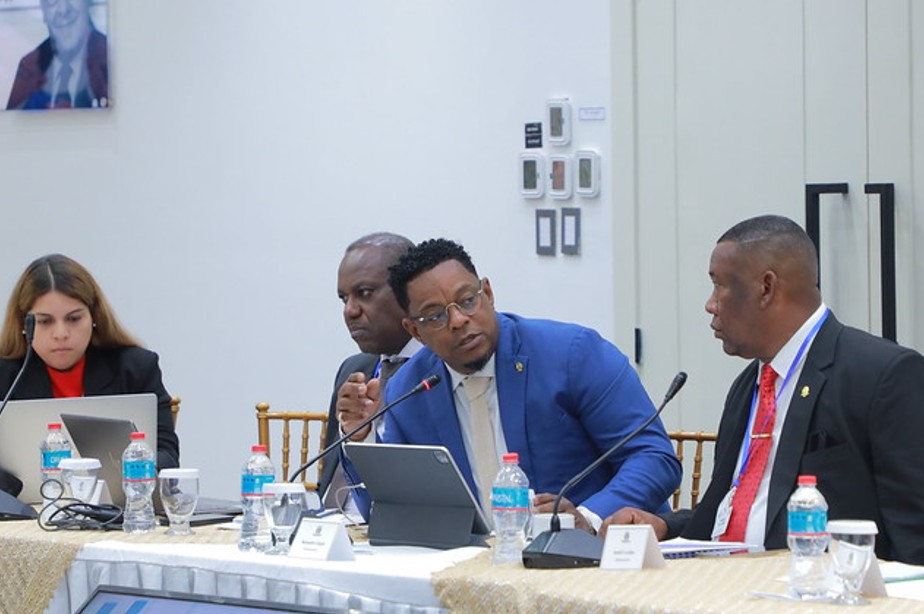
According to the Curaçao Parliament, an expert presentation on international environmental law highlighted that although Curaçao, Aruba and Sint Maarten are autonomous countries within the Kingdom, certain aspects of climate policy can require consultation or involvement at Kingdom level.
Among the issues discussed were financing arrangements, particularly where funding is subject to financial supervision involving the Kingdom, as well as the division of institutional responsibilities between the individual countries and the Kingdom under the Charter for the Kingdom of the Netherlands.
The discussion also addressed the principle of concordance between legal systems, under which certain areas of legislation within the Kingdom are expected to maintain a degree of consistency.
The Interparliamentary Kingdom Consultation, better known as IPKO, was identified during the presentation as a potentially useful forum for consultations among the parliaments of Curaçao, Aruba, Sint Maarten and the Netherlands on measures with broader implications.
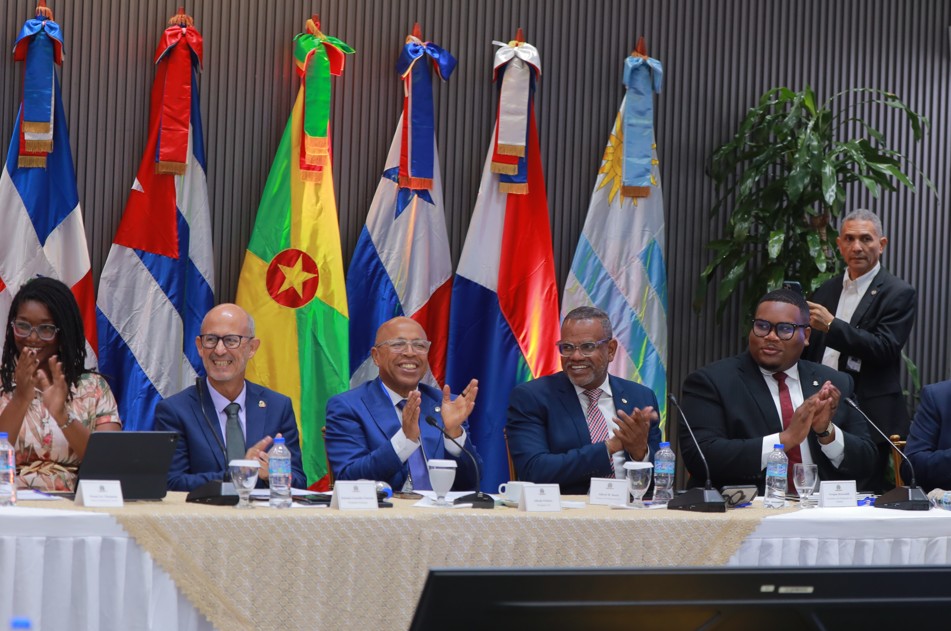
The debate came as PARLATINO's Caribbean commission placed climate action near the top of its agenda. Regional reporting from the Santo Domingo meeting confirms that parliamentarians discussed climate change, island resilience, coastal mitigation and the rapidly growing sargassum challenge.
The commission itself originated with an initiative from the Curaçao Parliament. PARLATINO's governing board approved Curaçao's request for the body on March 25, 2026, and the decision was ratified two days later. The commission was officially installed in Willemstad in May.
At that inaugural meeting, PARLATINO President Rolando González Patricio described the commission as a potential political and technical bridge between Latin America and the Caribbean. Curaçao Parliament President Fergino Brownbill argued that the insular Caribbean needs its own space within the regional agenda because of its particular vulnerabilities and opportunities.
The Santo Domingo meeting represented a continuation of that agenda. Besides environmental issues, the commission discussed food security, sustainable trade, regional integration and legislative cooperation. Representatives from Curaçao, Aruba, Sint Maarten, Cuba, Paraguay, Panama and Mexico were among those reported present, while Venezuela, Uruguay and Nicaragua participated virtually.
The final technical discussions also examined how PARLATINO model laws could be applied or adapted within the legal systems of Curaçao, Aruba and Sint Maarten.
For the three autonomous Caribbean countries, that question carries an additional constitutional dimension. Regional environmental initiatives may be developed through Caribbean and Latin American cooperation, but their implementation must also fit within each country's domestic legal system and, where applicable, the constitutional arrangements governing relations within the Kingdom.