ST. JOHN’S – Curaçao’s tourism industry is arriving at a new moment of international confidence, and according to the President of the Curaçao Hospitality and Tourism Association (CHATA) Mimi Luttge, the island is increasingly becoming one of the Caribbean’s most recognized and talked-about destinations.
Speaking with Curaçao Chronicle during the Caribbean Travel Marketplace in St. John's, Luttge said the atmosphere surrounding Curaçao at the regional tourism event was overwhelmingly positive.
“It’s always very nice to promote Curaçao to buyers,” she said while representing both LionsDive Beach Resort and the new TUI Blue Curaçao resort. “We had a lot of appointments and there was a lot of interest in Curaçao. Everybody knows where we are now, everybody knows us, and everybody knows that it’s going really well.”
The Caribbean Travel Marketplace, organized by the Caribbean Hotel and Tourism Association (CHTA), brings together tourism buyers, airlines, hotel representatives, and travel professionals from across the Caribbean and international markets.
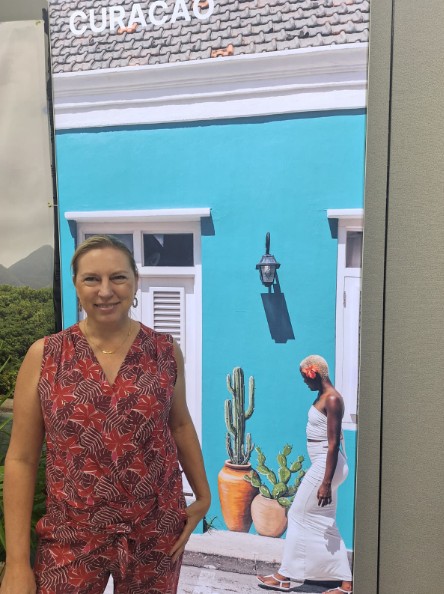
Mimi Luttge during the Caribbean Travel Marketplace in Antigua
According to Luttge, Curaçao’s growing visibility did not happen overnight.
The island had already been experiencing strong tourism growth since the COVID-19 pandemic, but she acknowledged that the worldwide excitement surrounding Curaçao’s historic qualification for the 2026 FIFA World Cup — known locally as the “Blue Wave” — is now adding even more international attention to the island.
“The Blue Wave is just a fantastic opportunity,” she said.
Luttge explained that Curaçao’s football success was even discussed during an Expedia tourism event held during the conference, where Avila Beach Hotel received an award from Expedia while LionsDive received a nomination.
“We promoted the Blue Wave there as well,” she said. “I feel like the whole Caribbean is going to support our team.”
Curaçao Represented on Regional Tourism Stage
Although several Curaçao tourism stakeholders were present at the conference through international hotel brands, Luttge stressed the importance of Curaçao maintaining a visible standalone presence at regional tourism events.
“For me, it’s important that we are visible, that we are here,” she explained.
She noted that participation at international tourism conferences requires significant investment and travel costs, which can influence which companies or organizations attend. Still, she said she was happy Curaçao maintained visibility at the event and attracted considerable interest from tourism buyers and industry partners.
At the same time, Curaçao is already preparing for another important tourism initiative later this year.
According to Luttge, the island will organize a North American trade symposium in October, where international tourism buyers will be invited directly to Curaçao to experience the destination firsthand.
“That may have been the reason why some colleagues decided not to come here, but instead invite people to visit us later this year,” she said.
Sustainable Growth Becoming Central Theme
Despite Curaçao’s strong tourism growth and increasingly positive international image, Luttge emphasized that sustainability and balance must remain central priorities moving forward.
The island recently published new tourism figures showing continued record growth in visitor arrivals, particularly from North America and Europe.
Still, Luttge acknowledged that the speed of tourism expansion has surprised many within the sector.
“The size of the growth surprised us a little bit,” she said. “It went really, really fast.”
As president of CHATA, Luttge explained that the organization is actively reflecting on what type of tourism development Curaçao wants for the future.
“We asked for a moment to reflect on who we want to be, which visitors we want to attract, how we are going to attract them, and make sure that everything stays balanced,” she said.
According to her, the island still has room for tourism growth, but only if that growth is carefully managed and sustainable.
“Yes, we want growth in tourism, but it needs to be sustainable as well.”
Caribbean Cooperation Growing Stronger
Luttge also highlighted the increasing cooperation between Caribbean tourism destinations despite the natural competition between islands for visitors.
She noted that destinations across the region are facing similar challenges related to tourism growth, infrastructure, sustainability, and balancing economic benefits with quality of life.
“The Caribbean is very popular in general right now,” she said.
That shared reality, according to Luttge, is creating stronger regional cooperation between hotel associations and tourism organizations throughout the Caribbean.
“We are competitors in terms of destinations,” she explained, “but we are also making each other stronger.”
Through partnerships between CHATA, CHTA, and organizations from neighboring islands, Curaçao hopes to learn from both the successes and mistakes of other Caribbean destinations as it continues building its tourism future.
For Luttge, the mood at the Caribbean Travel Marketplace reflected something larger than business meetings and hotel promotions.
It reflected a growing sense that Curaçao is no longer simply emerging as a tourism destination — but increasingly establishing itself as one of the Caribbean’s rising success stories.