WILLEMSTAD – The parliaments of Aruba, Curaçao and Sint Maarten are continuing efforts to establish a formal mechanism for resolving disputes within the Kingdom of the Netherlands, as the three countries also examine the possible extension of their existing reform agreements with the Netherlands.
Both issues were discussed during the tripartite parliamentary meeting held in Curaçao on Thursday, October 15, 2026.
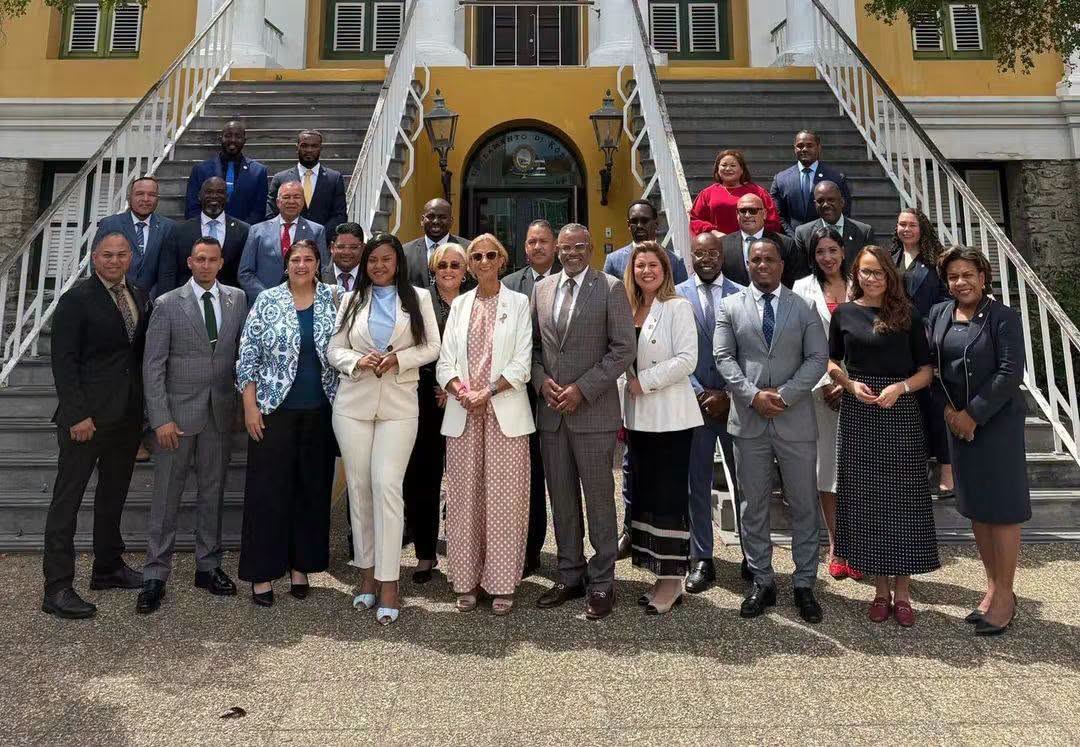
MPs of the three Dutch Caribbean Parliaments
The delegations received an update from the Petit Comité Geschillenregeling, which is monitoring progress on a proposed Kingdom Dispute Settlement Act.
The legislation seeks to establish a formal procedure for addressing disagreements between the Caribbean countries and the Kingdom concerning the interpretation of the Charter for the Kingdom of the Netherlands.
The proposal is particularly significant because the Charter has required a dispute settlement mechanism since October 2010, but efforts to establish an acceptable system have faced years of disagreement.
A previous legislative proposal was withdrawn after objections from Aruba, Curaçao and Sint Maarten. The three Caribbean countries subsequently took the initiative to develop their own proposal.
That proposal was submitted to the Dutch House of Representatives by Aruba's Minister Plenipotentiary in September 2025.
Under the proposed legislation, disputes that cannot be resolved through consultation could be referred to the Council of State of the Kingdom.
The Council would issue a binding decision, which the Kingdom Council of Ministers would not be permitted to overturn.
The Council of State issued its advisory opinion on the proposal in March 2026. The legislation has not yet been enacted.
During Thursday's meeting, the parliamentary delegations also exchanged information about their respective countries' positions on the possible extension of the reform packages, known as the Landspakketten.
These agreements were introduced to guide economic, financial, and administrative reforms in Aruba, Curaçao and Sint Maarten, with implementation supported through cooperation with the Netherlands.
The current cooperation arrangement is scheduled to run until April 2027, making discussions about a possible extension increasingly relevant.
The parliamentary statement did not indicate whether the three countries support an extension or whether they have agreed on a common position.
Another subject discussed was the work being undertaken by the respective governments and parliaments to address the historical legacy of slavery.
The delegations exchanged information about national initiatives and their countries' approaches to the issue, although no new joint measures were announced.
The meeting was the fourth tripartite parliamentary consultation of 2026, following earlier discussions in February, April and June.
The three parliaments are expected to continue their consultations on January 12, 2027, when the next tripartite meeting takes place in Sint Maarten.