CARACAS – Venezuela’s emerging political negotiations have opened a new debate over whether institutional reform should go beyond replacing senior officials and include investigations into the controversial handling of the July 28, 2024 presidential election.
The issue has gained renewed attention after representatives of the government and sectors of the opposition reached an agreement this week to completely renew the country’s Supreme Tribunal of Justice (TSJ). The agreement emerged from negotiations between National Assembly President Jorge Rodríguez and opposition representative Dinorah Figuera.

Caryslia Rodríguez
The agreement could ultimately mean the departure of TSJ President Caryslia Rodríguez, who played a central role in the judicial process that validated Nicolás Maduro’s disputed 2024 reelection.
However, critics argue that replacing Rodríguez and National Electoral Council (CNE) President Elvis Amoroso would not by itself address what happened following the presidential election.
They are calling for an independent investigation into decisions made by both institutions and argue that any criminal responsibility should be determined through judicial proceedings with full due-process guarantees.
The controversy dates back to July 28, 2024, when the CNE declared Maduro the winner. Amoroso announced that Maduro had received 51.2 percent of the vote, but the electoral authority did not publish polling-station-level results supporting that declaration.
The opposition disputed the result and collected copies of polling-station tally sheets that it said demonstrated a decisive victory for opposition candidate Edmundo González Urrutia.
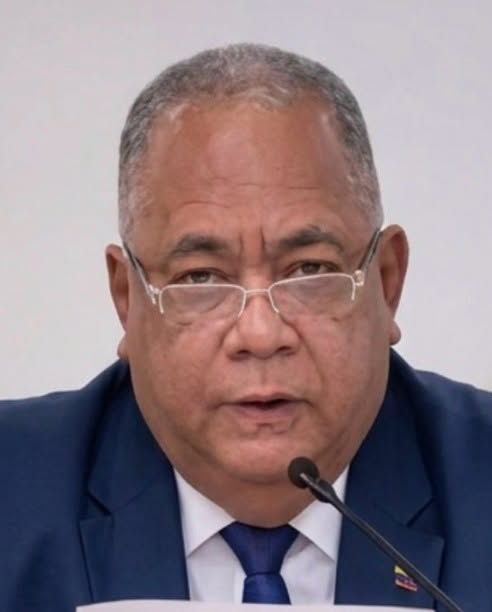
Elvis Amoroso
International scrutiny subsequently intensified.
The Carter Center, which had been invited to observe the election, concluded that the process did not meet international standards for electoral integrity and said the CNE’s failure to publish disaggregated results prevented verification of the announced outcome. Its final report again stressed the importance of publishing the complete polling-station results.
Maduro subsequently asked the TSJ to review the election.
In August 2024, the Supreme Court, with Caryslia Rodríguez playing a prominent role in the proceedings, validated the CNE result declaring Maduro the winner. The decision was heavily criticized by the opposition and international observers who questioned the court’s independence.
The political circumstances have changed significantly since then.
The latest negotiations between the government and opposition representatives produced an agreement to replace all TSJ magistrates and reopen the judicial selection process. The parties also agreed to expand the Judicial Nominations Committee and work jointly on recovering Venezuelan gold held at the Bank of England.
The agreement nevertheless raises a larger question about Venezuela’s democratic reconstruction: whether institutional renewal will consist primarily of replacing officeholders or whether authorities will also examine decisions made during the disputed election and its aftermath.
Critics demanding accountability argue that an independent investigation should determine whether Rodríguez, Amoroso or other officials violated Venezuelan law or abused their institutional authority. Any finding of criminal responsibility, they argue, should be established by an independent court rather than assumed politically.
No such independent judicial determination establishing that Rodríguez or Amoroso committed electoral fraud has been identified. Allegations against them therefore remain accusations and should not be presented as established criminal responsibility.
The distinction is important as Venezuela considers rebuilding institutions whose credibility was severely damaged by the 2024 electoral crisis.
Replacing magistrates or electoral authorities could change the leadership of those institutions. Restoring public confidence, however, may ultimately depend on whether the country can establish what happened on July 28, determine responsibility where evidence supports it and create safeguards preventing electoral and judicial institutions from being used to override the will of voters.