WILLEMSTAD – The Curaçao Court of Audit (Algemene Rekenkamer Curaçao) is maintaining its conclusion that the government lacked a legal basis for its decision to stop collecting tax assessments dating from 2017 and earlier, despite subsequent efforts by Parliament to endorse the measure.
The issue is one of several major points of disagreement between the Court of Audit and the government over Curaçao’s 2023 financial statements. In written answers submitted to Curaçao Parliament on October 7, the supervisory body said the government’s explanations have not changed its assessment.
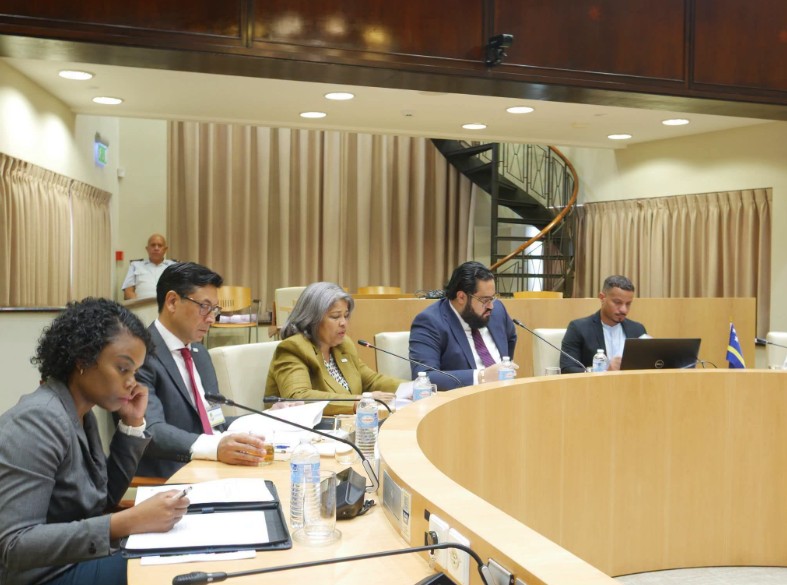
Audit Chamber during a parliamentary debate
The parliamentary review of the Court of Audit’s investigation into the 2023 annual accounts began on March 23 and continued through several meetings before being resumed on October 7. Members of Parliament requested additional explanations concerning the audit findings and the government’s responses.
One of the most significant issues concerns old tax assessments that were taken out of collection.
According to the Court of Audit, there was no statutory basis allowing the government to take that action.
Curaçao Parliament adopted a motion on September 26, 2024 seeking to retroactively endorse the measure. However, the Court of Audit maintains that a parliamentary motion cannot substitute for legislation.
As a result, it continues to consider the decision inconsistent with the applicable legal framework.
The financial consequences also remain unclear. According to the Court of Audit, it has not received a detailed breakdown showing the total value of the tax assessments that were removed from collection.
This means Parliament still does not know how much in outstanding tax claims was affected by the government’s decision.
The Court of Audit is also standing by its criticism of budget overruns during 2023. It said the overruns must continue to be regarded as unlawful as long as the 2023 annual accounts have not been formally adopted by Parliament.
For its assessment, the institution compared actual spending by ministries with the budgets authorized by Parliament, while taking into account legally permitted deviations and supplementary budgets approved during the year.
The dispute has broader implications for Parliament’s constitutional budgetary authority.
The Court of Audit stressed that the right to authorize government spending must remain with Parliament. The issue has become relevant amid questions about possible changes to Article 47 of Curaçao’s National Ordinance on Government Accounts, which could provide the government with greater flexibility to adjust budgets without prior parliamentary approval.
Another disagreement concerns revenue from gaming licenses.
The government argued that certain revenues from gaming license fees covering the period from 2011 through 2021 became known only after the 2023 financial administration had already been closed.
The Court of Audit rejected that explanation.
It pointed to the Casino National Ordinance, under which the Country of Curaçao is entitled to 62.5 percent of the annual revenue received by the Gaming Control Board from the relevant licensing fees. The audit institution therefore considers the government’s explanation for the accounting treatment unacceptable.
The Court of Audit did acknowledge that the government successfully challenged or clarified some findings during the formal response process. Its original report was adjusted after additional documents were provided concerning the purchase of the Cunucu Hatun properties. Its assessment of receivables involving Aqualectra was also amended, while criticism concerning the investment list in the annual accounts was clarified.
Nevertheless, the institution says the central problems identified in Curaçao’s 2023 financial management remain unresolved.
It is now calling on Parliament to take its recommendations seriously, press the government to correct weaknesses in financial management and address annual government accounts that have still not been formally adopted.