ST. JOHN’S – The Caribbean Hotel and Tourism Association’s Tourism Marketplace this week gave regional and international media a chance not only to network with tourism leaders, but also to experience the rich history and culture of Antigua and Barbuda firsthand.
As part of the opening activities, invited journalists — including Curaçao Chronicle — were taken on a guided tour through some of Antigua’s most historic locations, with the highlight being the world-famous Nelson's Dockyard in English Harbour.
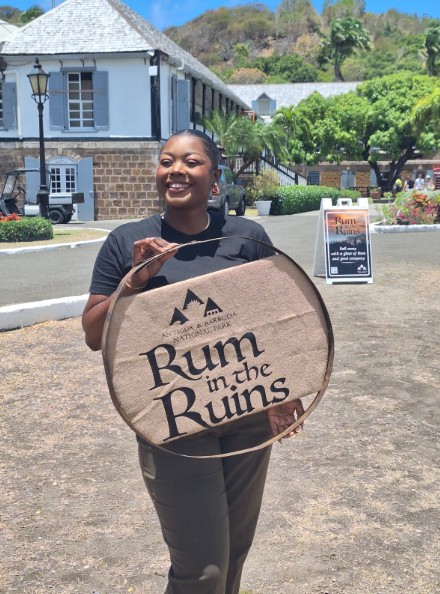
Tourguide and archeologist Desley Gardner
The dockyard, established in 1725, is one of the Caribbean’s most important historical maritime sites and today forms part of a UNESCO World Heritage Site.
During the tour, archaeologist and deputy heritage manager Desley Gardner guided visitors through the layered history of the dockyard, where British naval power, Caribbean craftsmanship, slavery, and architecture all intersect.
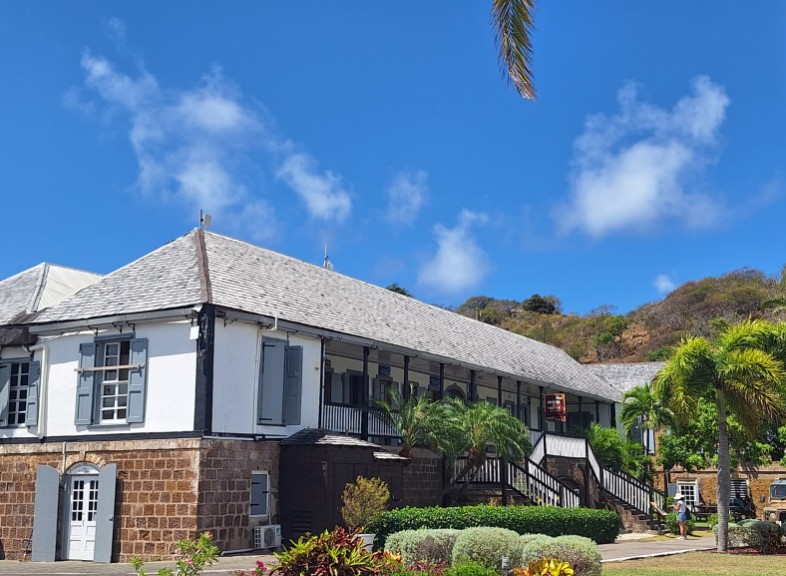
Officer's quarter
Gardner explained how the original dockyard quickly expanded as Britain sought to strengthen its naval dominance during conflicts between colonial powers in the Caribbean. As more ships arrived, the harbor developed into a complex naval base built during the Georgian era.
But behind the elegant stone buildings and scenic waterfront lies a deeper story.
According to Gardner, around 120 enslaved people from nearby plantations were forced to break down parts of a fifty-foot hill to help construct the dockyard complex. Over time, the area became home to an intertwined community of European sailors and soldiers alongside enslaved and free Africans who worked as carpenters, stonemasons, artisans, and shipbuilders.
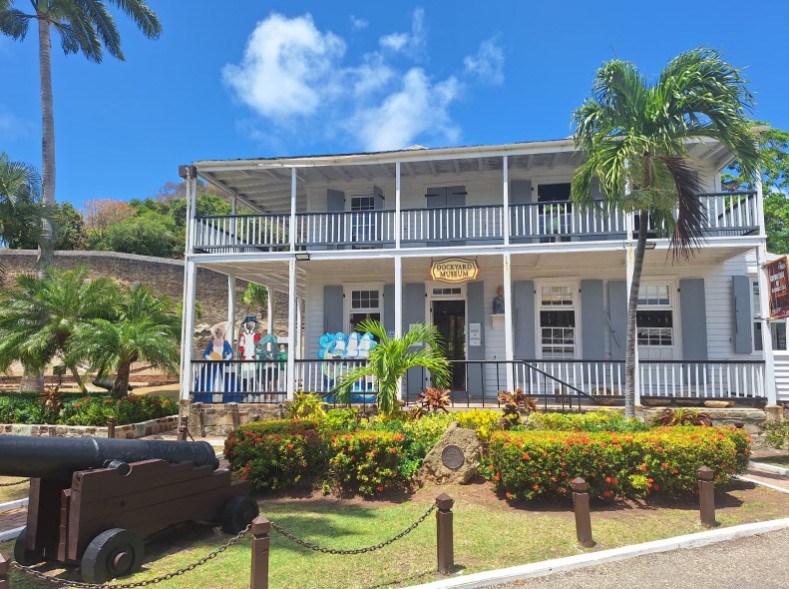
“These people had the skills,” Gardner explained during the tour. “When we look at the original European plans, the structures that were eventually built were different. Caribbean adaptations were made using African knowledge, local experience, and practical necessity.”
That blend is still visible throughout the dockyard today.
Historic structures such as the Copper and Lumber Store — built in 1789 — reveal how British Georgian architecture was redesigned for Caribbean conditions. Water catchment systems, wraparound verandas, airflow designs, and tropical construction techniques were added to adapt to Antigua’s heat and climate.
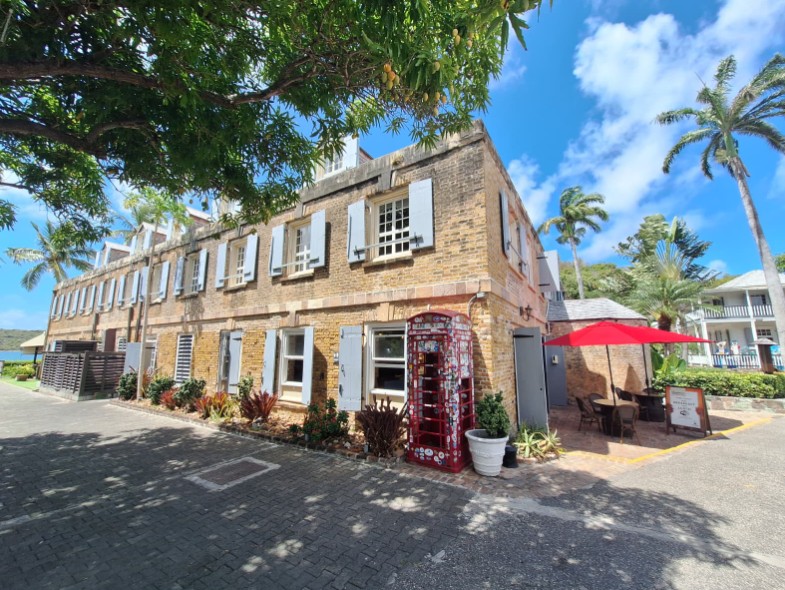
The dockyard itself once played a major role in “careening,” the process of tilting ships on their sides to repair hulls, remove barnacles, and maintain sails and wooden structures. Massive warehouses stored cannons, hammocks, sails, ropes, and ship supplies while vessels underwent repairs.
Today, many of those buildings have found new life as museums, restaurants, hotels, and cultural attractions.
One of the most striking stories shared during the tour centered around an explosion in 1744 caused by improperly stored gunpowder. Eight enslaved men died in the blast — Billy, London, James Sow, Paramanti, Comano, Dick, Joe, Scipio, and Jono.
According to Gardner, those names became central to the modern reinterpretation of the dockyard’s history.
“For a long time, people only heard about Horatio Nelson and British naval victories,” she said. “But Antiguans and Barbudans also wanted to feel connected to this place. Naming the enslaved workers and recognizing their contribution changed that.”
The site was officially recognized as a UNESCO World Heritage Site in 2016, but recent heritage projects have increasingly focused on telling the stories not only of admirals and empire, but also of the Africans whose labor physically built the dockyard.
Visitors walking through Nelson’s Dockyard today encounter a remarkable combination of Caribbean beauty, maritime history, colonial architecture, and cultural memory.
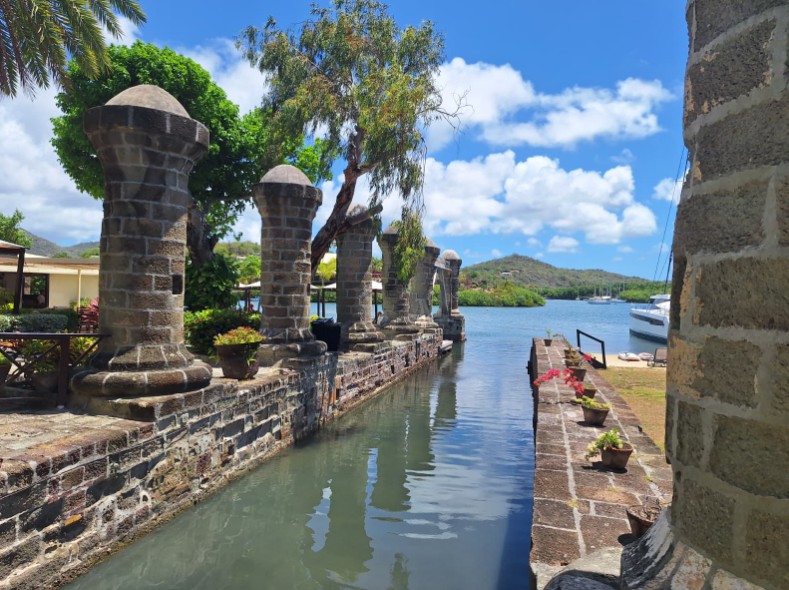
Surrounded by turquoise waters, sailboats, restored Georgian buildings, and lush green hills, the site remains one of Antigua’s crown jewels for tourism.
For Curaçao Chronicle, the visit offered more than a history lesson. It served as a reminder of how Caribbean islands continue transforming painful histories into living heritage experiences that educate, attract visitors, and strengthen cultural identity at the same time.
The Tourism Marketplace continues this week with meetings between tourism boards, airlines, hotels, travel companies, and media representatives from across the Caribbean and beyond.